
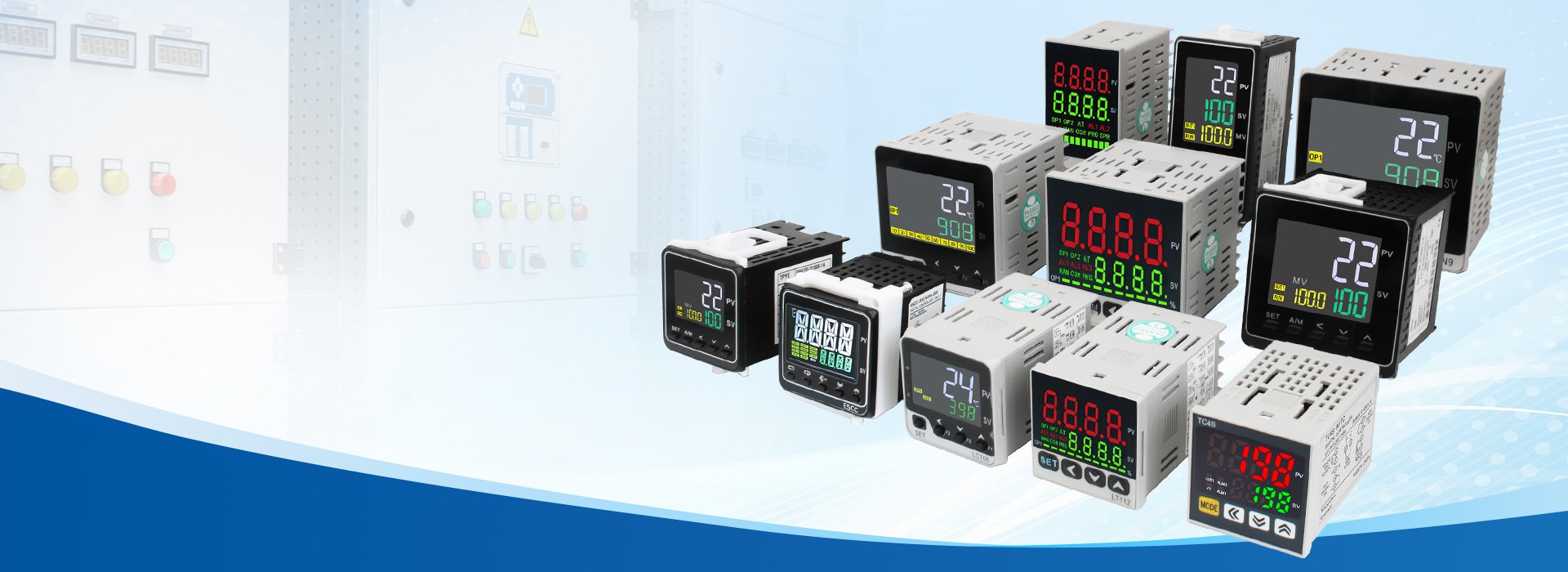
220V Temperature Controller Manufacturer from China
LCTC is a Chinese manufacturer specializing in electrical components, with over 10 years of industry experience in the development and production of 220V temperature controllers. This device is designed for operation on standard industrial power mains; its 50 Hz frequency is compatible with common industrial networks, eliminating the need for special power supply environments. It features a stable internal power supply tailored to the load characteristics of industrial heating systems.
Standards for power supply vary by country and region; therefore, LCTC offers power adapter variants compatible with common standards, such as 110V, 120V, and 240V to meet the diverse requirements of different markets. LCTC’s manufacturing and design strictly adhere to international standards for industrial electronics and meet various international certifications, such as CE, ensuring compliance with import and usage requirements across different countries and regions.
If you are interested in our 220V temperature controller, please contact us immediately for product specifications and technical support; we will gladly assist you with your selection and provide an extremely attractive offer.
Product By Features
LCTC offers five 24V temperature controller models to choose from.
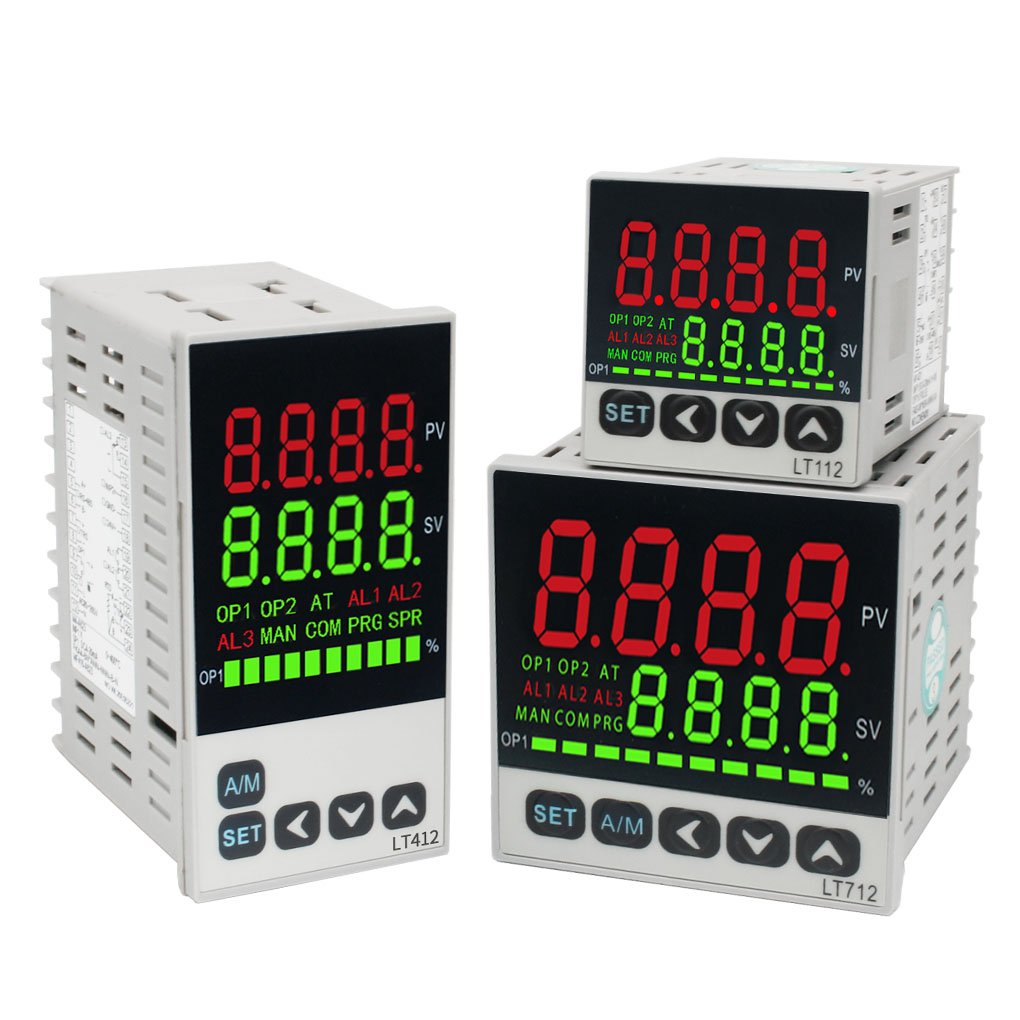
Supports multiple inputs and outputs, features alarm functions and RS485 communication, and is available in various sizes, including 5 models.
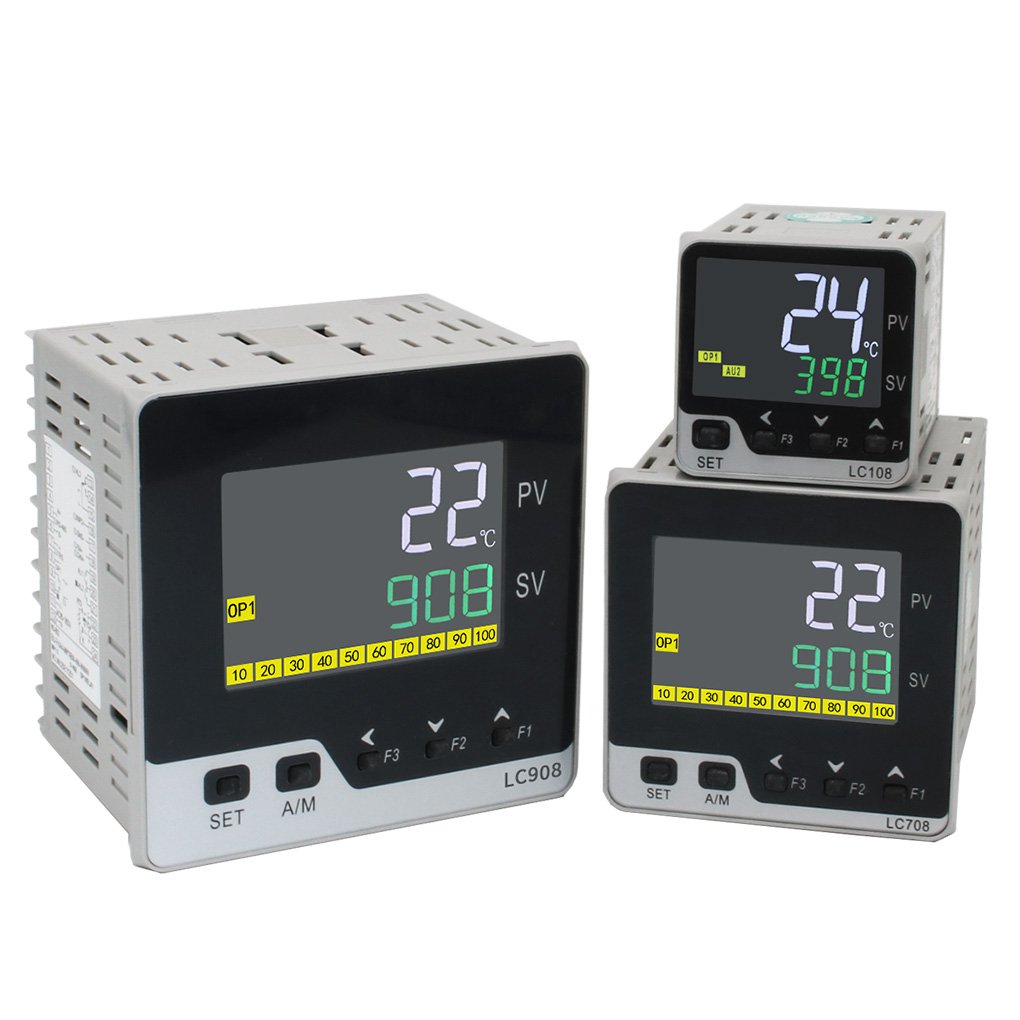
Supports various inputs and outputs; features alarm functions and RS485 communication; available in multiple sizes, including 4 models. There are also 110V, 120V and 240V options available.
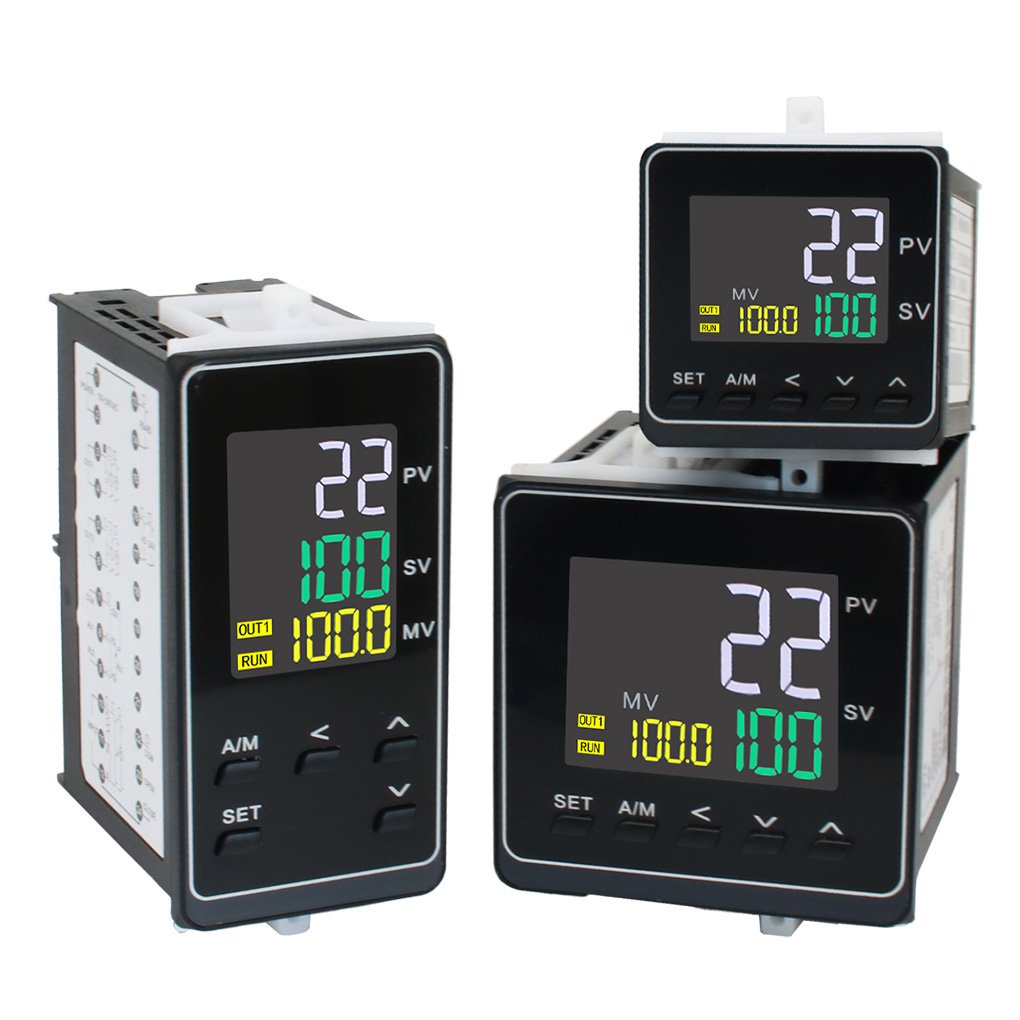
Supports various inputs and outputs, features alarm functions and RS485 communication, and is available in different sizes, including 48×48 mm, 48×96 mm, 72×72 mm, and 96×96 mm.
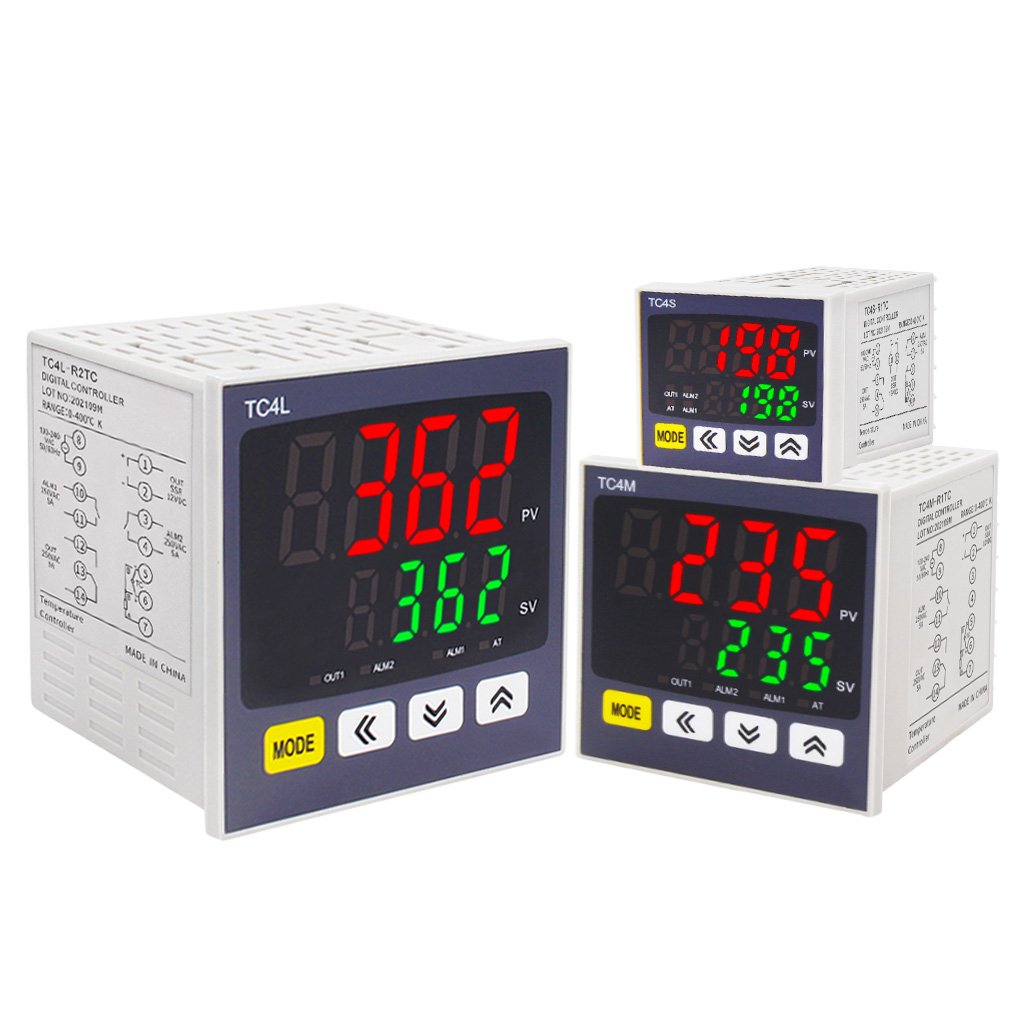
Supports various input and output sizes; available dimensions include 5 models. There are also 110V, 120V and 240V options available.
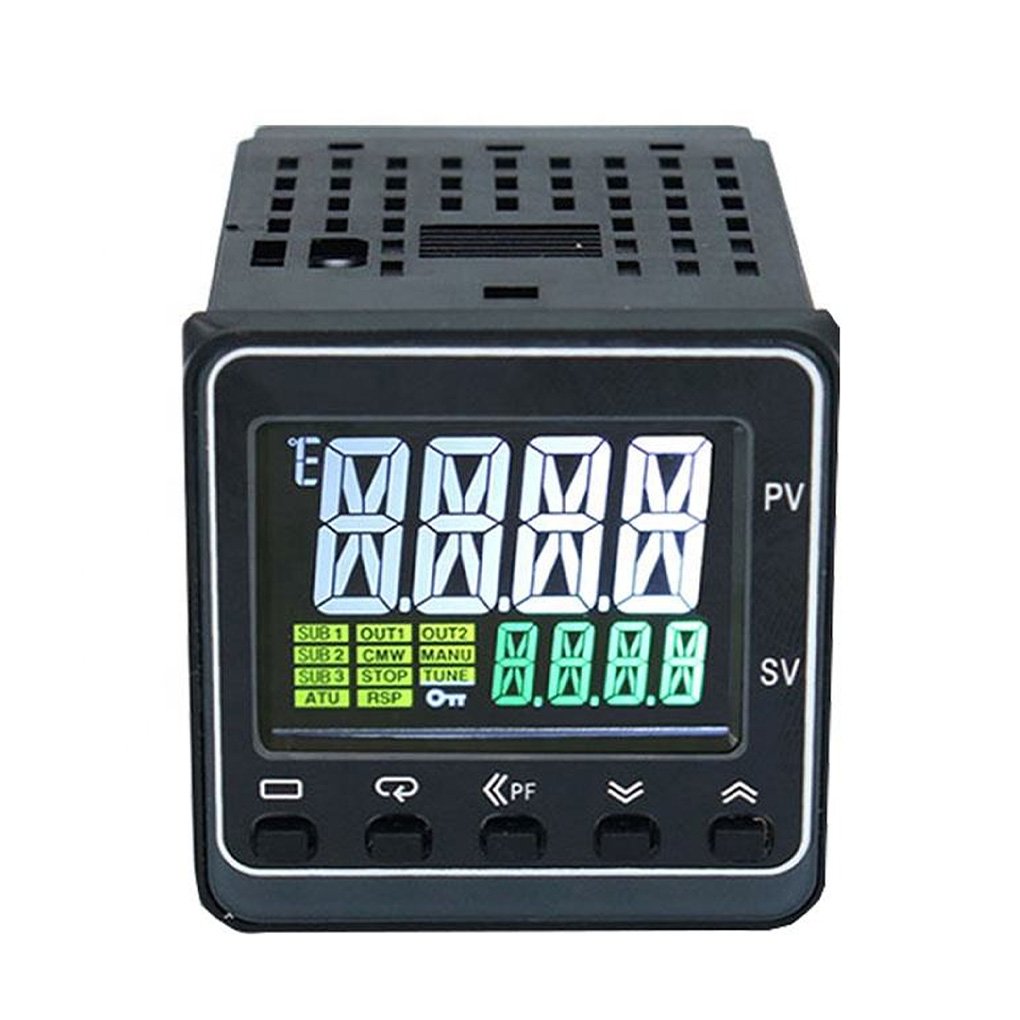
Supports multiple inputs and outputs, features an alarm function, and has dimensions of 48 x 48 mm. There are also 110V, 120V and 240V options available.
Feature of 220V Temperature Controller
The LCTC 220V temperature controller offers numerous advantages and is designed to provide you with reliable temperature control.

Most conventional systems are designed for 220V control systems; when replacing or upgrading equipment, there is no need to design new control circuits, making the direct use of a 220V temperature controller more practical and cost-effective.

Such systems typically do not come with complex automated load systems; since cost efficiency and structural simplicity are paramount, a 220V temperature controller offers an ideal and straightforward control solution.

The 220V temperature controller features an integrated, high-quality relay output, reducing dependence on load control modules. This results in a simpler system configuration, reduced wiring effort, and improved load control capability.

The conventional system itself uses a control architecture for 220V AC and is directly compatible with 220V temperature controllers, eliminating the need for voltage conversion or reconfiguration of the control system.
AC Mains Power Supply, Suitable for Standalone Equipment
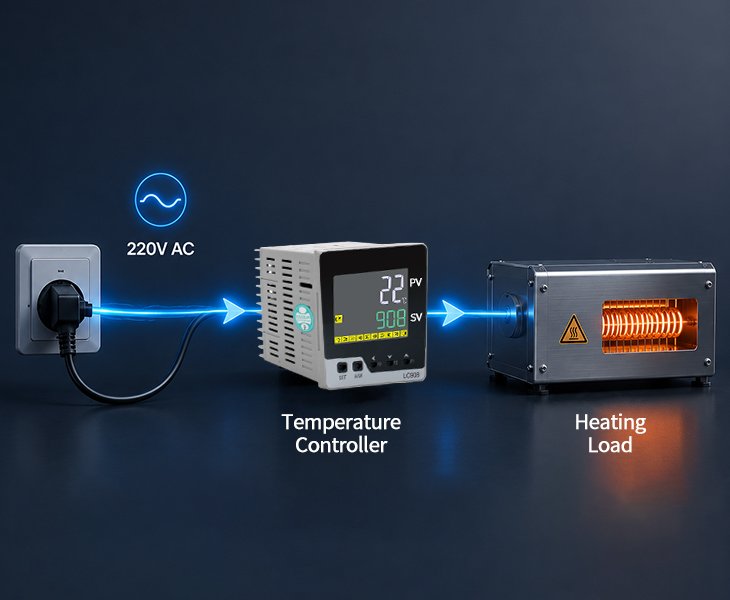
The 220V temperature controller can be directly connected to the AC power supply without an additional power adapter; this simplified configuration helps optimize operating costs, installation effort, and system complexity in industrial applications. In practice, a typical, independent 220V temperature control system can easily be implemented as a closed-loop control circuit by combining three components: a 220V AC connection, a temperature controller, and a heating load. Compared to 24V temperature controllers, they do not require a voltage conversion stage; they are characterized by lower complexity and reduced costs, are independent of system integration capabilities, and are better suited for use in standalone devices.
220V Temperature Controller Resource Download
220V Temperature Controller Industrial Temperature Control Solutions

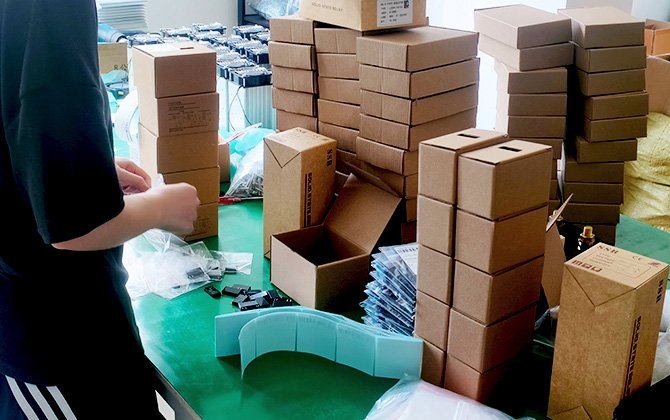
In industrial applications, 220V temperature controllers are compatible with most conventional heating equipment, enabling retrofitting and replacement of existing systems without requiring extensive modifications to the original electrical infrastructure. Additionally, it supports relay and SSR outputs, enabling reliable load control for heating devices in the low to medium power range. Based on years of expertise in research, development, and manufacturing, we provide equipment manufacturers and customers from the industrial processing sector worldwide with continuous, long-term, and stable product support as well as technical services, helping them achieve successful project implementation and long-term supply security.
Application of 220V Temperature Controller
The 220V temperature controller provides a simple, standalone solution for temperature regulation.
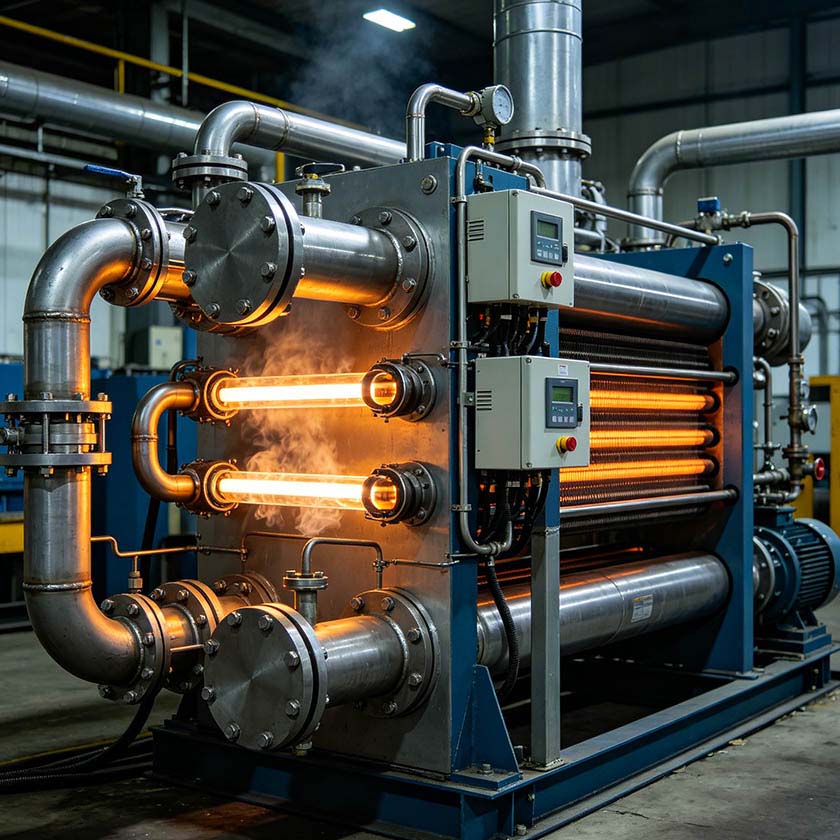
The 220V temperature controller allows direct connection to the power mains, enabling independent temperature regulation without an external power source; it is ideally suited for industrial heating and heat treatment systems such as industrial ovens, heat treatment furnaces, annealing equipment, and heating plates.
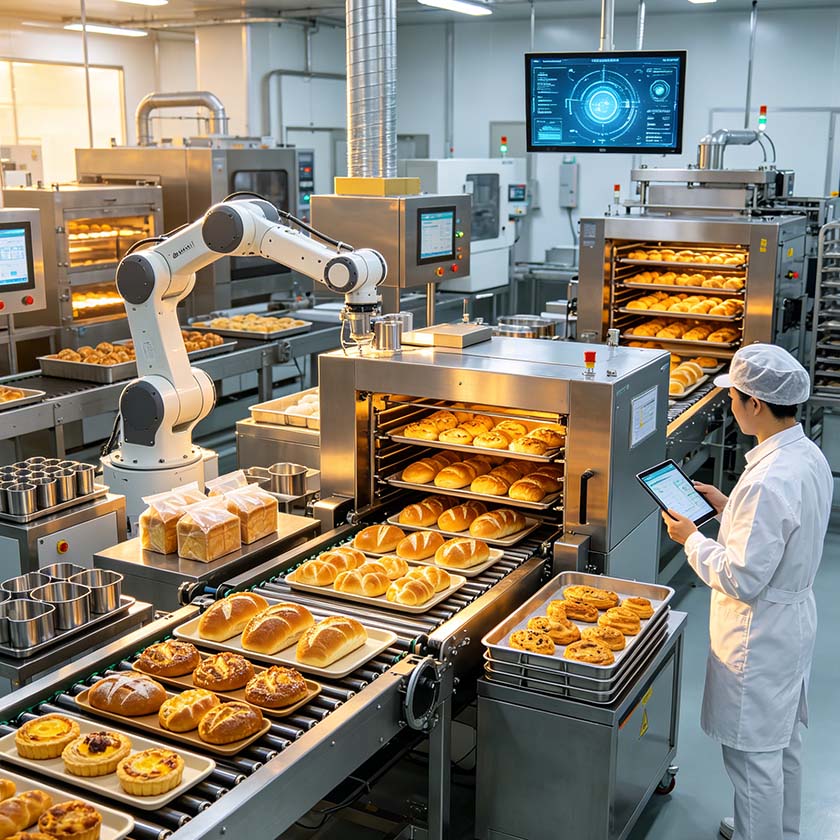
These temperature controllers available for 220 V, 110 V, 120 V, 240 V, and other configurations are compatible with worldwide standard power grids and feature reliable relay or SSR outputs. They are therefore ideally suited for applications in food processing and drying technology, such as food dryers, baking equipment, hot air drying systems, and thermal insulation systems.

The 220V temperature controller features high switching capacity, enabling direct control of low to medium-power heating elements. It is suitable for applications such as injection molding machine heating zone, extruder temperature control system, mold heating plate, rubber molding equipment.
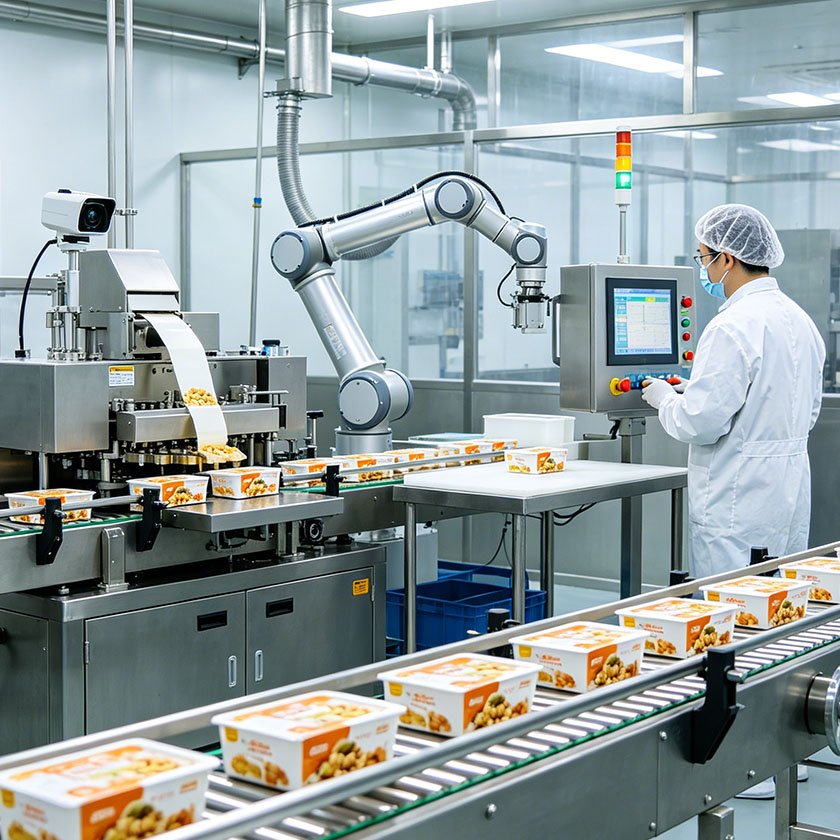
The 220V temperature controller is directly compatible with conventional 220-V control circuits, enables quick replacement and upgrades, and is suitable for applications such as heat sealer, packaging machines, and sealing equipment.

Testimonials
This 220V temperature controller is directly compatible with my existing equipment and can be installed immediately, saving time on wiring and reducing costs. It has proven highly reliable in long-term operation, and I am currently upgrading my production lines for industrial ovens with it, a worthwhile investment.
Industrial Oven ManufacturerI chose the LCTC 220V temperature controller primarily because it allows direct connection to the 220V power supply, simplifying the entire control process; additionally, it provides highly precise and stable temperature regulation, and the remote control is extremely convenient.
Equipment SupplierWe have used the 220V temperature controller LCTC in several projects for retrofitting heating systems. This allowed us to reuse existing control panels without any new construction; the replacement was quick and maintenance is simple, significantly reducing downtime.
Maintenance & Retrofit Engineer
The main differences lie in the power supply method and system architecture: the 220V version is directly powered by the mains and does not require an additional low-voltage power supply, whereas the 24V version requires an external DC power adapter.
Yes, LCTC offers models that support 110 VAC, 120 VAC, 220 VAC, 240 VAC, etc.
Yes, it supports both 50 Hz and 60 Hz power grids.
Yes, it is compatible with relay and SSR output systems.
Some markets in North, Central, and South America use 110 V AC; the United States and Canada use 120 V AC; China, Southeast Asia, and some European countries use 220 V AC; the most widely used standard in Europe is currently 230 V AC; and the United Kingdom, Australia, and New Zealand use 240 V AC.
How to Wire and Configure a 220V Temperature Controller
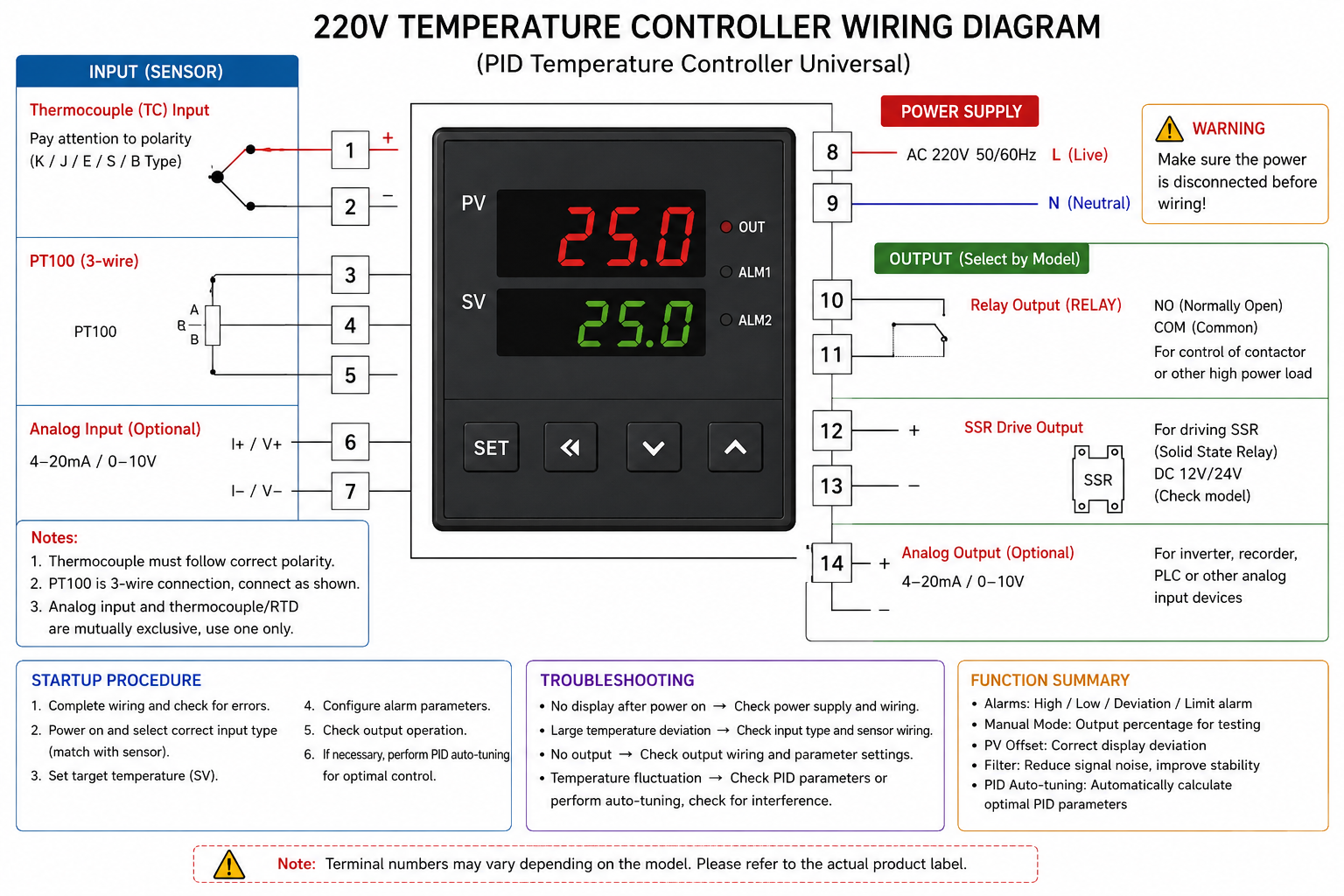
This guide explains the basic wiring, configuration, and troubleshooting of a 220V temperature controller, also applicable to general PID temperature controllers used in industrial heating systems.
220V Temperature Controller Wiring
Please disconnect the power supply before installation. Connect the 220-V temperature controller directly to the mains; no additional low-voltage power supply is required. When using sensors such as thermocouples of types K, J, E, and S, pay attention to the correct polarity, while RTD sensors require a three-wire connection. The 220V temperature controller also supports linear signal inputs such as 4-20mA and 0-10V, as well as SSR or relay outputs; carefully check the entire wiring before turning it on.
220V Temperature Controller Debug
- Configuration
After powering on, select the input type that matches the sensor and set the SV using the panel buttons; the controller will automatically adjust the heating process to reach the set
- Alarm Functions
The controller supports multiple alarm modes including high/low deviation and limit alarms. These are used for over-temperature protection and process monitoring. Alarm values can be configured through the menu system.
- PID Auto-Tuning
If control performance is unstable, the auto-tuning function can be activated. The controller automatically calculates optimal PID parameters for the system. During tuning, temperature may fluctuate before stabilizing.
- Manual Mode
Manual output mode allows direct adjustment of output percentage for testing heaters, SSRs, or relays. After commissioning, the controller should be returned to automatic mode.
- Compensation & Filtering
PV compensation can correct display deviation, while filtering reduces signal noise for more stable readings.
- Troubleshooting
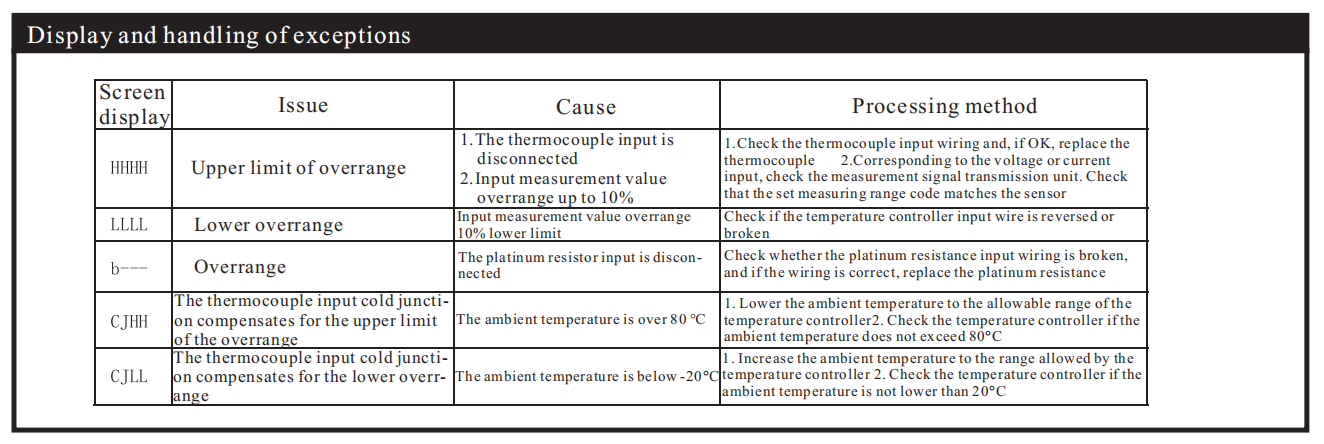
Common issues include sensor wiring errors, incorrect input settings, or electrical interference. Checking wiring, input type, and sensor condition usually resolves most problems.
The following are common abnormal displays and their corresponding handling methods.
SSR vs Relay Output in 220V Temperature Controller
When selecting a temperature controller, factors such as heating capacity and input and output methods must be taken into account. Selecting the appropriate starting type ensures stable system operation, extends equipment lifespan, and provides excellent temperature control performance. For 220 V temperature controllers, relay and SSR outputs are the most common types. Understanding the differences between these variants makes it easier to select the appropriate controller for a specific system, so what exactly distinguishes the two types?
SSR
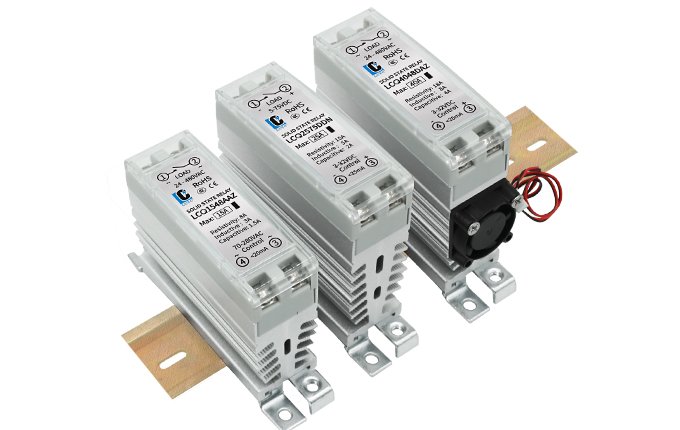
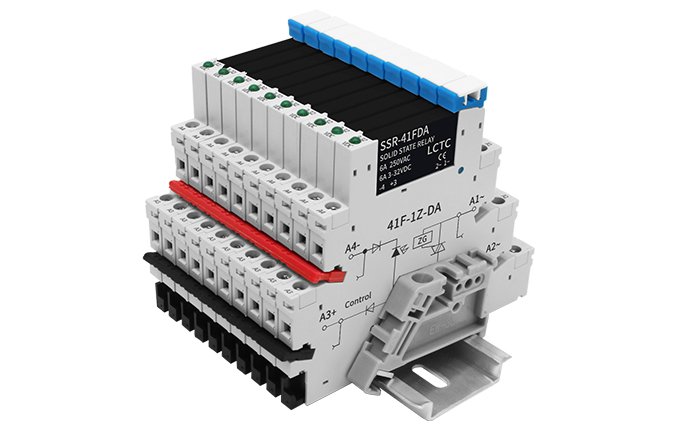
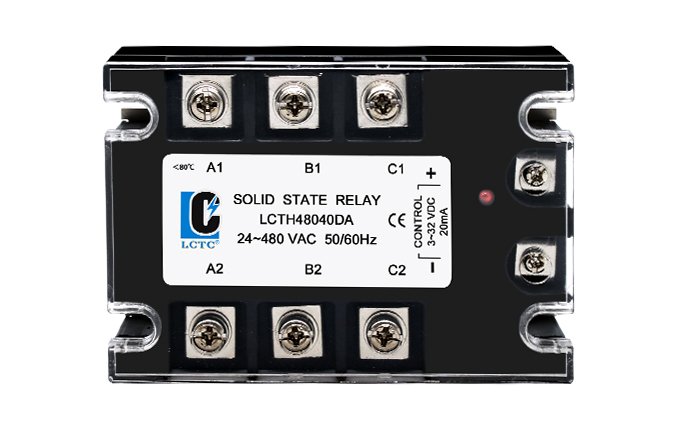
The SSR output refers to the control signal used to drive an external semiconductor relay. It does not directly switch the load, but instead provides a low-voltage trigger signal. Since they don’t contain mechanical components, SSR systems offer advantages such as high switching speeds, silent operation, and a long service life. Therefore, it is ideally suited for applications requiring frequent switching or precise temperature control.
Relay
The relay output uses an internal mechanical relay to directly control the heating load. The setup is simpler than with an SSR, eliminating the need for an external SSR module. Relay outputs are more cost-effective and are commonly used in simple heating applications with low switching frequencies, such as small heaters, basic ovens, and low-power industrial systems. However, mechanical relays have a limited lifespan due to physical contact wear and produce a “click” sound during operation.
Generally, SSR outputs are preferred for high-performance, continuously operating industrial systems, while simple, cost-effective solutions for heating control are well suited for relay outputs. Certain models of 220V temperature controllers are designed to optionally support either SSR or relay outputs, providing flexibility for various applications.