
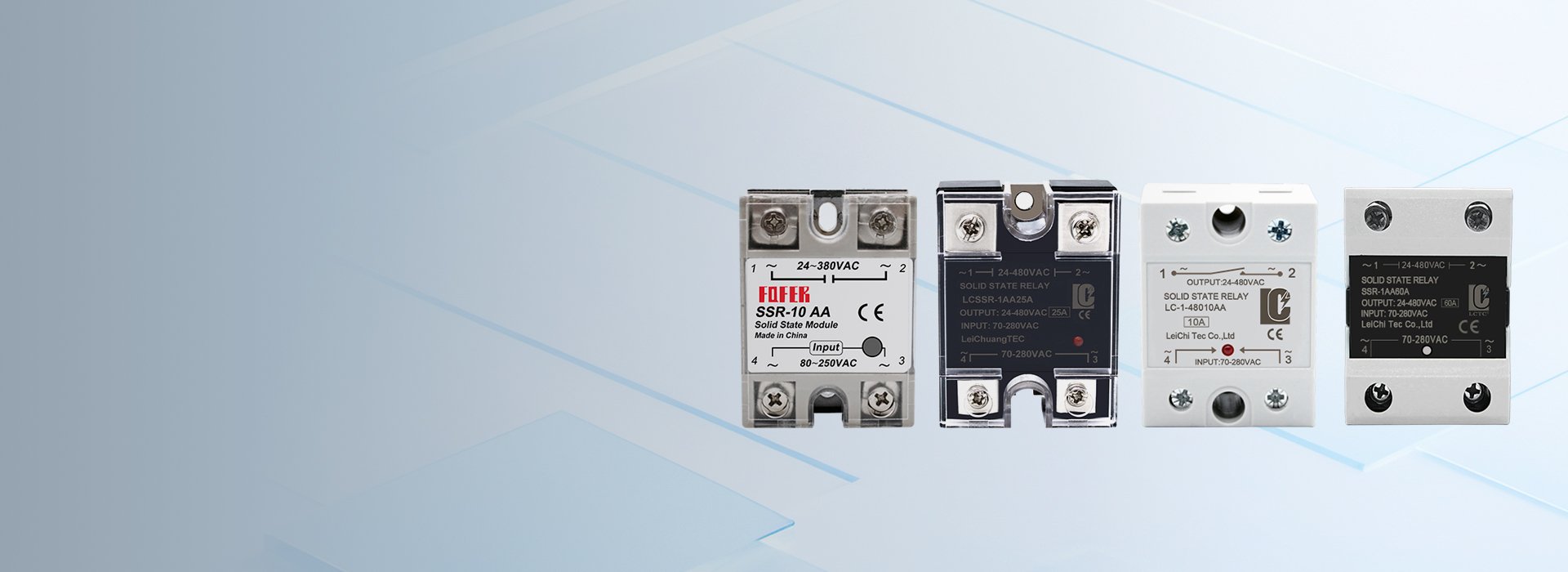
Solid State Relay AC-AC from an Experienced Component Supplier
If you encounter problems using traditional relays to control AC loads, you can take a look at LCTC. We are specialized in the design and production of electrical components, including the solid state relay ac-ac, which has been developed to provide you with excellent solutions for AC loads.
LCTC has nearly 10 years of experience in this field, and our team has made many improvements in it. Our products have not only passed international professional certifications such as CE, ISO9001 and RoHS, but also been exported to many countries and regions, providing more possibilities for industrial automation, heating and temperature control.
If you are interested in the LCTC solid state relay ac, please contact us and we will get in touch with you as soon as possible.
LCTC Product
There are four product types of solid state relays AC-AC.
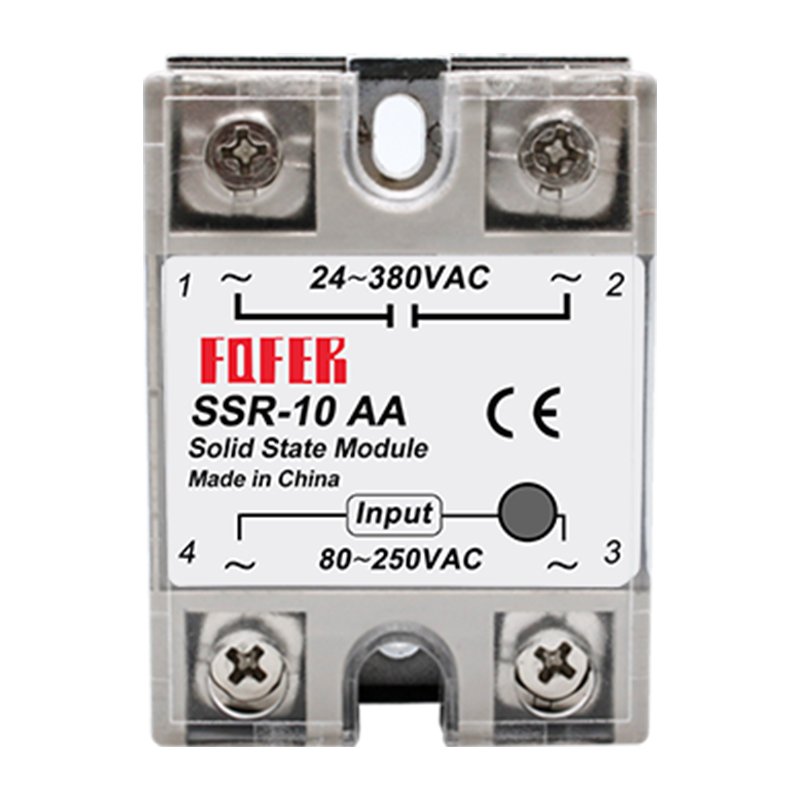
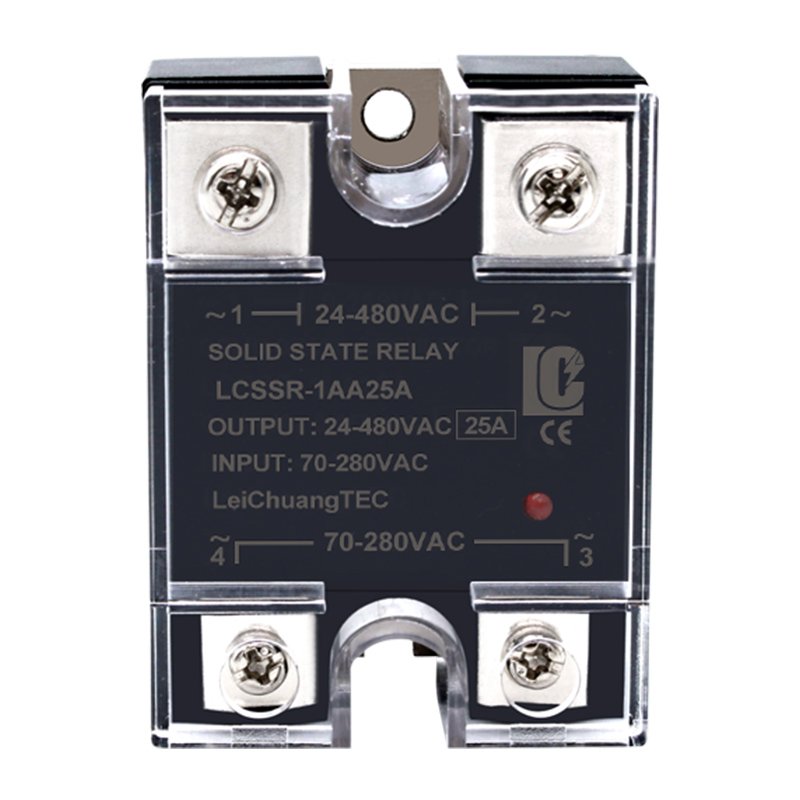
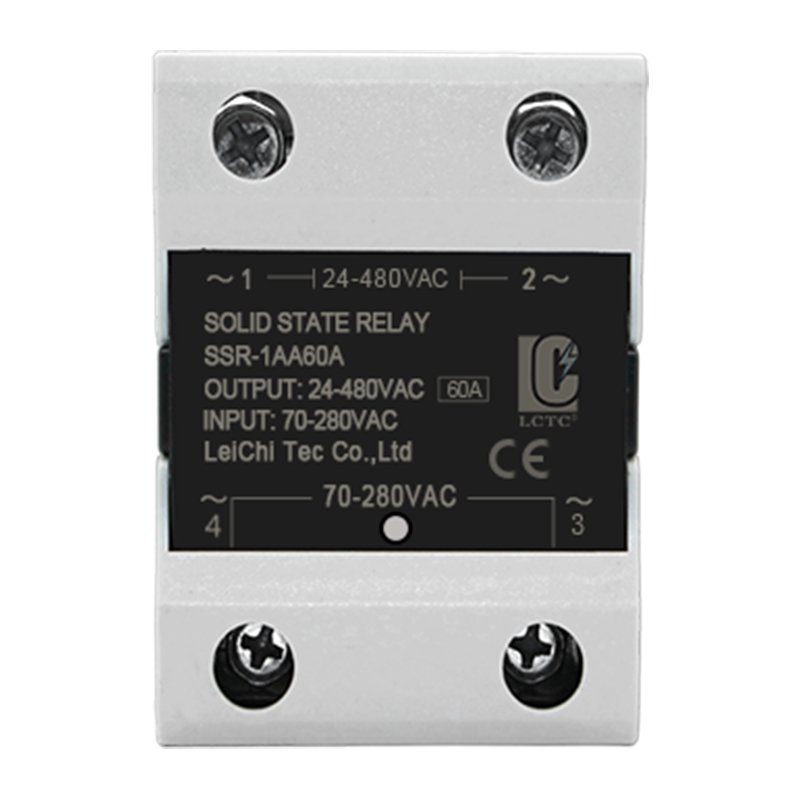
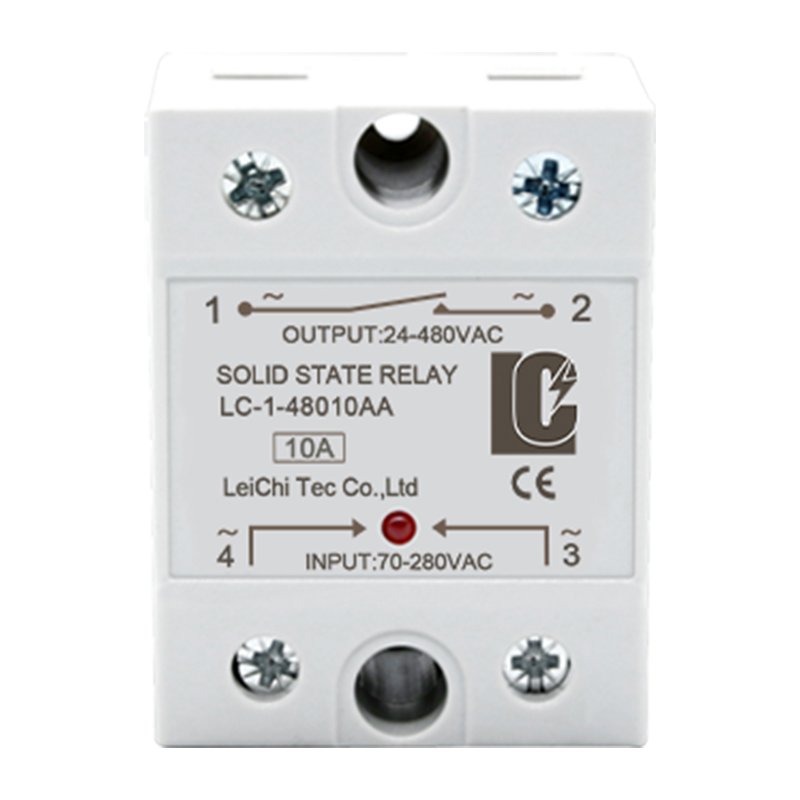
The current range is from 10A to 240A, which can meet the needs of various loads.
Feature of Product
Solid state relays AC-AC have the following advantages:

The noise level of this device is only 3 decibels, making it highly suitable for use in noise-sensitive environments such as laboratory equipment and medical devices.

The LCTC solid state relay AC-AC has an electronic response rate, typically within milliseconds, and is suitable for high frequency applications.

Solid state relays AC-AC have no mechanical structure and are therefore less sensitive to vibration and frequent shocks, so equipment that works in harsh environments or is moved regularly has greater advantages.

In LCTC solid state relay AC-AC, AC current can flow forward and backward, and the conducted current can also be controlled.
Zero-Cross Turn-On Makes Precise Control Possible
The LCTC solid state relay ac-ac supports zero-on resistance. When zero-on, it switches the AC voltage. The current gradually increases as it approaches 0, and reducing voltage peaks and electromagnetic interference, and improve its service life and stability.
It can Meet Various Load Requirements
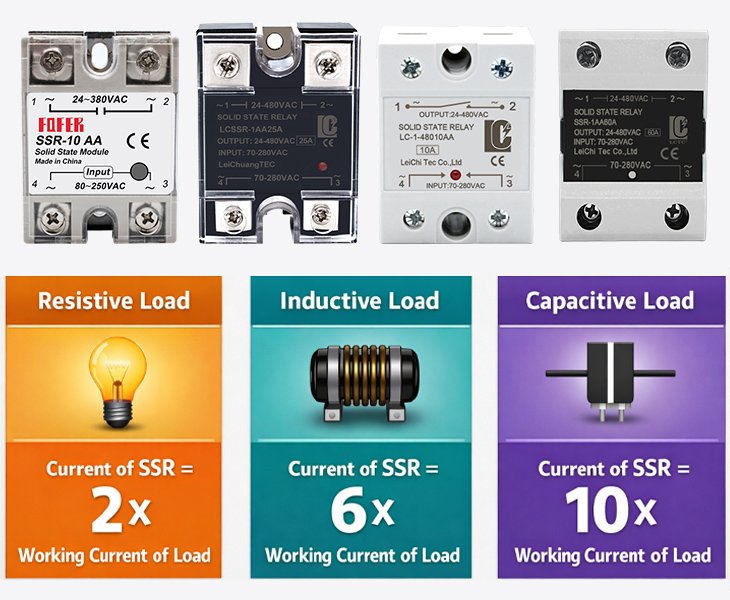
LCTC solid state relay ac-ac support various load requirements, including resistive, inductive and capacitive loads. However, different loads require different circuit specifications. Generally speaking, it can be calculated in this way, Current of Equipment/Ratio = Current of SSR. The SSR of a resistive load is usually double working current of load, that of an inductive load is usually six working current of load, and that of a capacitive load is usually ten times working current of load.
The control voltage for AC SSRs in different LCTC series varies slightly, but the typical range is generally 70–280 VAC. The SSR is designed to operate when the control voltage reaches at least 70VAC and release when the control voltage drops below 30VAC. The maximum input current is 15mA.
We recommend checking both the control voltage and the controller’s output capacity before selecting an AC-AC SSR. Make sure the actual control signal falls within the specified input range and does not exceed the maximum input current.
The load voltage of the various LCTC series of AC SSRs varies slightly, but the typical range is generally between 24 VAC and 480 VAC, covering a wide range of industrial heating, automation and AC load switching applications. The maximum rated output voltage is 480VAC, while the peak voltage rating is up to 800V.
When selecting an AC solid state relay, make sure the actual load voltage is within the specified 24–480VAC range and consider possible voltage fluctuations and transient overvoltage in the application.
LCTC AC-AC SSRs are available in current ratings from 10A to 120A. For continuous or high-current applications, also consider ambient temperature, switching frequency and heat dissipation when selecting the SSR.
To select the required AC-AC SSR current rating, first determine the load’s normal operating current and then consider the startup or inrush current. Resistive loads such as heaters generally have more predictable current characteristics, while motors, transformers and other inductive loads can generate significantly higher inrush currents.
When selecting avoid selecting one based only on the load’s nominal running current. For motor or inductive applications, provide the load’s rated current, startup current and duty cycle so the appropriate SSR rating can be evaluated.
Zero-cross switching means that an AC solid state relay turns on near the zero-crossing point of the AC voltage waveform. This switching method can help reduce switching transients and electrical noise and is commonly used for resistive loads such as heaters.
For applications involving motors, transformers or other inductive loads, we recommend confirming the SSR’s switching characteristics and load requirements before selection.
Yes. An AC-AC solid state relay can be used to switch AC heating elements when the load voltage and current are within the SSR’s rated range. LCTC AC-AC SSRs support 24–480VAC load voltages and current ratings from 10A to 120A, making them suitable for a wide range of AC heating and temperature control applications.
For continuous heater operation, we recommend selecting the SSR based on the actual load current and providing adequate heat dissipation. The SSR’s 1.5V maximum on-state voltage drop should also be considered when evaluating power dissipation at higher load currents.
An AC-AC solid state relay can be used for certain AC motor switching applications when its voltage, current and surge ratings are suitable for the motor. However, AC motors can draw significantly higher current during startup than during normal operation.
Do not select an AC SSR for a motor based only on the motor’s rated running current. Check the motor’s starting current, switching frequency, duty cycle and operating voltage. For high-power motors or applications requiring frequent starting and stopping, a dedicated motor starter, contactor or other motor-control solution may be more appropriate.
An AC-AC solid state relay generates heat because a small voltage drop occurs across the semiconductor output device while the SSR is conducting. LCTC AC-AC SSRs have a maximum on-state voltage drop of 1.5V. As load current increases, power dissipation also increases, which can cause the SSR temperature to rise during continuous operation.
High ambient temperature, excessive load current, insufficient airflow or inadequate heat dissipation can further increase the operating temperature. The LCTC AC-AC SSR is rated for an operating temperature range of -30°C to 80°C.
For high-current or continuous-duty applications, select the SSR together with an appropriately sized heat sink and ensure good thermal contact and airflow.
A single-phase AC-AC solid state relay is designed to switch a single-phase AC load, while a three-phase solid state relay is designed to control three-phase AC loads. Single-phase SSRs are commonly used for single-phase heaters and other AC equipment, while three-phase SSRs are more suitable for three-phase heaters, motors and industrial equipment.
Select the SSR according to the load’s power system, phase configuration and current per phase. For three-phase applications, also consider load balance and whether all three phases need to be switched together.
To protect an AC-AC solid state relay against voltage spikes and surge currents, select an SSR with sufficient output voltage and surge capability for the application. LCTC AC-AC SSRs have a rated output voltage range of 24–480VAC and a peak voltage rating of up to 800V.
For inductive or high-inrush loads, additional protection such as an MOV, RC snubber or other suitable surge suppression device may be required depending on the circuit. Proper heat dissipation is also important because repeated surge currents can increase thermal stress on the SSR.
When selecting an SSR for motors, transformers or other high-inrush loads, provide the load’s startup current and operating conditions so the appropriate SSR rating and protection method can be evaluated.
An AC-AC solid state relay is wired by connecting its AC control terminals to a compatible AC control circuit and placing its output terminals in series with the AC load. The controller or PLC must provide a control signal that is compatible with the SSR’s 70–280VAC input range.
For the LCTC AC-AC SSR, the control signal should reach at least 70VAC for reliable operation and drop below 30VAC for reliable release.
Before wiring, verify the controller’s output type and voltage. Because this SSR requires an AC control signal, it should not be connected directly to a low-voltage 3–32VDC output unless an appropriate interface or relay circuit is used.
AC-AC solid state relays offer several advantages over traditional mechanical AC contactors, including silent switching, fast response, no mechanical contact wear and suitability for frequent switching. These characteristics make SSRs particularly useful for temperature control, heating equipment and automation systems where frequent ON/OFF switching is required.
However, AC SSRs also generate heat during conduction and have a small off-state leakage current. LCTC AC-AC SSRs have a maximum on-state voltage drop of 1.5V and maximum off-state leakage current of 2mA. Therefore, the application, load type, switching frequency and thermal conditions should all be considered when selecting between an SSR and a contactor.
An AC-AC solid state relay can replace a magnetic contactor in some applications, but it should not be considered a direct drop-in replacement in every system. Before making the replacement, check the load voltage, operating current, startup current, switching frequency, off-state leakage current, heat dissipation and required electrical isolation.
AC SSRs are particularly suitable for applications requiring frequent, quiet and fast switching, such as heating and temperature control. However, mechanical contactors may remain more suitable for certain high-power motor applications, safety isolation requirements or systems where extremely low off-state leakage is required.
If you want to replace an existing contactor with an AC-AC SSR, provide the contactor model, load type, voltage, current and switching frequency. Our engineers can evaluate the application and recommend an appropriate SSR rating and heat dissipation solution.
If an AC-AC solid state relay is not switching, first check whether the control voltage reaches the required input range. For the LCTC AC-AC SSR, the control input range is 70–280VAC. The SSR is designed to operate when the input reaches at least 70VAC and release when the control voltage falls below 30VAC.
If the control signal is correct, check the AC load voltage, load current, wiring, operating temperature and possible overload conditions. Also verify that the load voltage is within the SSR’s 24–480VAC output range.
Troubleshoot the input and output sides separately. First confirm the control voltage, then check the AC load circuit and SSR temperature. If the input is within specification but the output does not switch correctly, further inspection of the SSR and load circuit may be required.
LCTC solid state relay ac-ac have a certain degree of heat dissipation. However, to extend their service life and maintain stable efficiency, it is recommended to install high-performance SSR, SSR that operate for a long time, or SSR with poor ventilation.
Unfortunately, the solid state relay AC-AC cannot be used with a DC power supply.
Yes. LCTC provides OEM/ODM services for AC-AC solid state relays to support different industrial and purchasing requirements. Depending on the project, customization may include electrical specifications, current and voltage ratings, terminal configurations and other product requirements.
Our engineering team can evaluate the required control voltage, load voltage, current rating, load type and operating environment to help identify a suitable AC-AC SSR solution.
LCTC Engineering Recommendation: For OEM/ODM projects, please provide the required control voltage, AC load voltage, load current, load type, switching frequency and estimated order quantity. This allows our engineers to evaluate the appropriate specification more efficiently.