
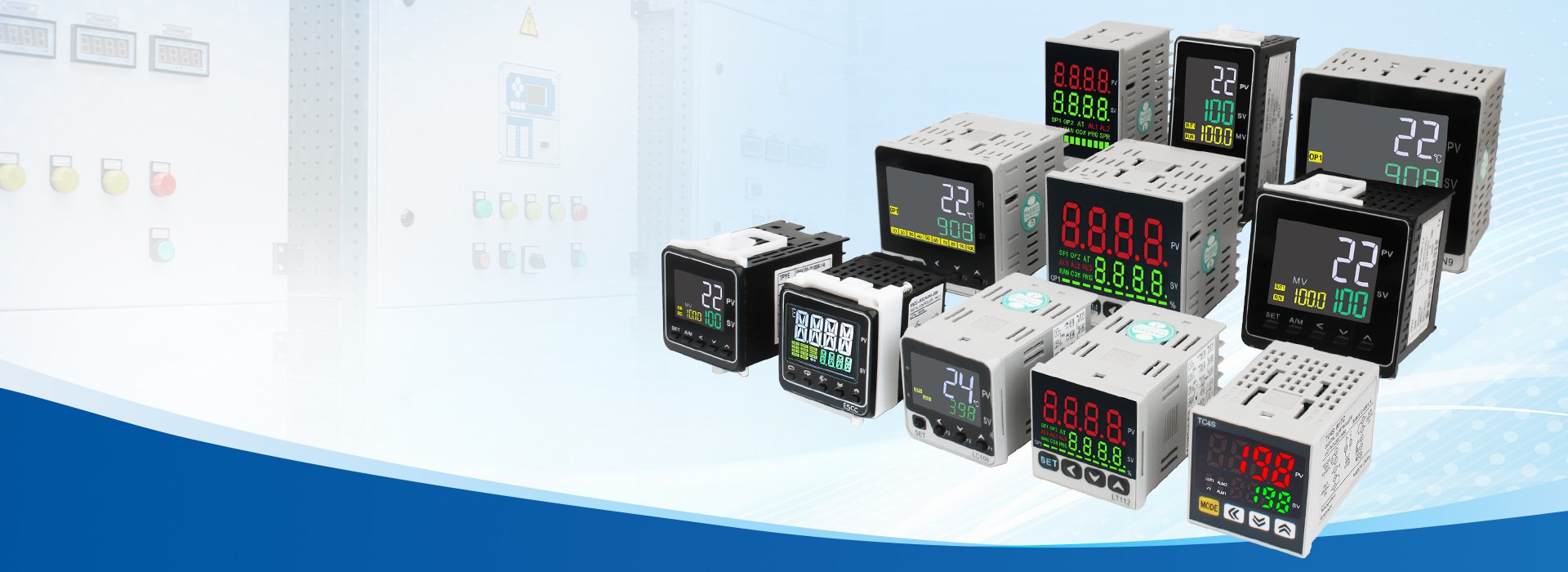
Panel Mount Temperature Controller Manufacturer
LCTC has over a decade of manufacturing experience in the electrical components industry, seamlessly combining years of professional expertise with product quality, reliability, and customer trust. The LCTC panel mount temperature controller is designed to deliver precise and stable performance in demanding industrial environments.
Through efficient production management and stable manufacturing capacities, LCTC ensures reliable supply and minimizes lead times, guaranteeing on-time order fulfillment. Whether you work in industrial heating technology, plastics processing, food processing, laboratory technology, or other industries, LCTC provides you with the optimal panel mount temperature controller. We also offer OEM/ODM services to support you in developing solutions that reflect your brand’s unique identity.
If you are looking for a suitable temperature controller to upgrade your temperature control system, please contact us immediately for expert advice on selection, a prompt quotation, and professional technical support.
Product By Features
LCTC offers five panel mount temperature controller models to choose from.
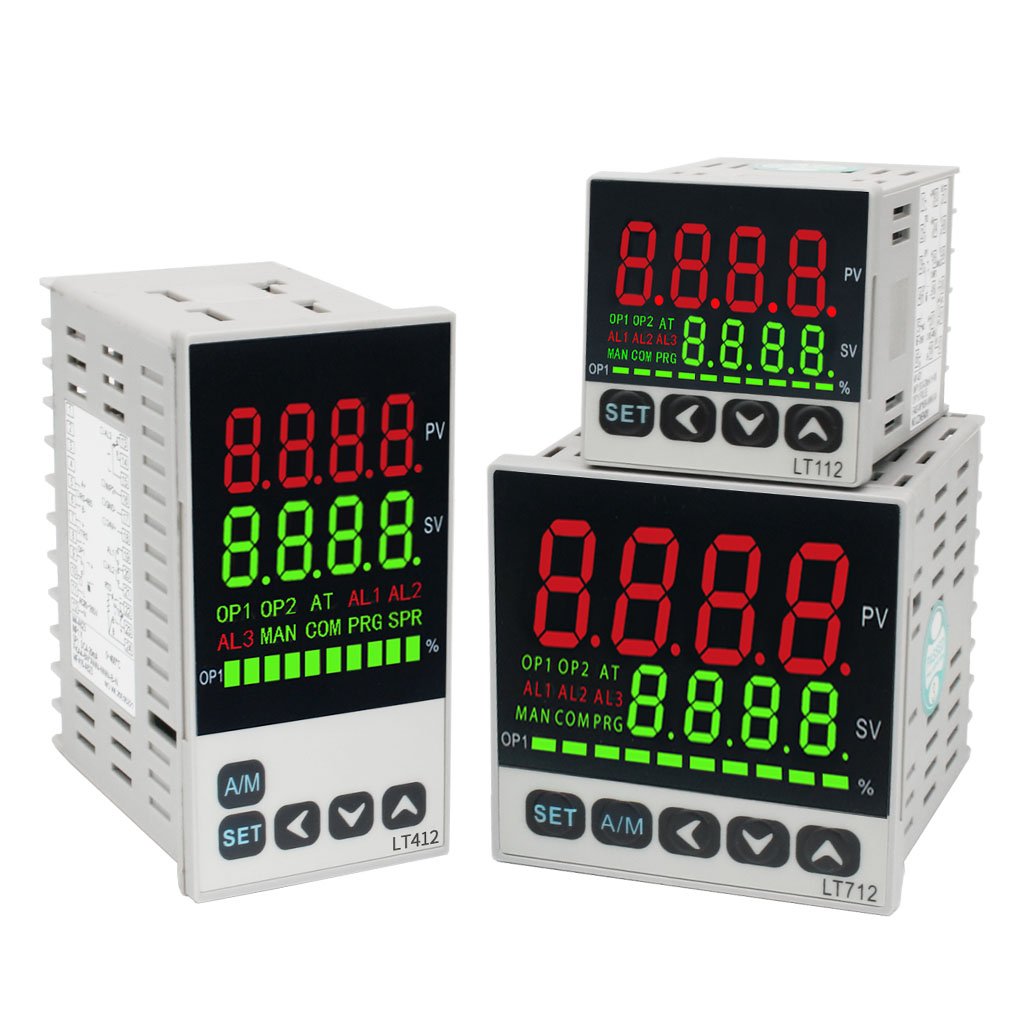
Supports multiple inputs and outputs, features alarm functions and RS485 communication, and is available in various sizes, including 48×48 mm, 48×96 mm, 96×48 mm, 72×72 mm, and 96×96 mm.
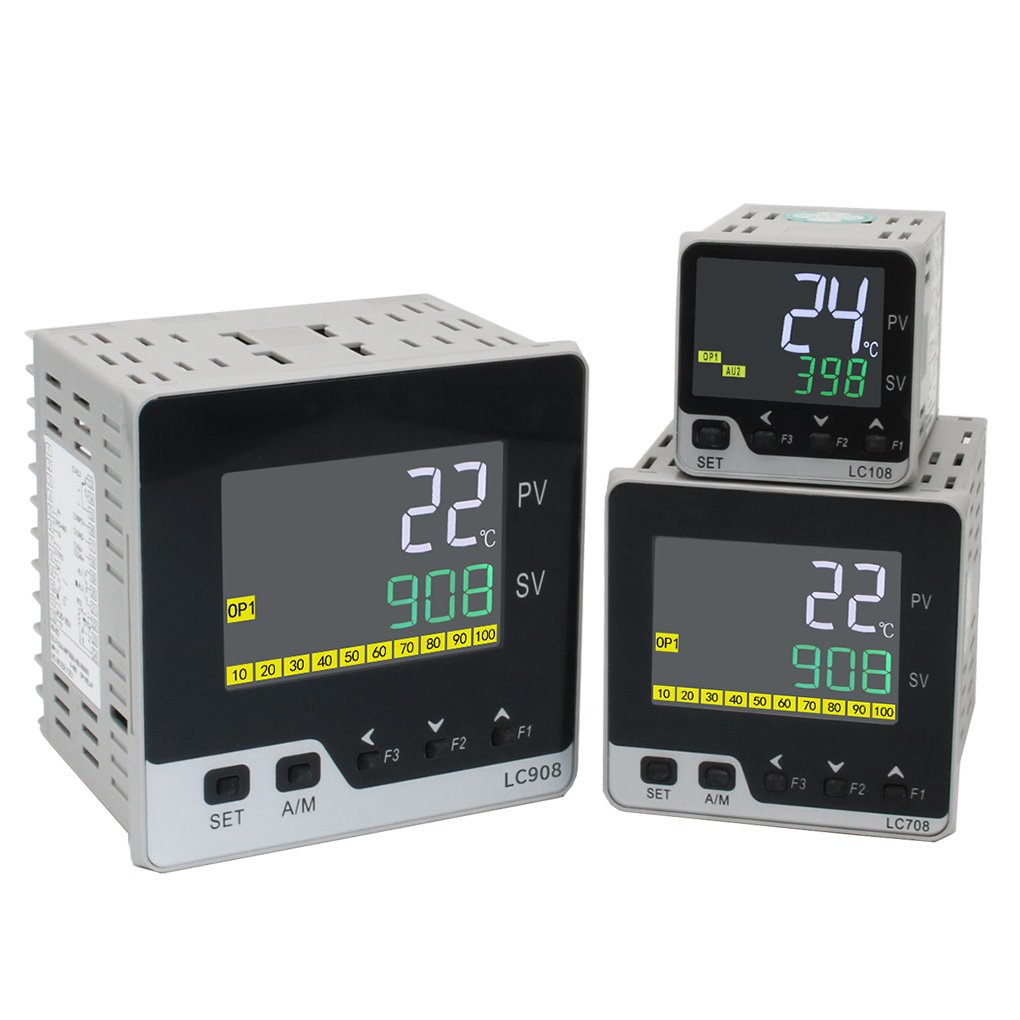
Supports various inputs and outputs; features alarm functions and RS485 communication; available in multiple sizes, including 48×48 mm, 48×96 mm, 72×72 mm, and 96×96 mm.
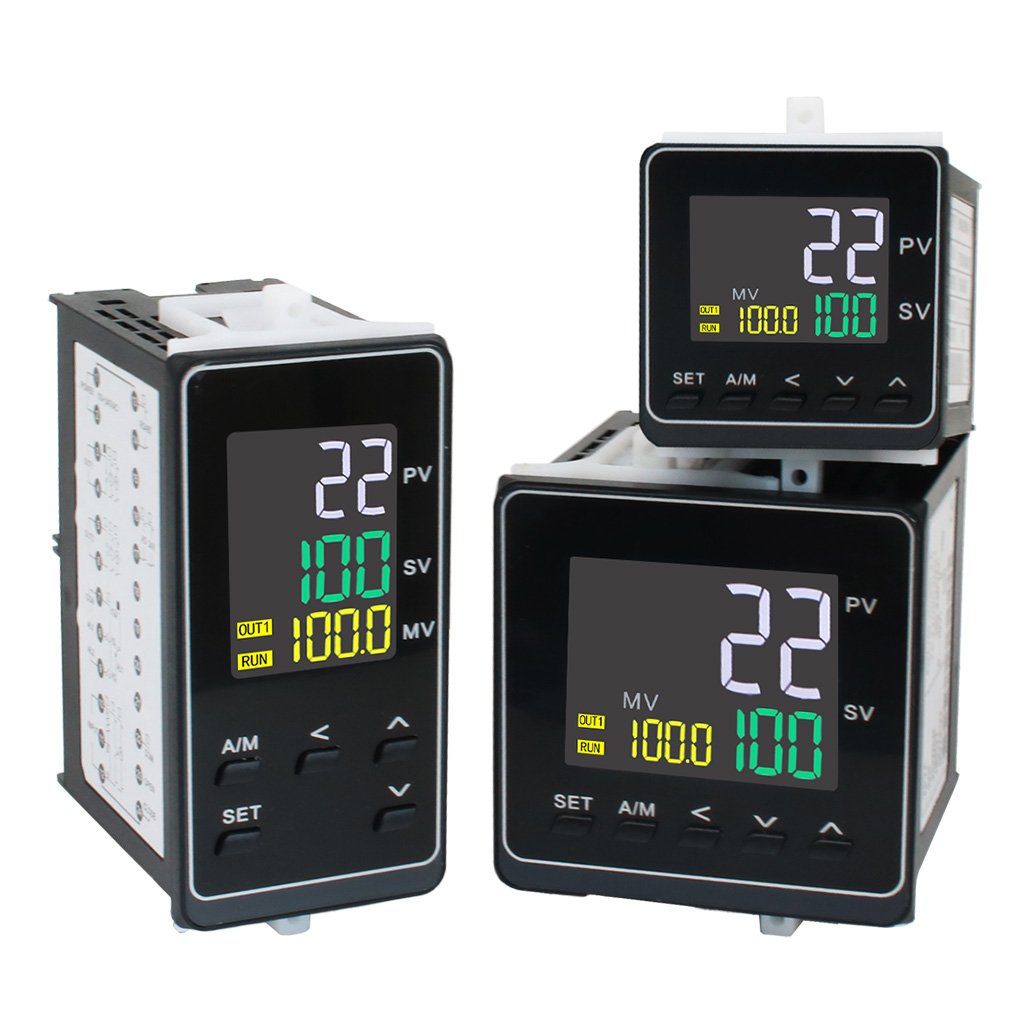
Supports various inputs and outputs, features alarm functions and RS485 communication, and is available in different sizes, including 48×48 mm, 48×96 mm, 72×72 mm, and 96×96 mm.
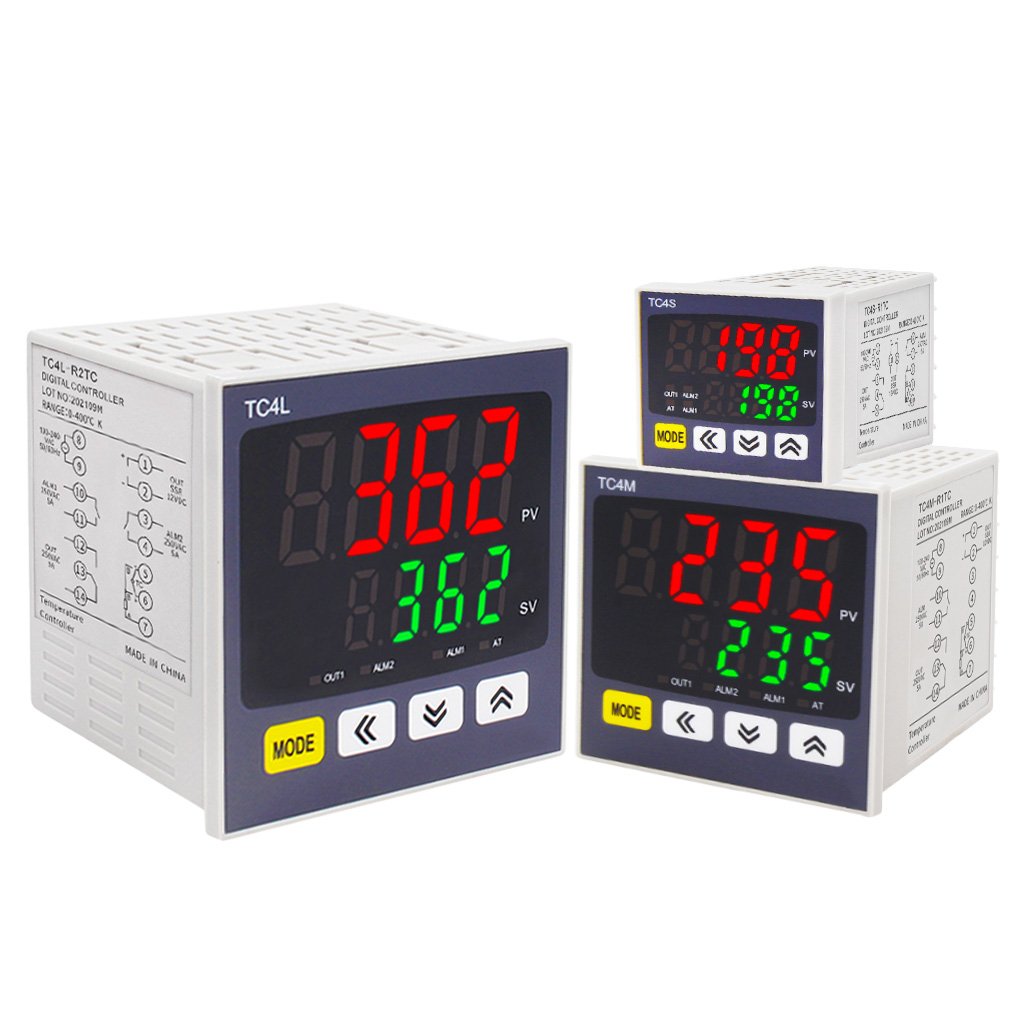
Supports various input and output sizes; available dimensions include 48×48 mm, 48×96 mm, 72×72 mm, 96×96 mm, and 96×48 mm.
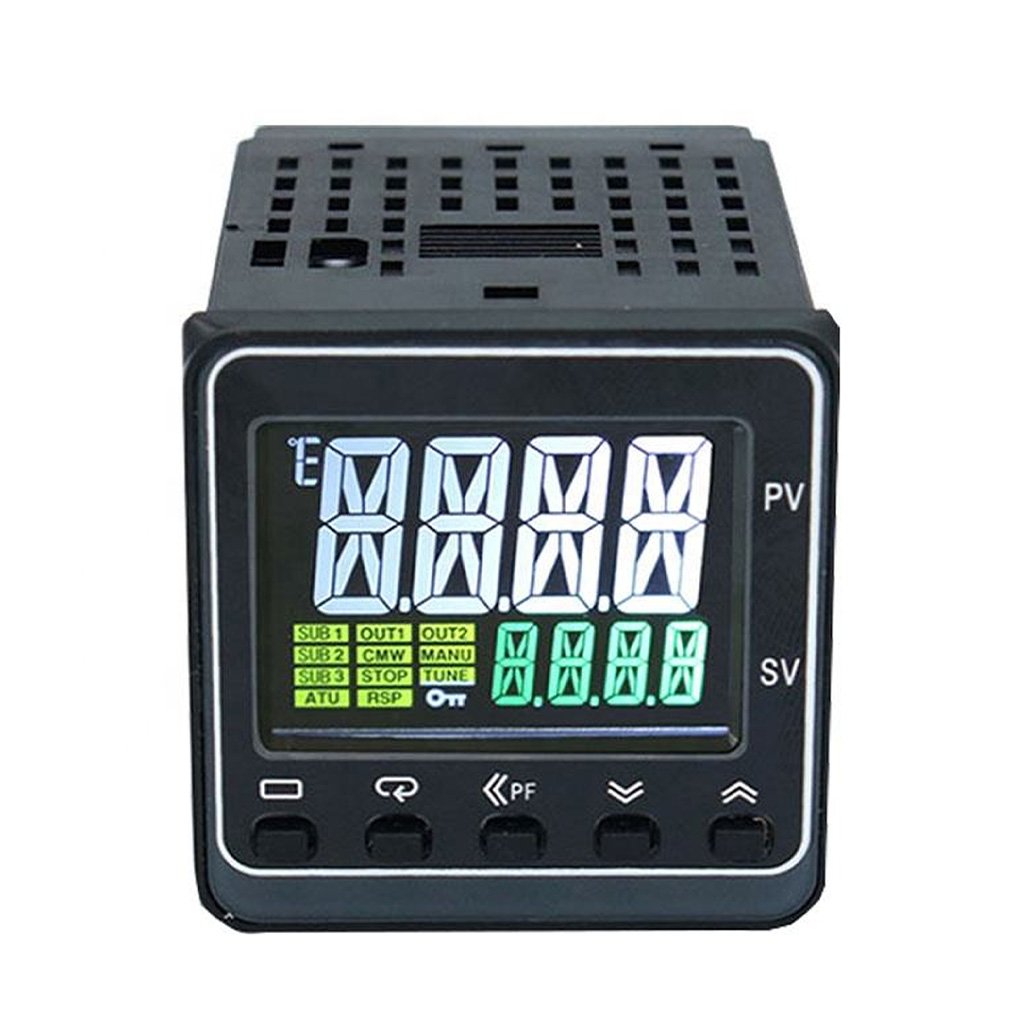
Supports multiple inputs and outputs, features an alarm function, and has dimensions of 48 x 48 mm.
Feature of Panel Mount Temperature Controller
The LCTC panel mount temperature controller offers numerous advantages and is designed to provide you with reliable temperature control.

The LCTC panel mount temperature controller features an RS485 interface and displays process and setpoint values in real time, enabling operators to quickly assess status, troubleshoot faults, and minimize operational errors.

The LCTC panel mount temperature controller integrated Auto-Tuning function automatically calculates the optimal PID parameters, reducing startup time and minimizing temperature overshoot, resulting in improved temperature stability and faster production start-up.

The LCTC panel mount temperature controller compact embedded panel can be seamlessly integrated into the control panel, eliminating the need for a separate operating unit and reducing wiring length, thereby optimizing space utilization in the electrical cabinet.

The LCTC temperature controller can be quickly assembled and disassembled thanks to snap fasteners; the controller can be easily maintained or replaced without having to dismantle the entire control cabinet, making operation more convenient.
Reducing Temperature Fluctuations and Saving Energy
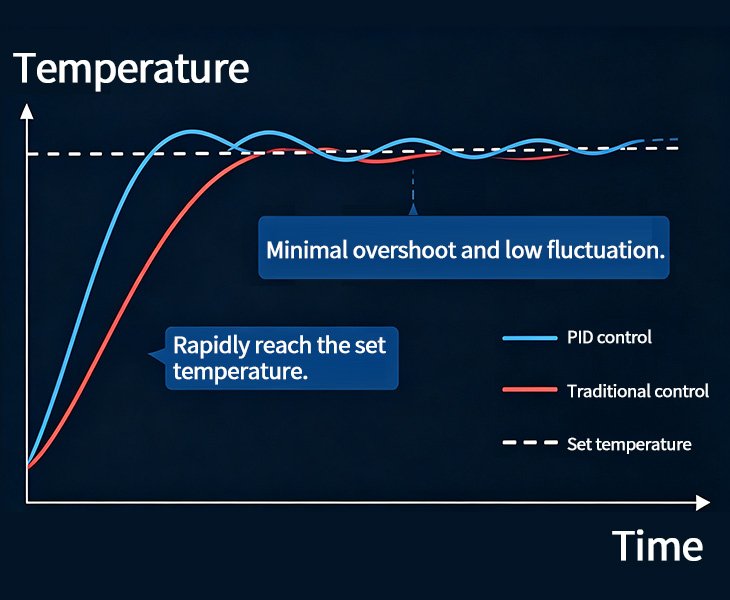
LCTC panel mount temperature controller features PID regulation, Auto-Tuning, and an SSR output, effectively enabling energy savings. Compared to conventional regulators, PID-controlled temperature regulators can minimize temperature fluctuations and overshoot, thereby reducing unnecessary heating cycles and saving energy. Poor PID parameter settings can lead to slow heating, frequent overshoots, and prolonged oscillations; however, automatic parameter optimization (Auto-Tuning) adjusts these parameters automatically, enabling the system to reach and maintain the desired state more efficiently while saving energy. In combination with an SSR output to achieve proportional control, this method ensures a more uniform output, prevents overheating, and improves energy efficiency.
Standardized and Easy Panel Installation
LCTC panel mount temperature controller uses internationally standard panel dimensions 48×48 mm, 48×96 mm, 96×48 mm, 72×72 mm, and 96×96 mm. It can be installed directly without modifying the control panel, effectively reducing installation effort and minimizing downtime. In addition, internationally standardized dimensions are effectively compatible with other systems, facilitating equipment upgrades or replacements and rationalizing standardized design and mass production for original equipment manufacturers (OEMs). Thanks to their uniform dimensions, multiple controls can be arranged in a regular pattern; this clear arrangement is not only aesthetically pleasing but also facilitates operation and maintenance.
Panel Mount Temperature Controller Resource Download
Why you Choose LCTC PID Panel Mount Temperature Controller

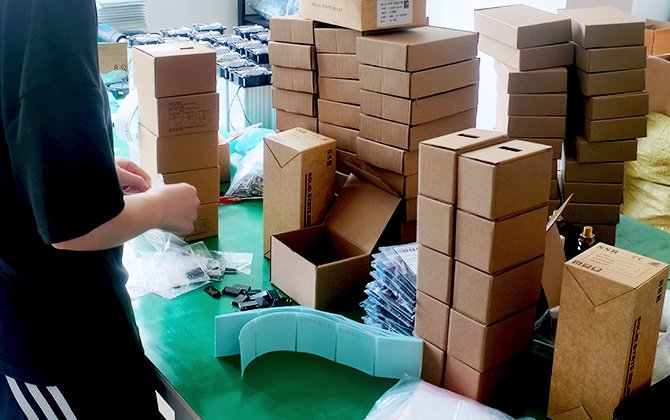
LCTC not only sells products but also works closely with customers to overcome challenges in thermal control and enhance system performance. By choosing the LCTC temperature controller for your switchgear installation, you are opting for a reliable temperature control solution supported by high-quality service both before and after purchase. We consistently strive to build long-term partnerships based on mutual trust, consistent quality, and prompt service response.
Application of Panel Mount Temperature Controller
Thanks to features such as versatile input and output compatibility and fast response time, the LCTC panel mount temperature controller is suitable for a wide range of industries and application scenarios.

The LCTC panel mount temperature controller is used in the plastics and rubber processing industry, where even minor temperature fluctuations can have an impact. The temperature controller achieves precise and stable temperature regulation through PID control and Auto-Tuning functions, effectively ensuring consistent product quality. Typical equipment includes injection molding machines, extrusion lines, blow molding machines, rubber vulcanizing presses, hot runner systems, plastic recycling equipment.

Food production requires precise temperature control; inadequate regulation can compromise product quality and hygiene, lead to flavor variations and reduced shelf life, and pose risks to food safety. Thanks to its precise temperature control and fast response, the LCTC panel mount temperature controller effectively stabilizes temperature regulation in switchgear installations and minimizes the occurrence of such issues. Typical equipment includes baking machines, food dryers, pasteurization systems, chocolate melting equipment, and frying machines.

temperature fluctuations can lead to weak sealing seams, product leakage, or packaging damage. LCTC panel mount temperature controller assembly can minimize temperature fluctuations and maintain temperature stability, making it ideal for the packaging industry. Typical equipment includes continuous sealing machines, vacuum packaging machines, shrink wrapping machines, blister packaging machines, cup sealing machines.
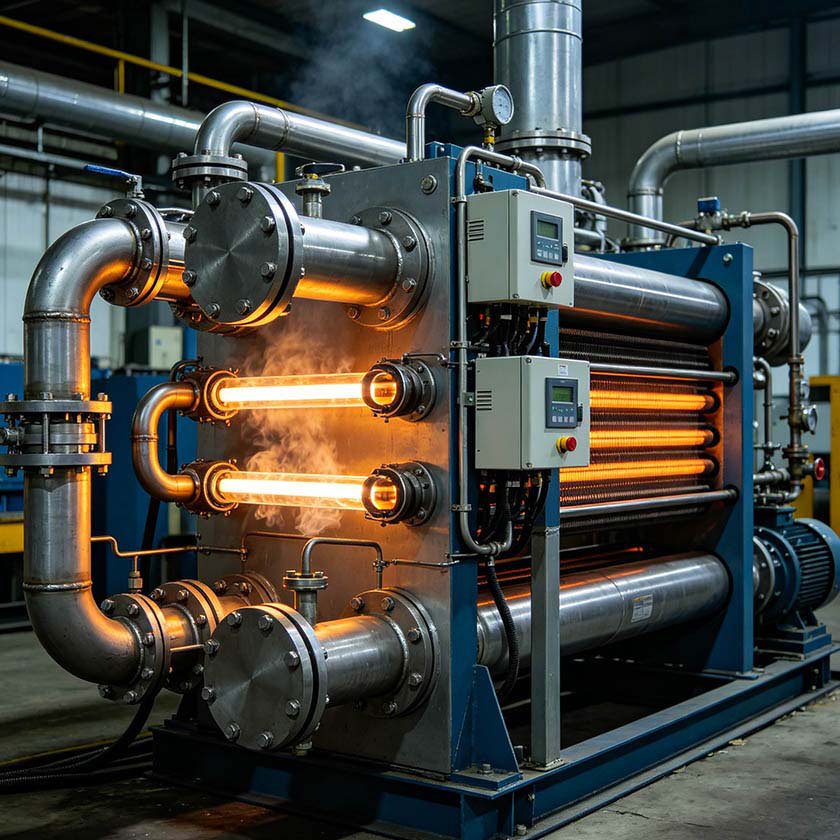
Industrial heating systems are typically operated in demanding environments, making stable temperature control essential. The LLCTC panel mount temperature controller feature precise PID temperature regulation, ensuring long-term stable operation while effectively reducing unnecessary energy consumption. Typical equipment includes electric furnaces, heat treatment furnaces, industrial ovens, drying chambers, heating cabinets, annealing equipment.

Printing processes typically require precise temperature control during the ink drying and lamination phases, as temperature fluctuations can easily affect print quality and production efficiency. The LCTC panel mount temperature controller construction ensures precise temperature regulation, resulting in stable pressure output and reliable equipment operation. Typical equipment includes laminating machines, hot stamping machines, drying tunnels, printing presses, label printing equipment.

Testimonials
We have replaced the old equipment on several injection molding machines with panel mount temperature controller. The PID control has proven exceptionally stable, and the dual display allows our operators to quickly monitor data, significantly reducing setup times when switching production lines.
Plastic Manufacturing CompanyWe use panel mount temperature controller in continuous heat sealing machines, it operated extremely stably even during continuous operation of nearly 20 hours. The Auto-Tuning function significantly simplified adjustment, and the device maintained a constant temperature throughout the entire extended operating period.
Packaging Equipment Manufacturer
The LCTC panel mount temperature controller supports universal inputs, including thermocouples (types K, J, E, T, and S) and RTDs (such as Pt100, Cu100, and Cu50).
First, prepare a panel cutout that matches the controller’s specified dimensions, insert the controller from the front of the control panel, and secure it using the supplied mounting brackets or clips from the rear.
Then you can connect the power supply, temperature sensor (thermocouple or RTD), and output terminals according to the wiring diagram. Select the appropriate input type and configure the required control parameters through the front-panel menu after wiring.
Finally, after completing all installation steps, the controller is ready for PID Auto-Tuning, you can enable it to automatically optimize control performance for your specific heating system.
LCTC supports installation in common sizes such as 48×48 mm, 48×96 mm, 96×48 mm, 72×72 mm, and 96×96 mm.
Yes. In most cases, the LCTC panel mount temperature controller can replace an existing temperature controller, provided that the dimensions of the panel cutout fit and the power supply, sensor type, and output configuration are compatible.
Yes, indeed, the LCTC panel mount temperature controller are also digital display temperature controllers that can simultaneously show both PV and SV values.
LCTC provides single-channel and two-channel panel mount temperature controller.
Yes, the LCTC panel mount temperature controller supports both RS485 and Modbus-RTU protocols, enabling seamless integration into PLC systems, HMIs, SCADA systems, and other industrial automation equipment.
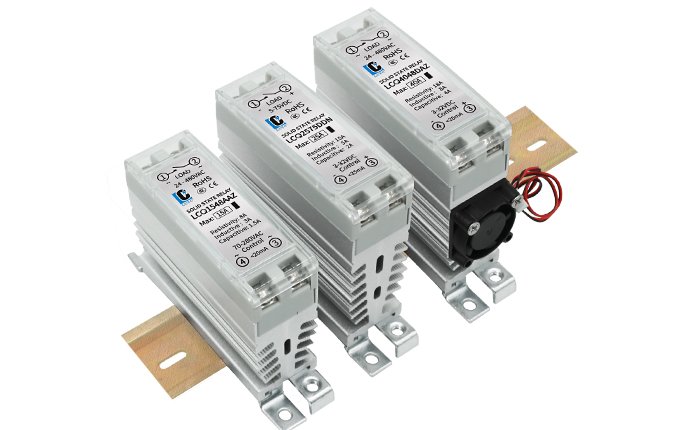
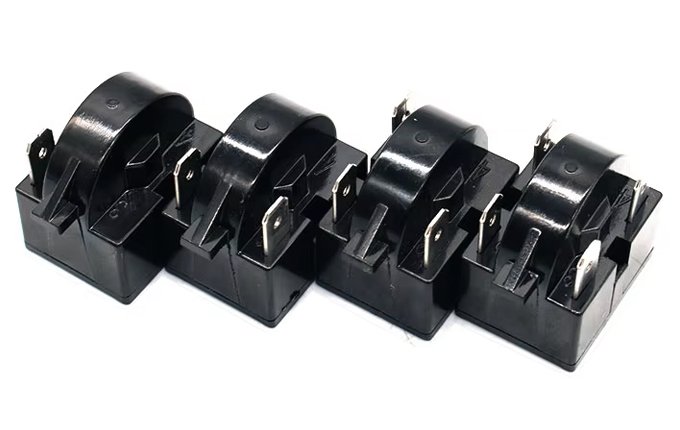
What Is the Difference Between Panel Mount and DIN Rail Temperature Controllers?
Selecting the appropriate temperature controller helps maximize the system’s performance, enabling precise temperature regulation and high stability. Even if other core functions remain unchanged, temperature controllers vary significantly in terms of operation, maintenance, and application scenarios depending on their installation type. The two most widely used installation methods today are the switchboard mounting and the track-mounted installation; so what exactly are the differences between them?
What is Panel Mount Temperature Controller?
This is a mounting type designed for direct installation into an electrical panel or machine wall, based on standard dimensions for both the front panel and the cutout size. Common panel size include 48×48 mm, 48×96 mm, 96×48 mm, 72×72 mm, and 96×96 mm, with corresponding panel cutout size of 45×45 mm, 45×92 mm, 96×45 mm, 68×68 mm, and 92×92 mm.
The complete dimensions of the panel size and the corresponding panel cutout size are as follows:
Temperature Controller Panel Size And Panel Cutout Size | ||
DIN Size | Panel Size | Panel Cutout Size |
| 1/32 DIN Vertical | 24 × 48 mm | 22.5 × 45 mm |
| 1/32 DIN Horizontal | 48 × 24 mm | 45 × 22.5 mm |
| 1/16 DIN | 48 × 48 mm | 45 × 45 mm |
| 1/8 DIN Vertical | 48 × 96 mm | 45 × 92 mm |
| 1/8 DIN Horizontal | 96 × 48 mm | 92 × 45 mm |
| 72 mm Square Panel | 72 × 72 mm | 68 × 68 mm |
| 1/4 DIN | 96 × 96 mm | 92 × 92 mm |
| 1/2 DIN Horizontal | 96 × 192 mm | 92 × 188 mm |
| 1/2 DIN Vertical | 192 × 96 mm | 188 × 92 mm |
What is DIN Rail Temperature Controller?
This is a temperature controller installed inside the control cabinet on a standard 35mm rail. Since it is mounted within the cabinet, external interfaces are typically required rather than direct configuration operations on the device. This installation method is also a universal standard, making centralized control and automation more convenient.
Panel Mount vs DIN Rail Temperature Controller
Feature | Panel Mount | DIN Rail |
| Installation | Mounted on the front control panel | Mounted on a DIN rail inside the cabinet |
| User Interface | Built-in LED display and keypad | Usually operated through PLC or HMI |
| Monitoring | Real-time PV/SV display | Remote monitoring via automation system |
| Maintenance | Easy front-panel replacement | Requires opening the control cabinet |
| Requirements | Standalone machines and operator interaction | Centralized automation and multi-device control |
| Typical Equipment | Ovens, packaging, plastics, food machinery | PLC cabinets, process automation, building control |
Which One Should You Choose?
If your automated systems require manual interventions, such as frequent adjustments to temperature settings by operators, monitoring of process values, or quick replacement of controllers during maintenance, a panel mount temperature controller is the more suitable choice for you.
If your system heavily relies on automation and centralized monitoring, a DIN rail temperature controller offers greater flexibility.
How to Select the Right Temperature Sensor for a Temperature Controller
The temperature sensor monitors the actual temperature and sends a signal to the temperature controller, which then adjusts the output power accordingly to maintain the set temperature. Therefore, selecting the right temperature sensor is crucial for precise and stable temperature control. How should we proceed in choosing the appropriate sensor?
When selecting a temperature sensor, factors such as temperature range, accuracy, response time, operating environment, and compatibility with the temperature controller must be considered. The two most widely used sensor types today are thermocouples and RTDs.
Thermocouple VS RTD: Which Sensor Should You Choose?
Thermocouples offer a wider measurement range, faster response times, and greater durability, which is why they are widely used in industrial heating applications. Thermocouples are better suited for systems exposed to rapid temperature changes; typical examples include injection molding machines, industrial ovens, and packaging machines.
RTD sensors offer higher accuracy and more stable long-term performance, making them better suited for applications requiring greater precision in temperature measurement, such as laboratory equipment, food processing systems, and testing instruments.
Please check before selecting a temperature sensor whether your temperature controller supports this output type to ensure compatibility between the sensor and the controller.
A comparison of the specific sensor types is as follows:
Sensor Type | Advantages | Disadvantages | Typical Applications |
| K Type Thermocouple | Wide temperature range, fast response, durable, cost-effective | Lower accuracy compared with RTD sensors | Industrial ovens, plastic processing machines, packaging equipment |
| J Type Thermocouple | Affordable, reliable, good performance in general applications | Limited temperature range compared with K type | General industrial heating systems |
| T Type Thermocouple | Good accuracy at low temperatures, stable performance | Not suitable for very high-temperature applications | Laboratory equipment, cooling systems |
| S Type Thermocouple | Excellent high-temperature resistance, long service life | Higher cost and slower response | Furnaces, heat treatment equipment |
| Pt100 RTD Sensor | High accuracy, excellent stability, good repeatability | Higher cost and slower response than thermocouples | Food processing, laboratories, precision temperature control |
| Cu50/Cu100 RTD Sensor | Good accuracy and suitable for low-temperature measurement | Limited temperature range | General temperature monitoring applications |