
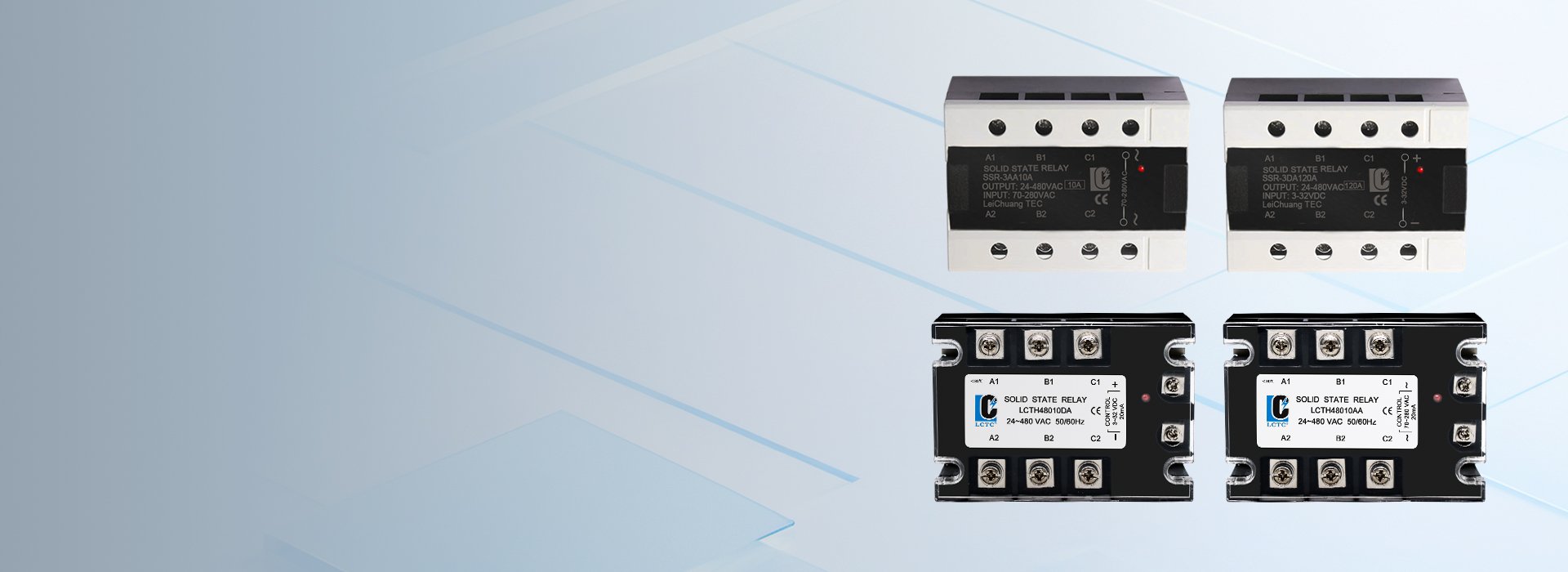
Three Phase Solid State Relay Produced for Long-Term Use
If you work in the field of industrial automation, you probably know the frustration caused by the frequent breakdowns of traditional relays. LCTC three phase solid state relay can help you solve this problem.
LCTC is a company with nearly 10 years of experience in manufacturing electronic components. All our products are certified to meet international professional standards, especially the three-phase static relay have reliable safety and quality. You’ll find it in a wide range of applications, such as the fields of industrial automation, security systems, medical and laboratory equipment, we hope to help you improve your equipment.
If you are considering modernizing your electrical installation, you can send us a request and we will reply to you as soon as possible.
LCTC Product
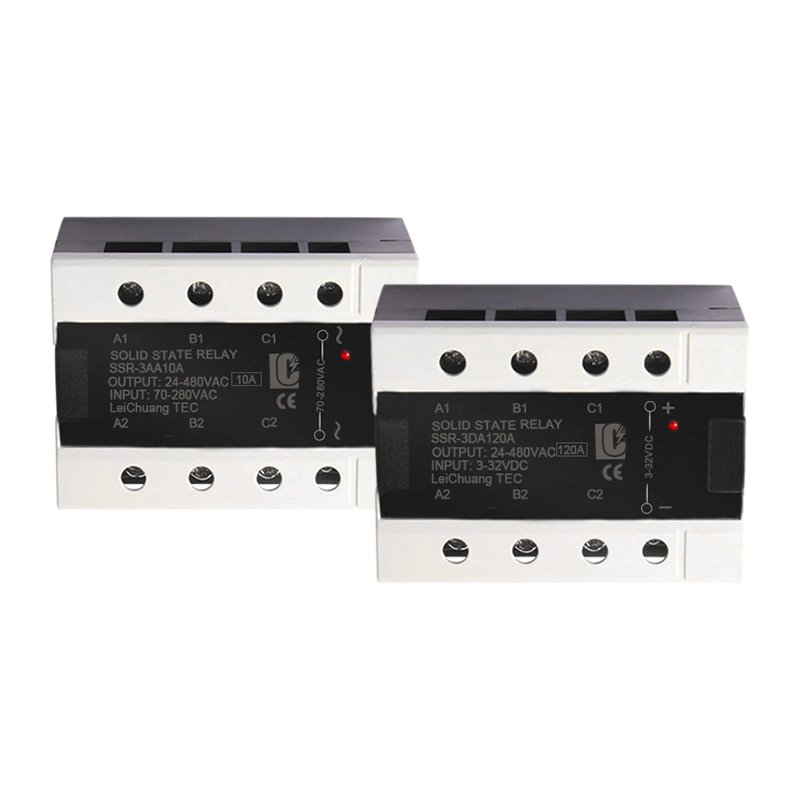
LCTC three phase solid state relay are classified into two types according to their models.
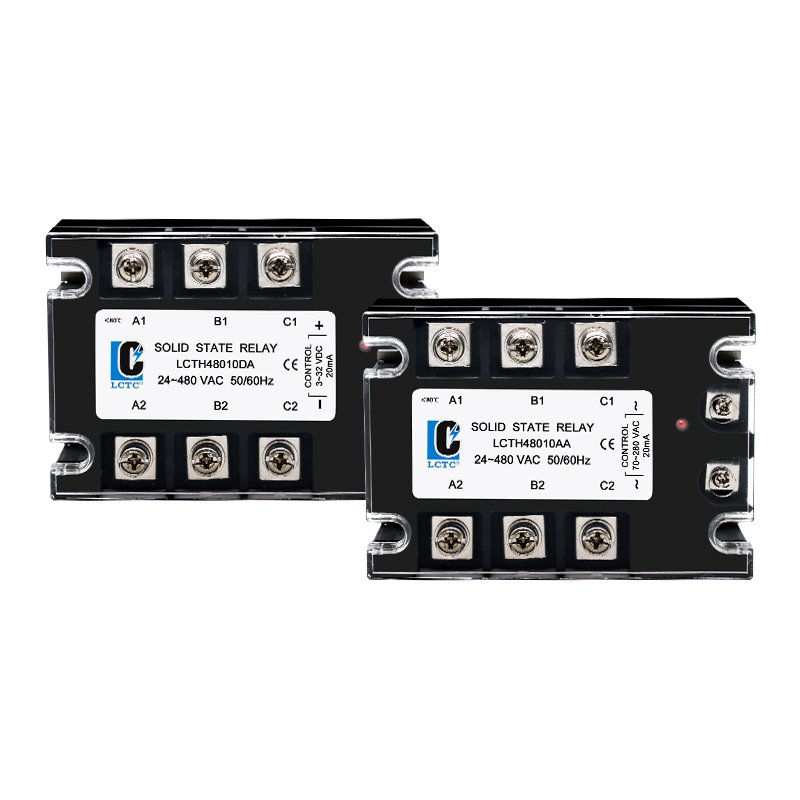
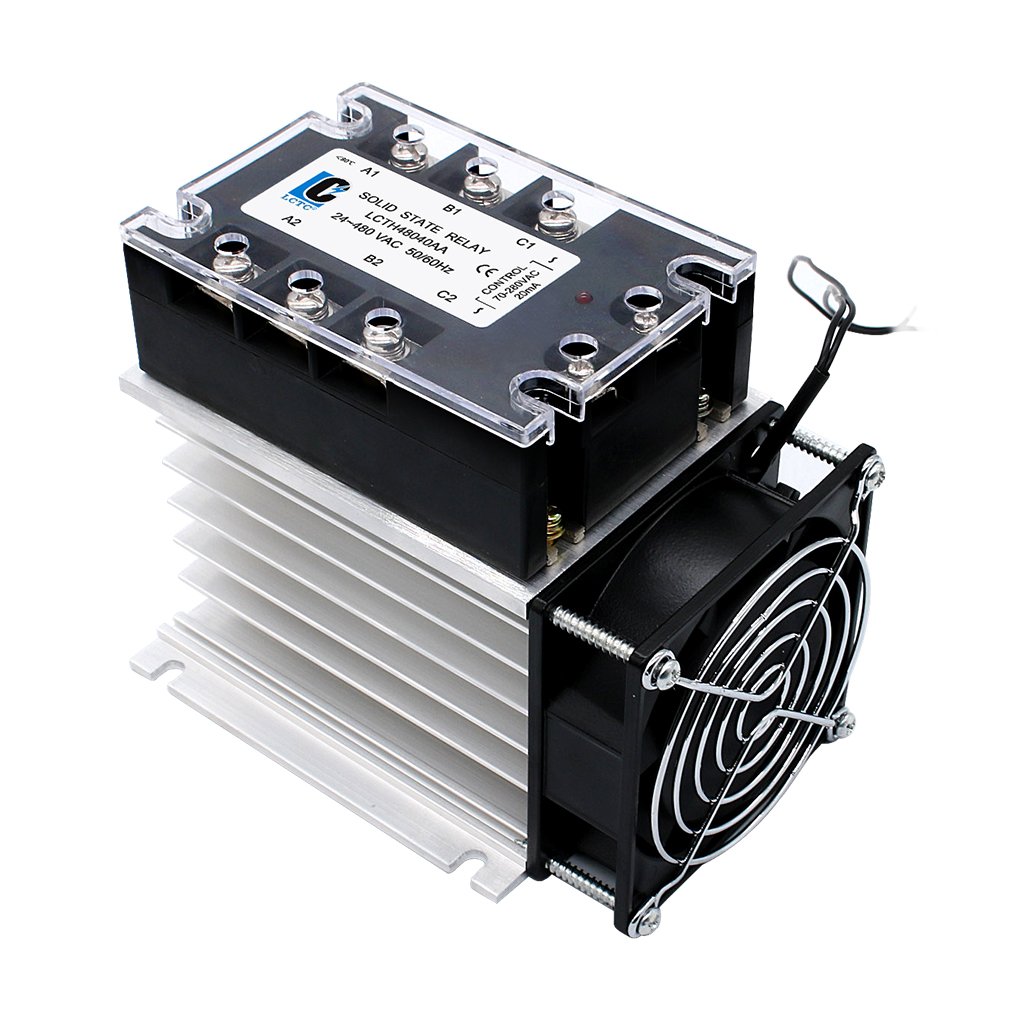
DA Three-Phase Solid State Relay (SSR) with Heat Sink: LCTH48040DA
AA Three-Phase Solid State Relay (SSR) with Heat Sink: LCTH48040DA
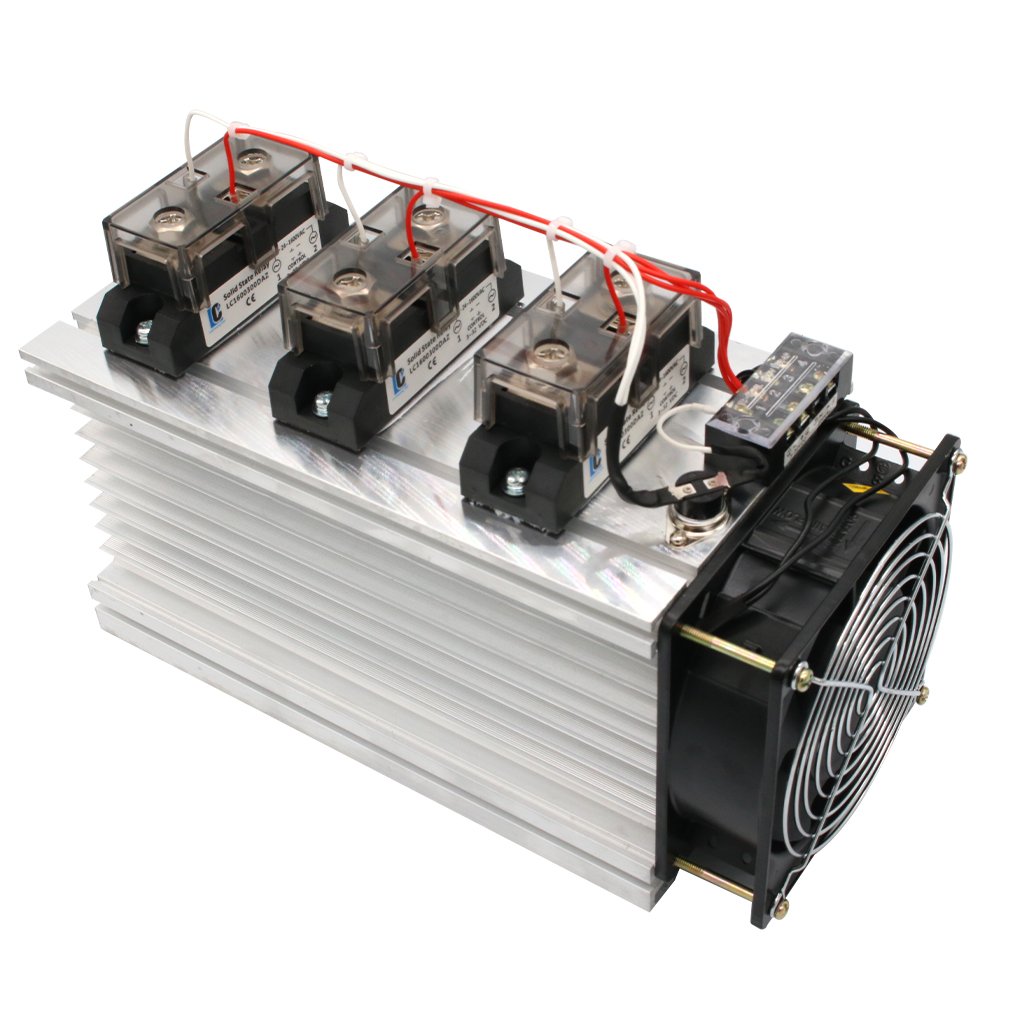
DA Industrial-Grade Three-Phase Solid-State Relay with Heat Sink:LC1600DAZ
AA Industrial-Grade Three-Phase Solid-State Relay with Heat Sink:LC1600AAZ
Feature of Three Phase Solid State Relay
LCTC three phase solid state relay has several advantages and deserves to be chosen.

It has A wide current range, supporting 10a to 200a, to meet the needs of various loads such as resistive, inductive and capacitive loads.

It is protected by an epoxy resin coating, which offers some degree of protection against dust, moisture and corrosive gases from the outside environment.

The LCTC three phase solid state relay is highly adaptable and can be customized to meet your needs for different loads.

Its installation is very convenient; LCTC provides a detailed user manual to guide you through the installation process.
Environmentally Friendly Three Phase Solid State Relay
The LCTC three-phase solid state relay adopts a non-contact design, reducing wear, preventing spark formation and arc formation, and enhancing safety. Its advantages are that it generates very little electromagnetic interference, can reduce energy consumption, extend service life, eliminate the need for frequent replacement, and lower energy consumption, and complies with RoHS
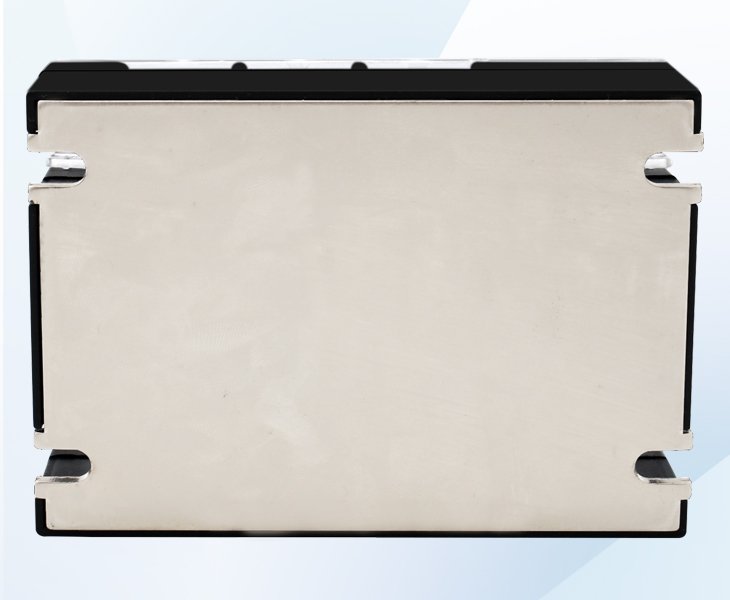
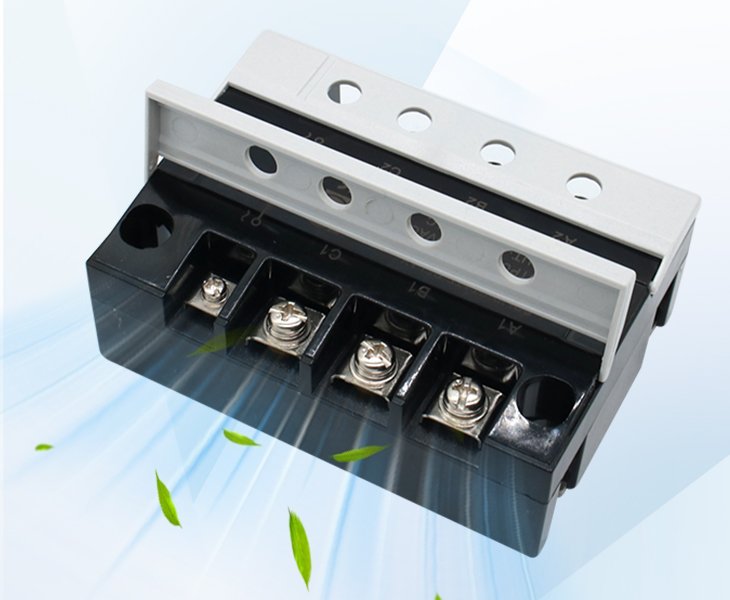
Operate Stably Even Under Harsh Conditions
The LCTC three phase solid state relay is equipped with LED lights to check its operating status at any time, so facilitating the monitoring of its performance. zero-cross or random turn-on options offer great flexibility for system configuration. It built-in RC over voltage protection circuit, with a maximum peak voltage of 1000V. It is also particularly suitable for environments where staff cannot work for long periods. Besides, it also has some resistance to high temperatures, making it suitable for environments that require heat dissipation or have poor ventilation.
You should consider parameters such as load type, operating voltage, rated current, and control voltage, among others.
If your load is resistive, you can program the SSR to activate at zero-crossing, which reduces electromagnetic interference; if it’s an inductive load, you may choose a random turn-on SSR or one with high-voltage transient protection, capable of handling surge currents and voltage spikes.
Secondly, a nominal intensity higher than the normal operating intensity of the load must be selected, leaving sufficient margin to meet operational requirements. If necessary, the system should also consider compatibility with the PLC.
The selected rated current must always be higher than the load’s normal operating current.
For resistive loads, the rated current can be selected with an appropriate safety margin based on the actual load current.
For inductive loads, in addition to providing an adequate safety margin, it is necessary to take into account the starting current and the inrush current.
You should also consider temperature and heat dissipation conditions, as the actual current conduction capability of three-phase SSRs is also affected by operating temperature.
The LCTC three-phase SSR supports AC loads from 24 to 480 VAC and DC loads from 5 to 220 VDC. Additionally, you can choose between control output specifications of 3 to 32 VDC and 70 to 280 VAC, allowing you to adapt them to your control signal source, such as a PLC.
This is because the actual current conduction capability of the three-phase SSR is also affected by operating temperature.
Calculate the required load current based on the load power and three-phase supply voltage. For a balanced three-phase load, you can use I = P / (√3 × V × PF), where P is the load power, V is the line-to-line voltage, and PF is the power factor. For resistive loads, the power factor is typically close to 1.
Once the operating current has been calculated, it is essential to select a nominal current with sufficient margin to account for requirements arising from continuous operation, starting current, heat dissipation, and other factors.
Following the LCTC product connection diagram, connect the SSR control output to the control signal and connect the three output channels to the corresponding load cables.
Before making the connection, ensure that the control voltage matches the nominal input voltage of the three-phase SSR and the load voltage.
For three-phase SSRs used in high-load or continuous operation environments, it is recommended to equip them with a heat sink. The required thermal dissipator dimensions typically depend on the SSR’s load current, ambient temperature, operating time, and other conditions.
In low-current or intermittent operating environments, a heat sink is not always necessary.
You should take into account factors such as actual load current, power consumption, ambient temperature, and maximum allowable temperature. The greater the load current, the more heat is generated, so a heat sink with lower thermal resistance is required.
Yes, LCTC three-phase SSRs can control three-phase motors, but the motor parameters must match those of the SSR, such as motor voltage, operating current, starting current, and inductive load characteristics, among others.
LCTC three-phase SSRs use semiconductor components to control the connection and disconnection of three-phase loads. They are characterized by fast switching speed, the absence of mechanical contacts, and quiet operation, although their thermal dissipation is limited. Ideal for situations requiring frequent changes, precise control, industrial automation, and more.
Contactors operate using mechanical contacts, but they produce considerable noise when switching and are prone to mechanical wear over time. They are suitable for high-power loads, motor control, or applications requiring physical isolation.
The choice of the appropriate equipment depends on the specific application environment and particular requirements.
Yes, as long as the PLC system output signal matches the parameters of the LCTC three-phase SSR, they will be compatible.
In fact, three-phase SSRs are commonly used together with PLCs in industrial automation systems, temperature control systems, motor drives, and other similar applications.
Yes, and the heat generated in high power operation is very noticeable. Overheating may result in intermittent or permanent failure of the three-phase static relay. So in most cases, it’s necessary to combine it with a heat sink to facilitate its cooling.
It is mainly used for long service life, fast switching speed, shock and vibration resistance and low power consumption, which are very advantageous features in the industrial field.
A LCTC three phase solid state relay and three single-phase static relays have the same basic function, but there are still differences in the functional details. It has better matching of internal parameters and higher timing control, avoiding equipment vibration and ensuring more uniform heat distribution. Besides, its design is more compact, it takes less space and its installation is easier.
Generally, it is recommended to use a fast-acting semiconductor fuse to prevent short circuits or overcurrent in three-phase SSRs, especially in high-intensity applications.
The specific choice of the fuse depends on the three-phase SSR model, the load, and application requirements, and it is necessary to ensure that the fuse parameters are compatible with those of the SSR.
Yes, LCTC provides OEM/ODM service solutions and can also develop customized solutions for specific applications or large-volume orders.
If you need, you can send LCTC the data you provide us, such as load voltage, load current, control voltage, quantity, and others. We will recommend the most suitable model and offer a customized solution.