
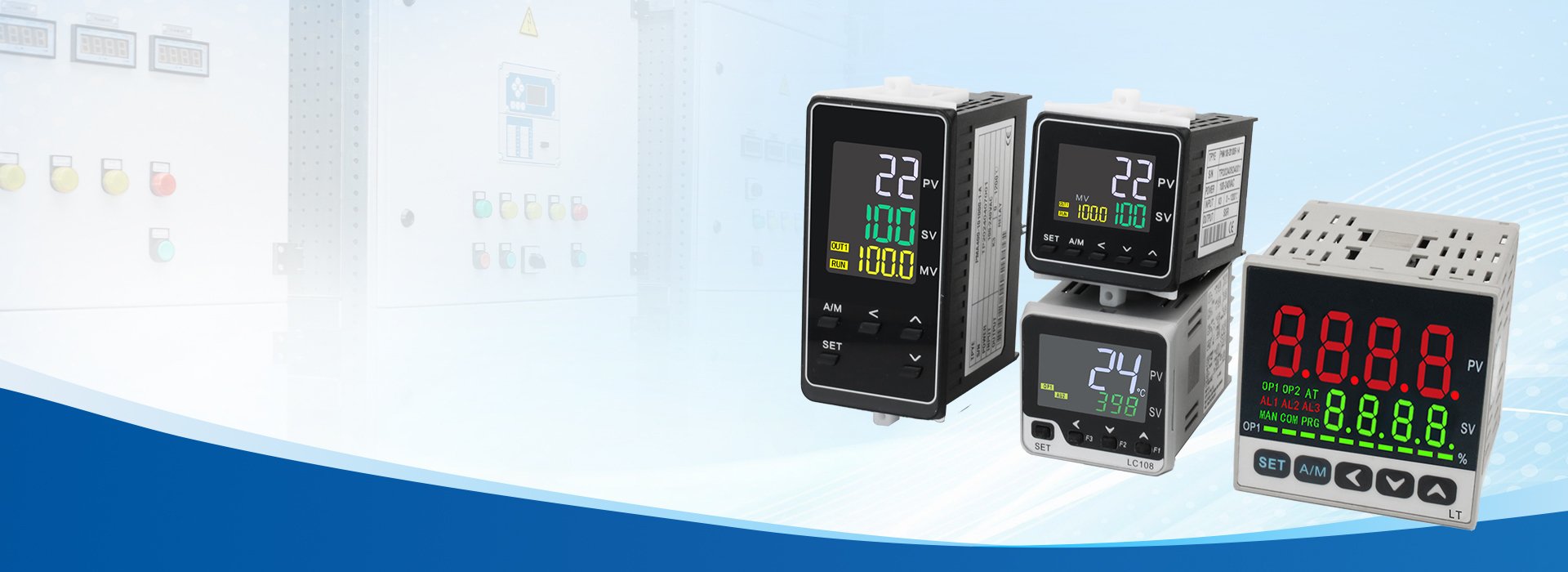
RS485 Temperature Controllers for Industrial Automation
LCTC has specialized in the manufacturing and sales of electrical components for over a decade. Our RS485 temperature controller combines precise PID control with reliable Modbus RTU communication, enabling integration into various industrial automation systems for real-time monitoring and centralized control.
The LCTC RS485 temperature controller supports various input types, including thermocouples, RTDs, and analog signals, as well as multiple output options such as relays and SSRs. It is widely used in temperature-sensitive applications, such as plastic processing, packaging machinery, food processing, and laboratory equipment, and provides a faster solution for networked and integrated management.
In addition, LCTC offers OEM/ODM customization services, ensuring fast response times, technical support, and professional, tailor-made global delivery.
If you are interested in our products, please contact our engineering team today for expert advice, customized solutions, and a fast quotation.
Product By Features
LCTC offers three RS485 temperature controller models.
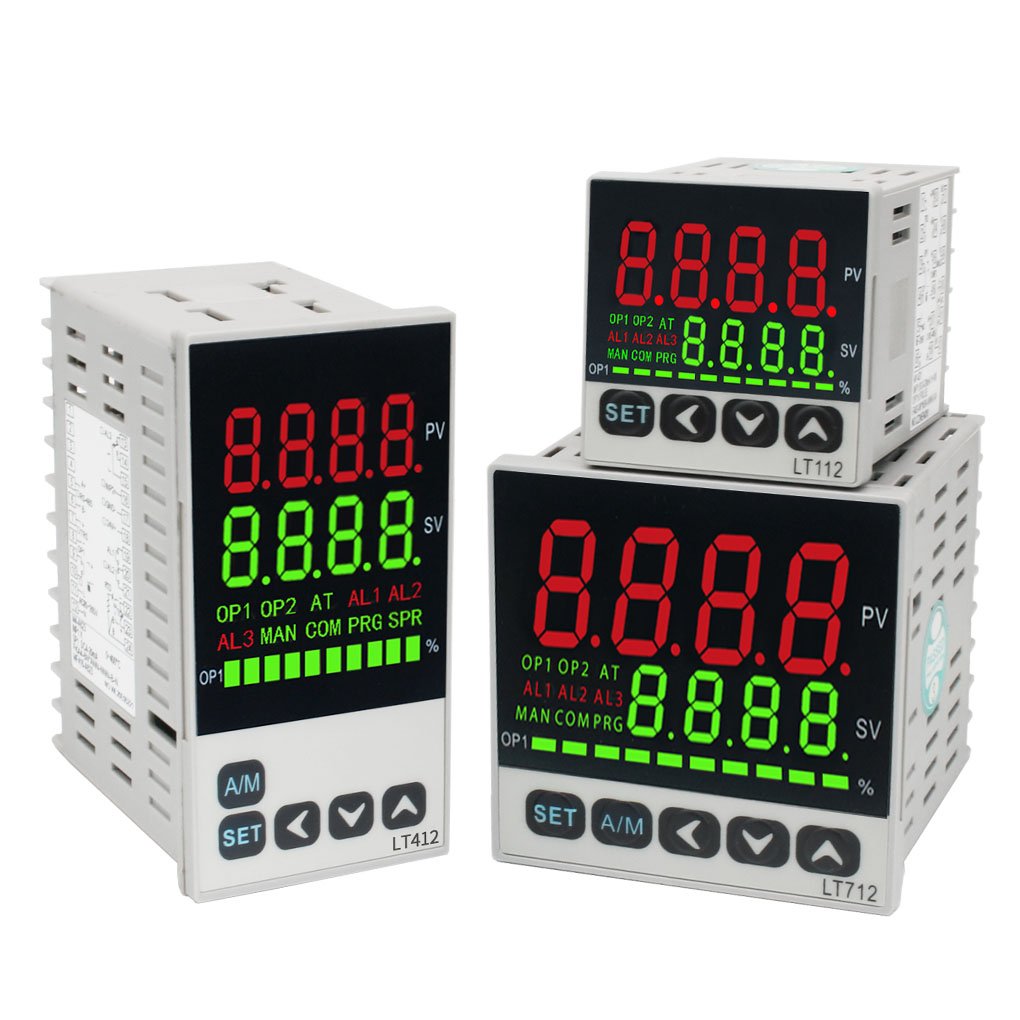
Supports various input and output types, features a digital display, and includes an integrated output scaling function.
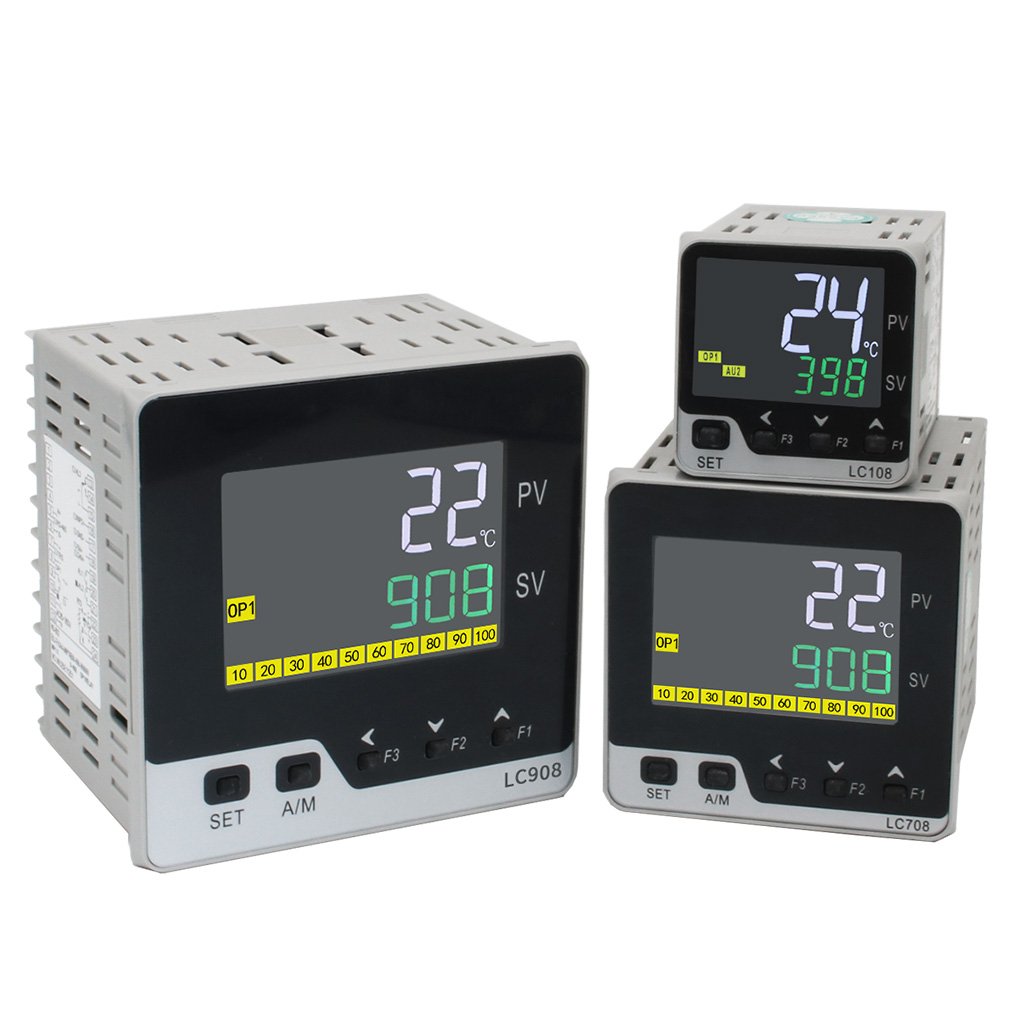
Supports dual alarm systems and RS485, features an LCD display, and allows standard panel mounting.
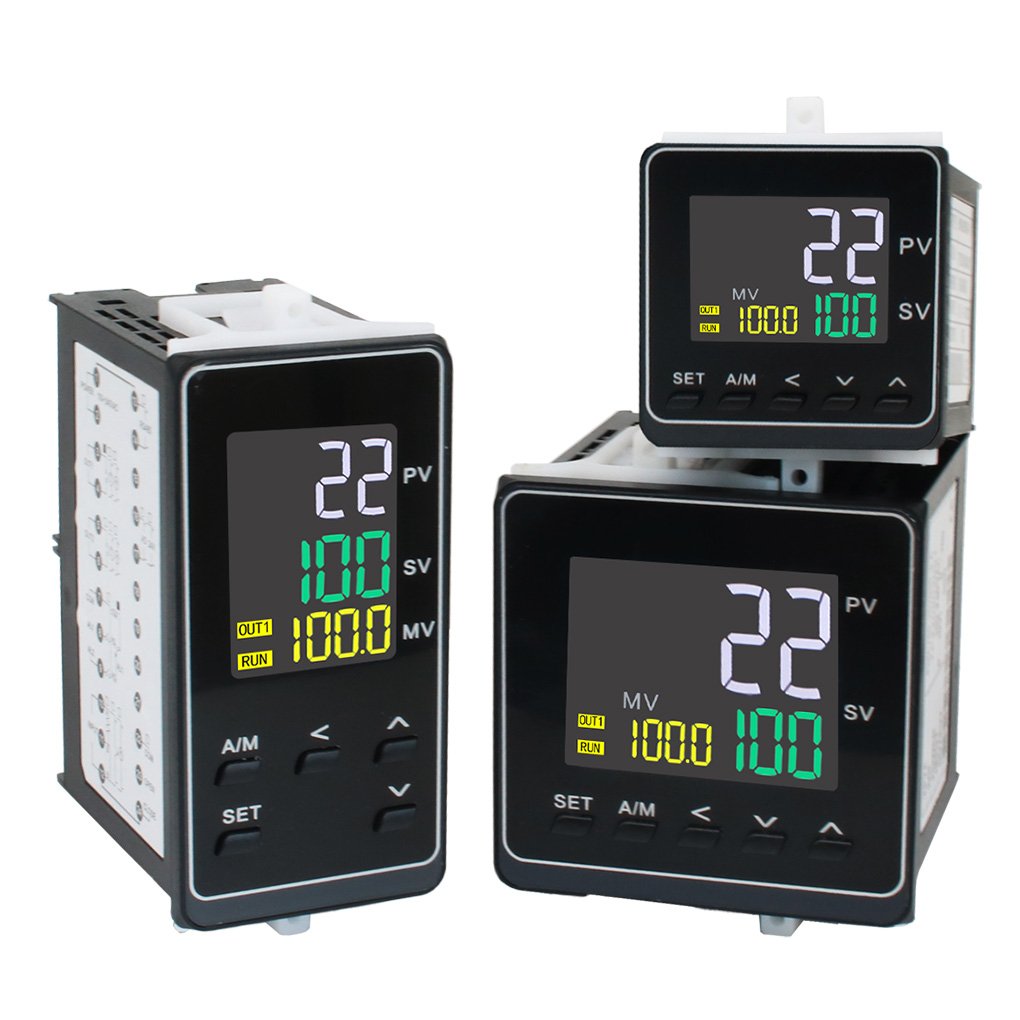
Supports multiple input and output methods; programmable.
Feature of RS485 Temperature Controller
The LCTC RS485 temperature controller offers numerous advantages and is designed to provide you with Long-distance centralized control.

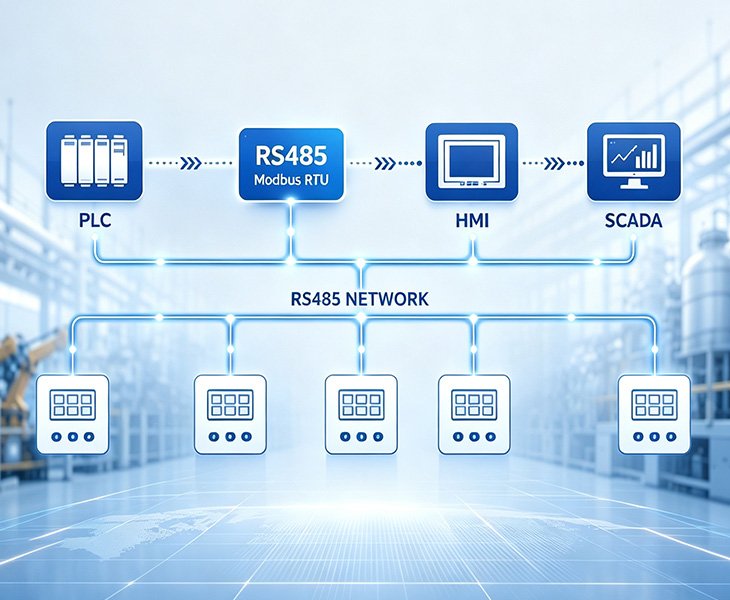
This is one of the key advantages of RS485, all controllers use the same RS485 bus, and each device has a unique communication address. The PLC reads data from individual controllers sequentially, eliminating the need to run separate communication cables for each device.

You don’t need to develop proprietary communication protocols; instead, you can directly use the built-in Modbus functionality. This reduces debugging time, enables faster integration of temperature data into SCADA or MES systems for centralized monitoring and data logging, and simplifies integration with PLC systems.

You can simultaneously meet the requirements for process monitoring and plant protection: By configuring alarm outputs and utilizing various alarm modes, anomalies can be detected earlier, downtime risk is reduced, and the safety and stability of the plant are enhanced.

RS485 uses differential signal transmission, providing significantly higher resistance to electromagnetic interference in industrial environments compared to RS232. As a result, communication remains stable over long distances. The technology supports both high-speed and low-speed communication, allowing the transmission range to be adjusted according to baud rate to minimize communication interruptions and data loss.
Modbus RTU Compatibility
The LCTC RS485 temperature controller interface supports Modbus RTU communication, enabling seamless integration into modern industrial automation systems such as PLCs, HMIs, and SCADA; the Modbus RTU temperature controller’s standardized protocol simplifies system integration. You don’t need to configure each controller individually on site; instead, you can manage multiple temperature controllers through a central control system. Enable remote reading of process temperatures, adjustment of setpoints, tuning of PID parameters, monitoring of alarm conditions, and control of plant operations to improve operational efficiency.
Communication over an RS485 network improves scalability, simplifies the expansion of automation systems, and minimizes both cabling effort and installation costs. System integration can also be implemented across manufacturers, providing greater flexibility for future system upgrades and expansions.
RS485 Temperature Controller Resource Download
Modbus RTU RS485 Temperature Controllers for PLC Systems
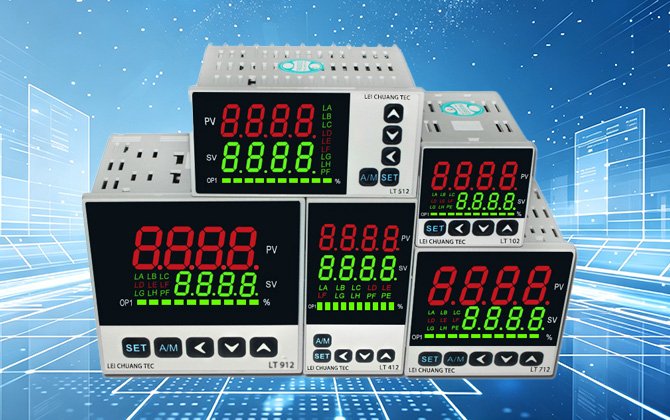

LCTC specializes in high-performance system integration and networked RS485 temperature controllers. Thanks to advanced PID algorithms and versatile input/output options, LCTC’s RS485 temperature controllers ensure precise temperature regulation. Product quality and customer satisfaction are always our top priorities. Our products undergo professional quality control to ensure they meet local standards. In addition, we offer flexible OEM/ODM services, fast delivery times, and professional technical support to meet the specific requirements of various industries. Choosing LCTC means choosing proven products, an extremely responsive service, and a solid, long-term partnership.
Application of RS485 Temperature Controller
RS485 temperature controllers are used across various industries, making automation easier.
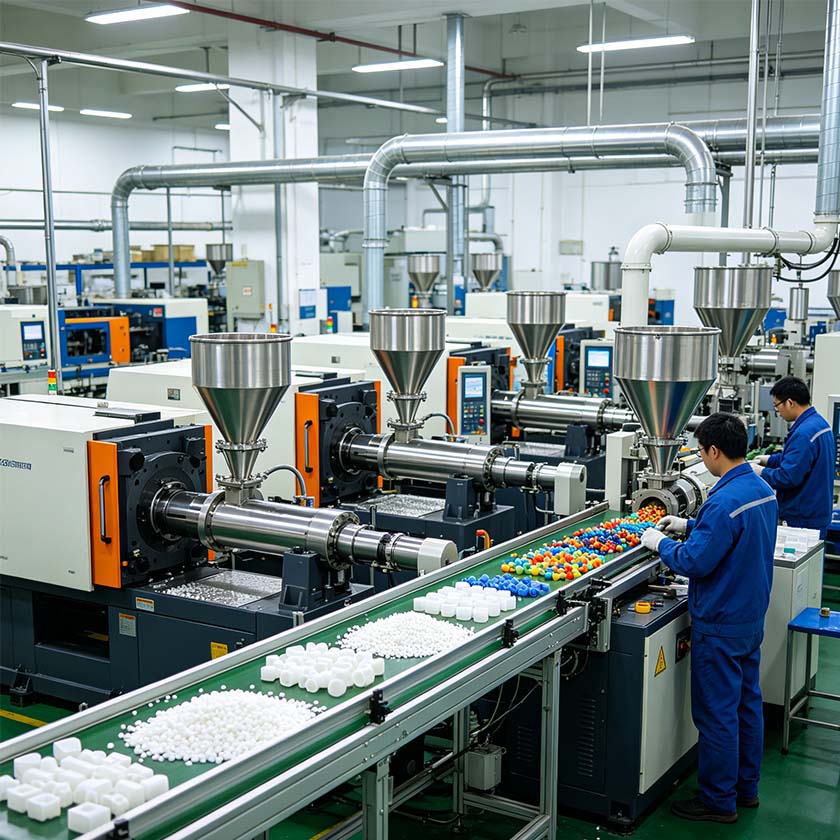
In the plastics industry, several temperature zones are typically used, each equipped with its own controller. Manually adjusting parameters for each zone is not only inefficient and prone to errors, but also prevents the transmission of temperature data to the PLC. The use of the LCTC-RS485 temperature controller in this industry enables centralized control across multiple temperature zones, automatic temperature recording, and uniform parameter adjustment. Typical equipment includes injection molding machines, extruders, blown film machines, and hot runner systems.

The use of the LCTC RS485 temperature controller in this industrial sector enables centralized monitoring from the control room, remote PID tuning, and networked furnace operation. This facilitates communication over long distances and central monitoring of furnace temperature, reducing the need for manual inspections and improving production consistency. Typical equipment includes annealing furnace, vacuum furnace, drying oven, heat treatment furnace.

This industry places strict requirements on food safety, with temperature playing a crucial role; this includes continuous temperature monitoring throughout the entire process, traceability of temperature, and automatic PLC control. The LCTC RS485 temperature controller enables automatic temperature data recording, automatic alarm notification, and remote monitoring, meeting HACCP requirements. Typical equipment includes pasteurizer, sterilizer, fermentation tank, baking oven.

This industry is highly sensitive to temperature. During each production run, temperature, time, and any alarm notifications indicating deviations must be recorded. RS485 communication is essential to ensure the transmission of all data to the SCADA system, thereby meeting GMP, FDA data logging, audit trail, and centralized monitoring requirements. Typical equipment includes sterilizer, incubator, reaction vessel, freeze dryer.
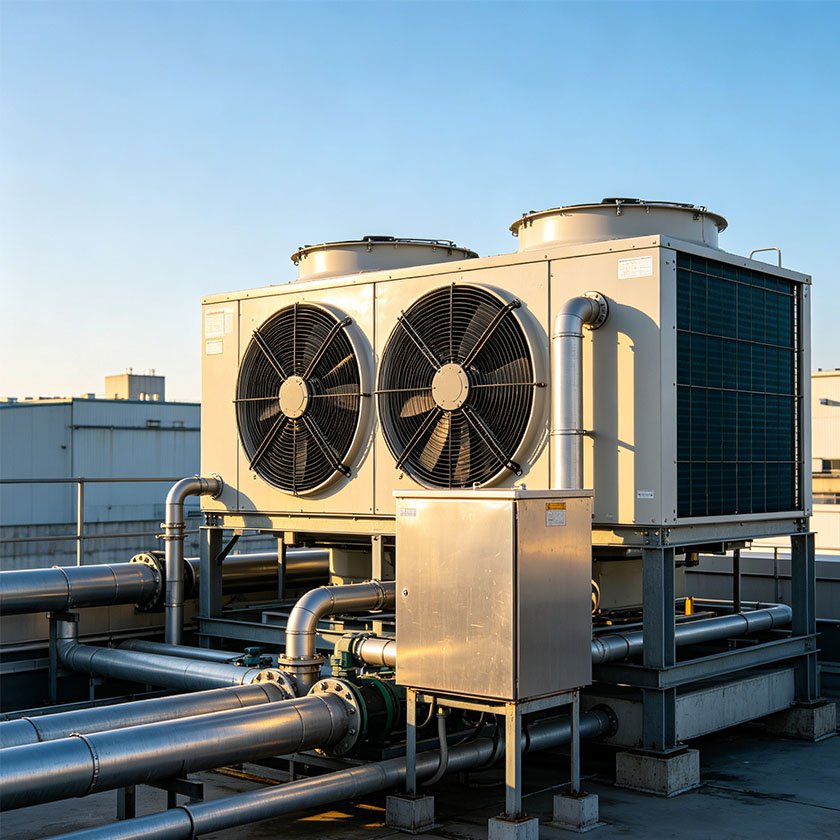
The LCTC RS485 temperature controller enables centralized management, energy savings, remote maintenance, and the networking of multiple devices. It is ideally suited for HVAC systems and enables the integration of dozens of controls throughout the building into the building management system (BMS), making it perfect for building automation. Typical equipment includes air handling units, chillers, boiler, cooling tower.
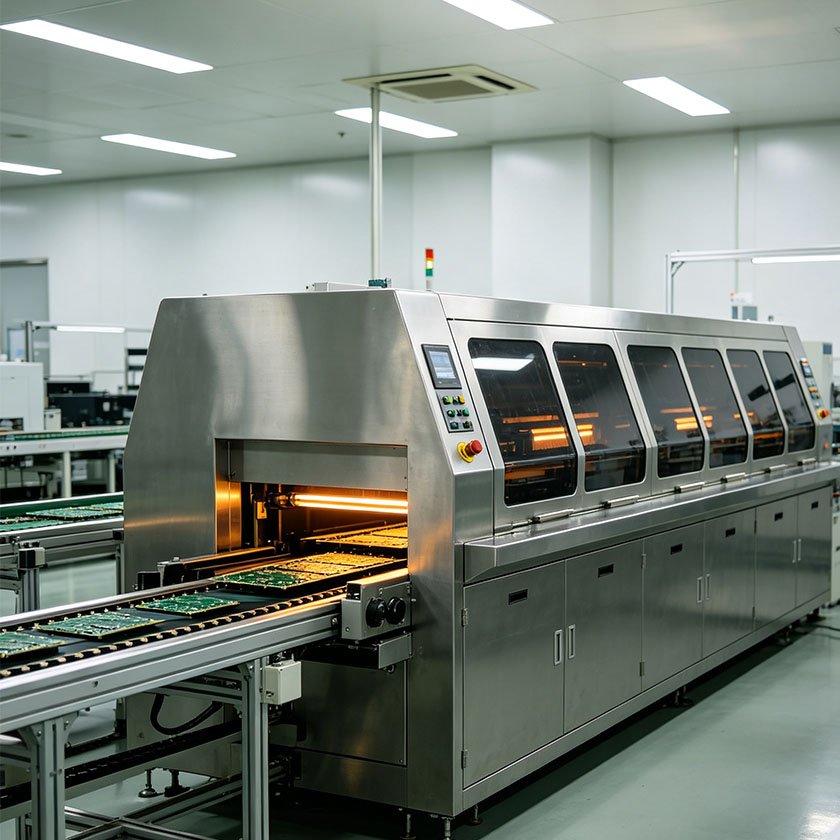
This industry requires extremely precise temperature control and strict adherence to tolerance limits across multiple temperature zones. The LCTC RS485 temperature controller supports communication with PLC or SCADA integration, enabling centralized control, remote monitoring, real-time adjustments, and production data logging, features that have practically made it an industrial standard. Typical equipment includes reflow ovens, wave soldering machines, burn-in test chambers, environmental test chambers, semiconductor processing equipment, electronic component aging systems.

In this industry, large-scale installations are often distributed across hazardous or restricted areas, making manual operation impractical. The LCTC RS485 temperature controller enables stable communication over long distances to central monitoring and control of multiple heating zones, thereby facilitating continuous production management and data logging. Typical equipment includes chemical reactors, mixing tanks, jacketed vessels, heat exchangers, storage tanks, continuous processing systems.

Testimonials
We integrated these RS485 temperature controllers into our plastic extrusion line. The Modbus RTU communication worked perfectly with our PLC, allowing us to monitor and adjust all temperature zones from a single HMI. Compared to before, the installation layout is now clearer, and daily operations are more comfortable and efficient.
Automation EngineerWe use these RS485 temperature controllers on several industrial heat treatment furnaces. Despite the considerable distance from the central control panel, RS485 remote communication has proven to be extremely stable; we can now monitor the system via the SCADA system, modify data, and receive alarm notifications, leading to improved efficiency.
Production Manager
A standard RS485 network allows connection of up to 32 controllers to a single bus, with each controller assigned a unique Modbus RTU address.
Under normal conditions, the communication range of an RS485 network can typically reach 1,200 meters (4,000 feet), although the actual range may be affected by factors such as baud rate, cable quality, wiring configuration, and environmental interference. By using high-quality cables, suitable termination resistors, and lower communication speeds, the transmission range can be effectively increased.
Yes, some or all LCTC temperature controllers support the PID auto-tuning function, which automatically calculates the optimal PID parameters for the heating or cooling process.
Compared to a standard temperature controller, RS485 temperature controller includes a communication interface that enables remote monitoring and control through PLCs, HMIs, or SCADA systems using the Modbus RTU protocol, It also supports multi-device networking, making it ideal for automated production lines, multi-zone temperature control, and industrial applications where centralized management and long-distance communication are required.
RS232 temperature controller is designed for short-distance, one-to-one communication and is typically used for standalone equipment or local configuration. RS485 is designed for communication over long distances and simultaneous control by multiple controllers, thereby supporting automation.
Yes. One PLC can control multiple temperature controllers through a shared RS485 network. Each controller is assigned a unique Modbus RTU address, allowing the PLC to communicate with individual devices separately.
The Modbus address can be set via the parameter menu or the buttons on the controller’s control panel; each controller has a unique address, ensuring independent communication within different systems. Besides, you also ensure that communication settings such as baud rate, parity, and stop bits match the host system configuration, these factors may also affect the correct configuration of the address.
The LCTC RS485 temperature controller supports common Modbus RTU baud rates such as 9600, 19200, 38400, 57600, and 115200 bps.
Check the communication wiring for incorrect polarity and ensure connections are secure; verify that Modbus RTU settings, including address, baud rate, parity, and stop bits, match those of the PLC, HMI, or SCADA system, and confirm that the address is unique. If the issue persists after following the steps above, please contact LCTC; we will provide you with technical support.
What is an RS485 Temperature Controller?
In industrial automation systems, temperature control goes beyond simple regulation; it now also includes remote monitoring, centralized management, and seamless integration. Temperature controllers with RS485 interfaces combine these functions, ensuring highly efficient operation.
What is RS485?
This is an industrial standard for communication designed for data transmission over long distances and in environments with electrical interference; unlike RS232, RS485 supports communication over long distances and enables multiple devices to share a common communication network.
How does an RS485 Temperature Controller Work?
The RS485 temperature controller integrates three key functions: temperature measurement, control, and data communication. The device receives temperature signals from sensors such as thermocouples or resistance thermometers (RTDs) and displays the actual temperature. Based on the difference between the measured temperature and the preset setpoint, the controller automatically adjusts the output via PID regulation to achieve the desired temperature.
The RS485 function enables data exchange with external systems; via Modbus RTU communication, a PLC or SCADA system can read and modify temperature values, monitor alarm statuses, adjust PID parameters, check output states, manage multiple temperature zones, and much more.
How is an RS485 Temperature Controller Installed?
The installation of the RS485 temperature controller involves four aspects: mechanical mounting, electrical wiring, sensor connection, and communication configuration.
Step 1: Mount the Temperature Controller
Temperature controllers are typically mounted either on a DIN rail or as a switch panel assembly; for the switch panel installation, determine the appropriate cutout dimensions on the control panel, insert the controller, and secure it using mounting brackets.
Step 2: Connect the Temperature Sensor
Select a temperature sensor suitable for the application according to the specific use; common sensor types include K, J, E, T, S, Cu100, Cu50, and Pt100. A faulty sensor connection may result in inaccurate temperature readings or sensor malfunction.
Step 3: Connect the Control Output
The output terminal is typically connected to heating or cooling devices; common output types include relay output, SSR output, voltage output, and current output.
Step 4: Connect RS485 Communication Wiring
Typically, the connections are labeled with A(+) and B(-), and twisted-pair communication cables are used for connecting devices such as PLCs and HMIs. When multiple controllers are connected to the same network, each must be assigned a unique Modbus address to ensure independent operation; additionally, settings such as baud rate, parity, and stop bits must match those of the higher-level control system.
Step 5: Configure Controller Parameters
You can configure operating parameters, including temperature setpoint, PID parameters, alarm limits, sensor type, communication address, and communication speed.