
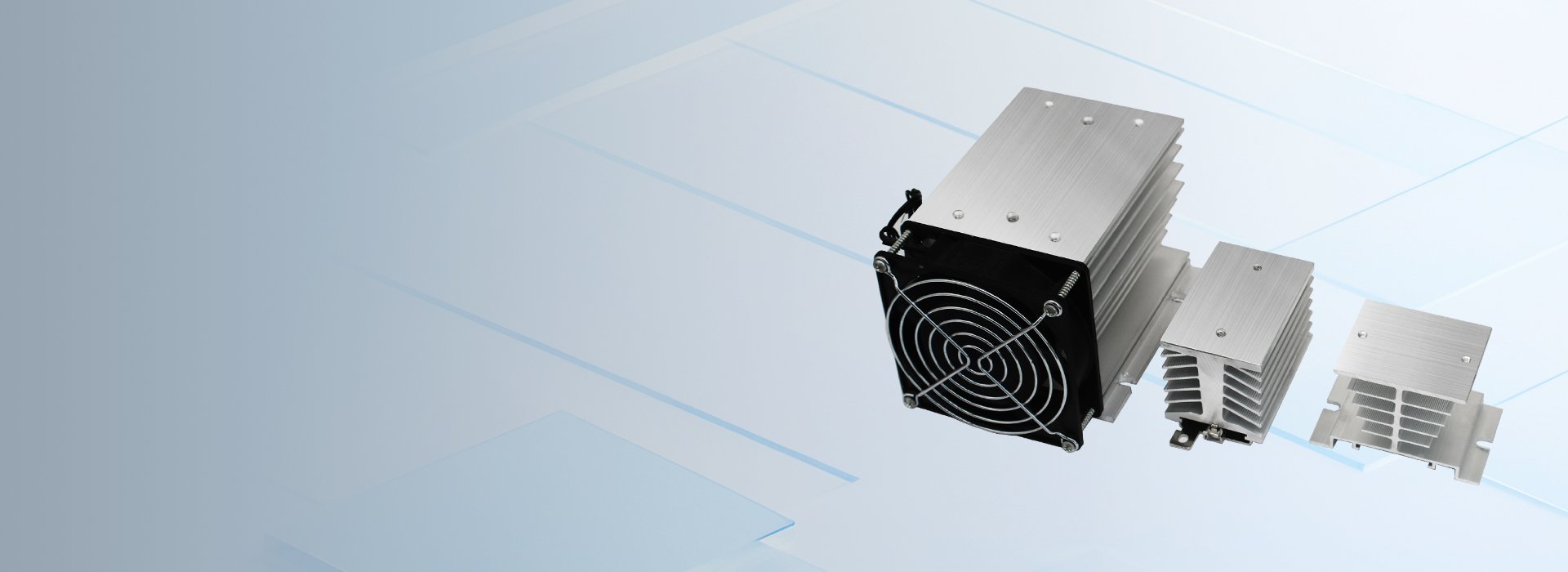
Professional DIN Rail Heat Sink Manufacturer from China
If you are looking for a DIN rail heat sink, please choose LCTC. We specialize in the production of electrical components. Our DIN rail heat sinks enhance the performance of your equipment.
LCTC products usually have reliable quality, you’ll notice that that we have international professional certifications such as CE, RoHS and ISO9001, ensuring the stable performance of long-term industrial operations.
LCTC has at least 10 years of manufacturing and sales experience and is dedicated to providing stable and reliable products. Our service team and production facilities with strictly controlled production processes in China are all committed to one goal, sell our products to the world. If you have any questions about DIN rail heat sinks, please feel free to contact us at any time.
LCTC Product
Among LCTC products, only the single-phase heat sinks feature DIN rail mounting. Therefore, the DIN rail heat sinks are available in the following models:
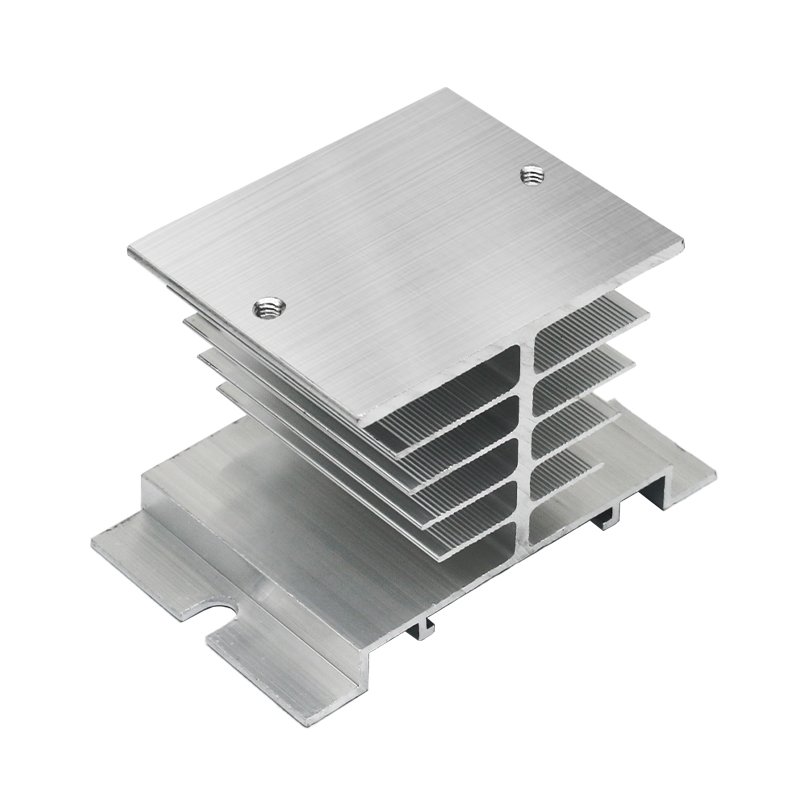
Dimensions: 80 x 50 x 50 mm; Weight: 100 g; Supports SSR currents from 10 A to 40 A.
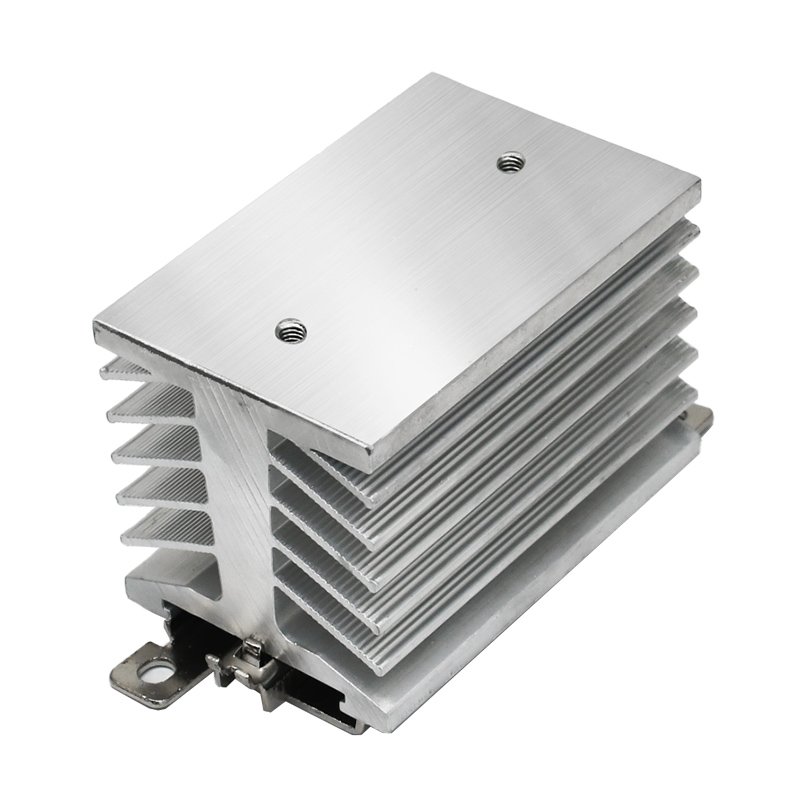
Dimensions: 74 x 48 x 54 mm; weight: 260 g; supports SSR currents from 50 to 80 A.
Feature of Products
DIN rail heat sinks offer various advantages that help ensure the stable operation of your equipment.

The LCTC DIN rail heat sink uses standard 35mm DIN rail mounting, eliminating the need for drilling or soldering and screw fastening. It simply snaps into place on the rail, enabling quick installation that reduces assembly time and labor costs.

The LCTC DIN rail heat sink is made of an aluminum alloy that ensures efficient thermal conductivity. Its optimized fin design increases the surface area, thereby improving heat dissipation, resulting in lower operating temperatures, extended service life, and stable performance.

Equipment within control cabinets is typically DIN-rail mounted, facilitating the integration of DIN-rail heat sinks, reducing wiring length, ensuring a neater layout, improving space utilization, and simplifying maintenance and expansion.

The LCTC heat sink for the hat rail is not only compatible with SSRs, but also suitable for temperature controllers, PLC systems, switching power supplies, and automation control cabinets.
Supports High Current Applications
The DIN rail heat sink is made of aluminum and features a wider base along with an increased number of cooling fins (higher in number), providing a larger surface area for air contact. This configuration promotes efficient thermal conduction and natural convection, allowing faster dissipation of generated heat into the air. Therefore, the LCTC DIN rail heat sink is better suited for applications involving continuous high-current loads, as well as installations with space constraints and critical environmental conditions. Effective heat dissipation helps extend the service life of equipment, improves availability, and reduces replacement costs.

Installing the DIN rail heat sink is very simple: first, attach it to the DIN rail, ensuring it is securely fixed in place; then, fasten the SSR or other device to the heat sink using screws. A layer of thermally conductive silicone grease can be applied to the contact surface between the device and the heat sink to improve thermal conductivity.
During installation, ensure that the cooling fins are not blocked and that there is sufficient airflow around the radiator to maximize its performance.
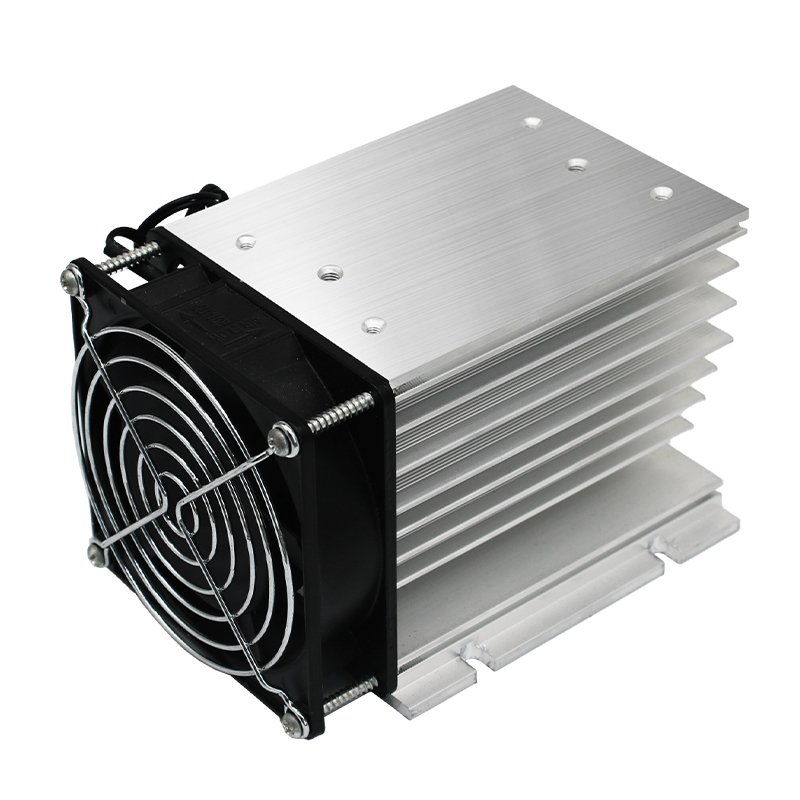
Not necessarily. A DIN rail heat sink is sufficient in a well-lit and well-ventilated environment. However, if the device operates at high current, runs continuously, or is placed in a high-temperature and poorly ventilated environment, installing a cooling fan can help improve heat dissipation.
Yes. LCTC offers customized heat sinks for DIN rails designed for OEM projects. We can tailor dimensions, mounting methods, and other specifications according to your thermal management and installation requirements, aiming to provide you with the most suitable heat dissipation solution.
Thermal resistance measures the efficiency with which a DIN rail heat sink dissipates heat into the surrounding air; lower thermal resistance indicates higher dissipation efficiency and superior cooling performance, thereby improving the operational reliability of the device.
When selecting a heat sink, carefully consider factors such as rated current, ambient temperature, airflow conditions, and operating cycle to ensure effective heat dissipation.
Although copper offers superior thermal conductivity, its cost is prohibitive; aluminum provides a better balance between economic affordability and performance characteristics, such as heat dissipation, structural lightness, and corrosion resistance, making the aluminum radiator for DIN guidance a more cost-effective choice compared to copper.
Yes, the LCTC heat sink for DIN rails is suitable for three phase solid-state relays, it can also be used with single-phase SSRs and even with SSR modules, provided that the specific model is properly selected based on factors such as the SSR’s rated current, installation environment, and heat dissipation requirements.
It is recommended to use thermal paste or a thermal pad during installation; these materials fill the microscopic gaps between contact surfaces, maximizing thermal contact between the heatsink and the SSS, thereby reducing thermal resistance and improving heat dissipation.