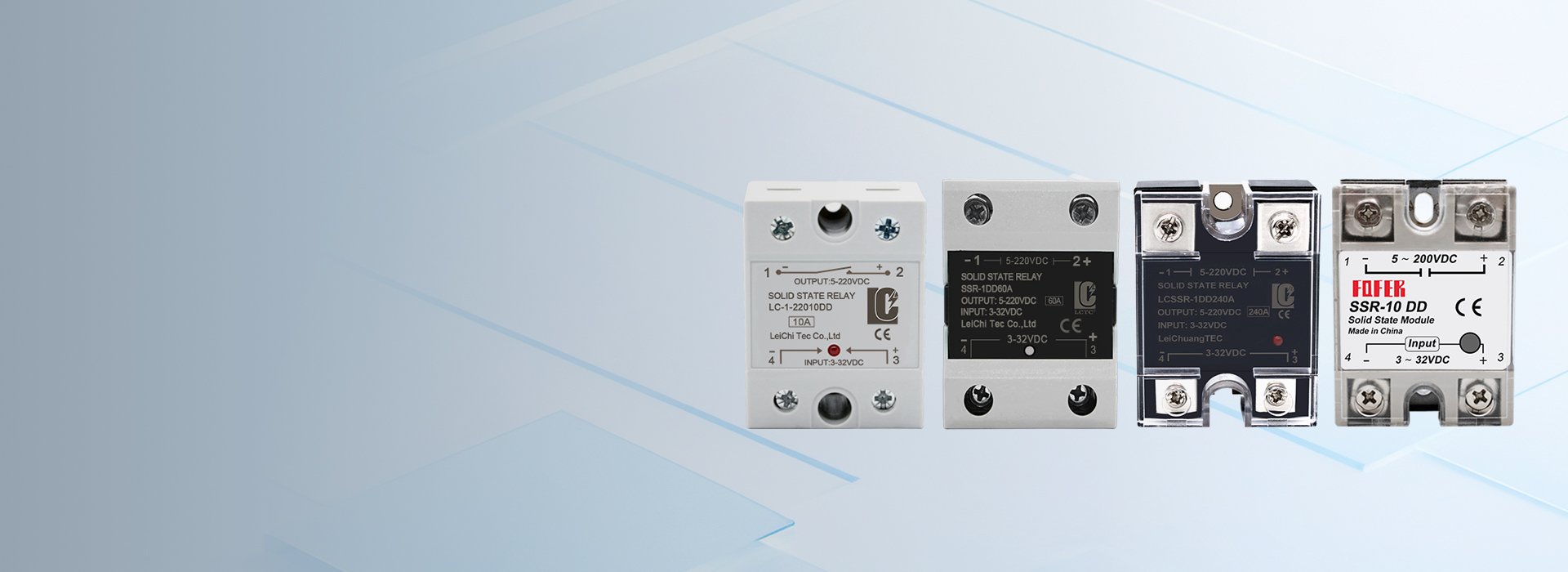
Solid State Relay DC-DC Built for Reliable Operation
If you’re working with industrial automation, you’ve probably run into DC load control. At LCTC, our solid state relay dc-dc converter is designed to solve this problem. Our team of engineers has focused on research and development, providing reliable support for equipment in sectors such as industrial automation, new energies and medical devices.
With nearly 10 years of experience, LCTC’s rigorous quality control and flexible customization services help customers optimize equipment efficiency and safety, offering better solutions for their projects.
If you are interested in the DC-DC LCTC solid state relay, please send us an inquiry and we will get back to you as soon as possible.
LCTC Product
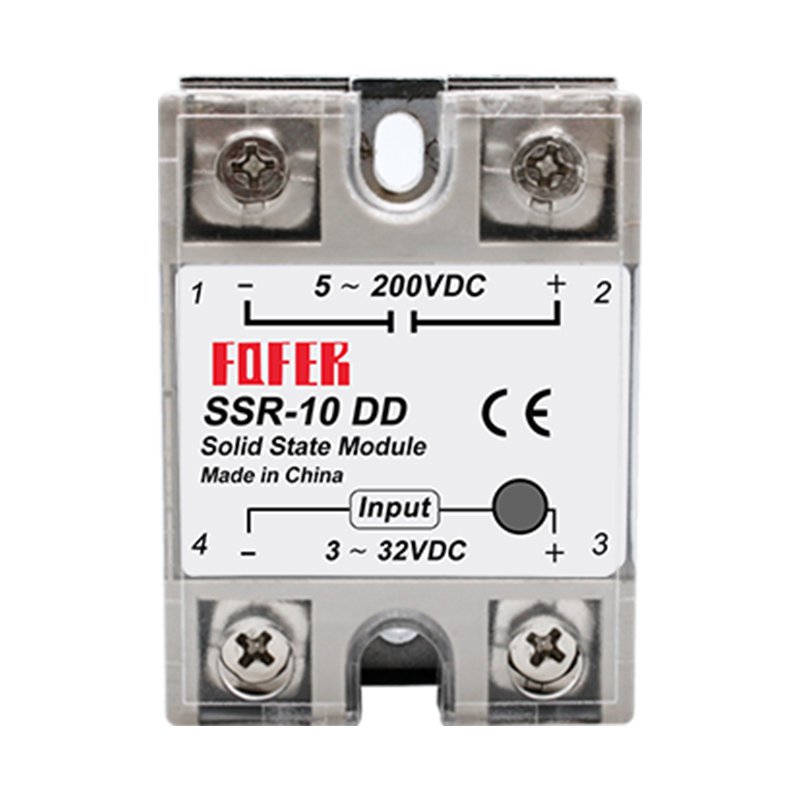
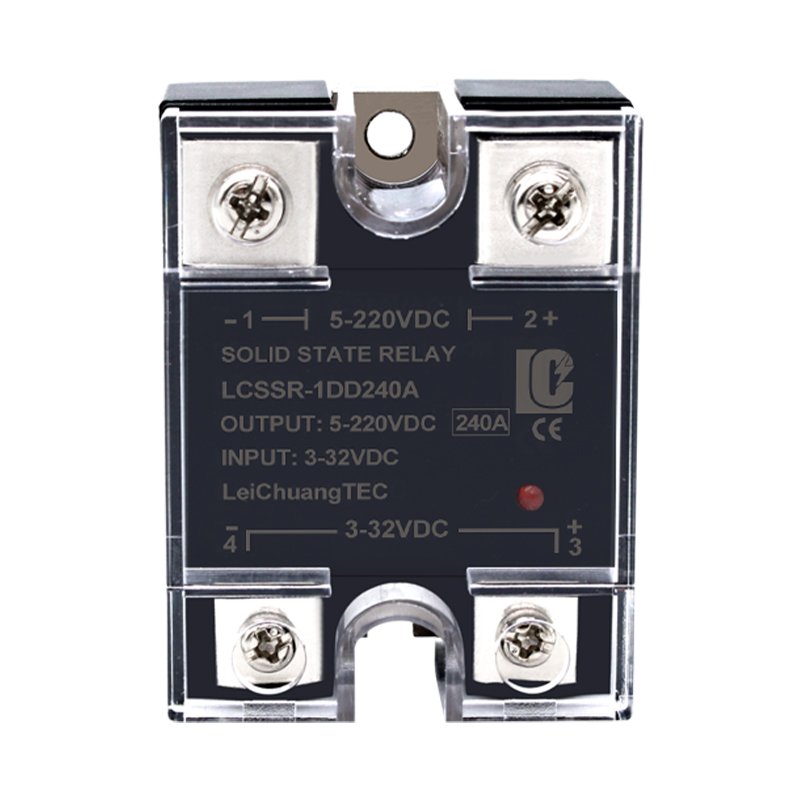
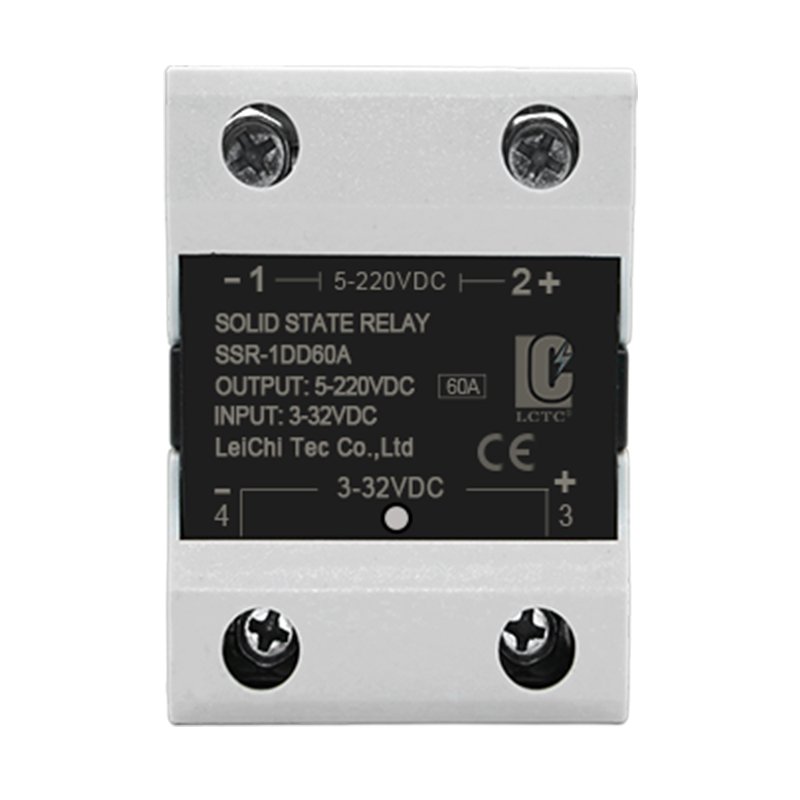
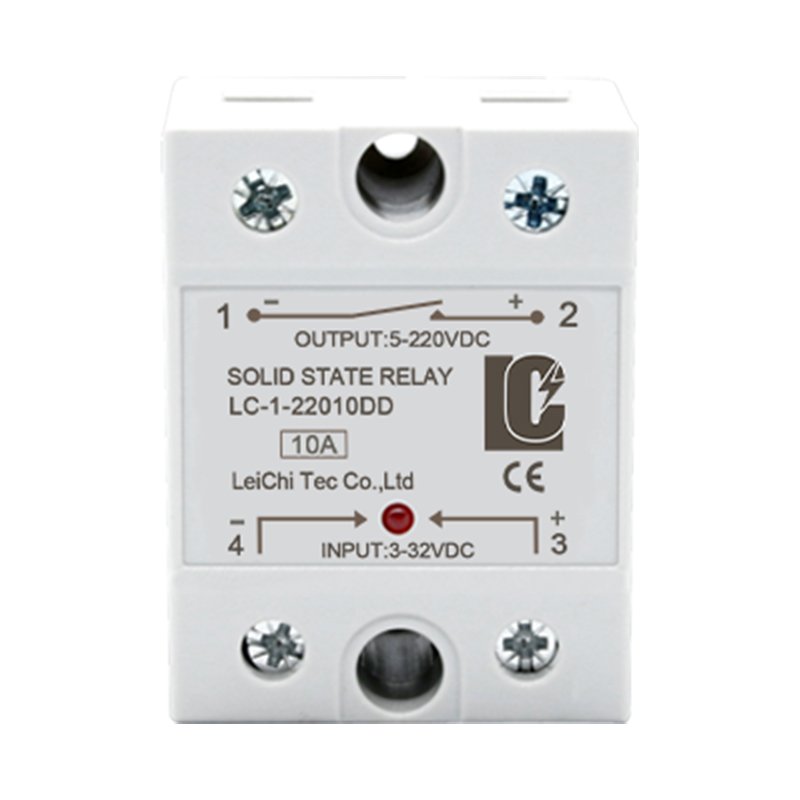
There are four types of solid state relay dc-dc:
Feature of Product
LCTC DC-DC solid-state relays offer a wide range of features suitable for DC load systems.

Switches DC current loads using DC control signals, making it suitable for all types of DC control systems.

Without mechanical contacts, wear on the contacts and deterioration of mechanical performance are minimized, thereby extending their service life.

LED indicators allow for intuitive and quick visualization of control status, facilitating monitoring of operation and simplifying fault detection.

It can be installed on both rails and panels, making it suitable for a wide range of equipment applications and easily adaptable to various operating environments.
Turn it off at Any Time with High Controllability
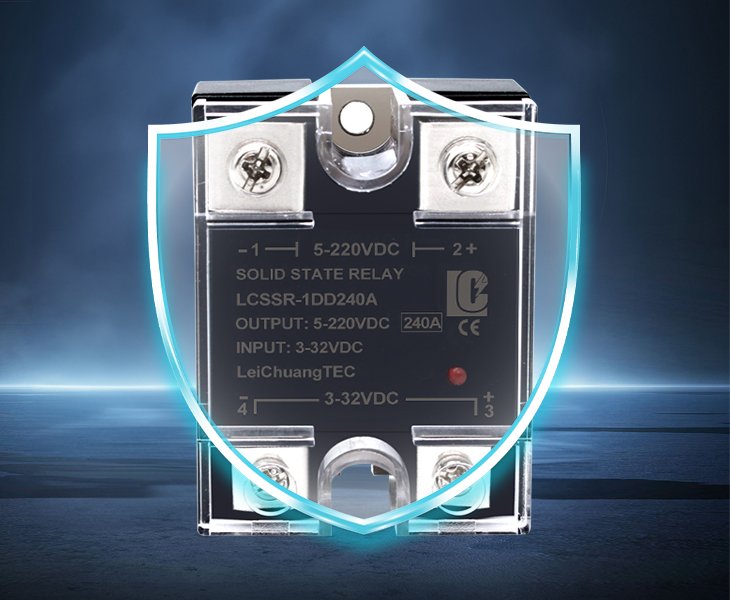
In simple terms, the main advantage of a solid state relay dc-dc is that it can fully control on and off states. As MOSFET are used internally, it is directly controlled by signals and does not depend on changes in power supply. Other control methods, such as DC-AC, require the circuit breaker to wait for the power supply to drop to 0 before closing. Therefore, the LCTC solid state relay dc-dc can not only reliably shut down the equipment in the dc system, but also provide precise control, rapid response, stability and safety.
More Suitable for Harsh Environments
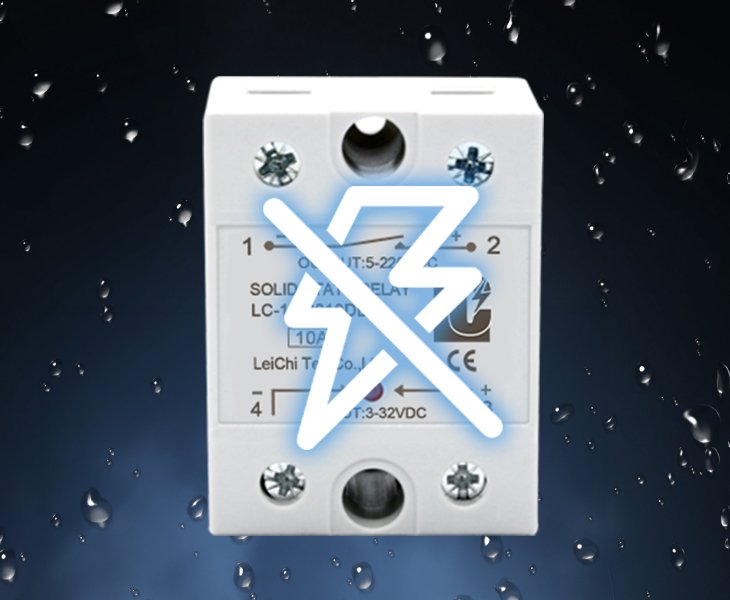
The LCTC solid state relay dc-dc is a fully electronic structure with no mechanical contacts. It can resist vibration and shock and will not encounter problems such as poor contact or wear. It also does not generate electric arcs, which makes it safer in flammable or dangerous environments. Solid state relay dc-dc also have a certain degree of sealing, making them more resistant to environments such as dust and humidity, and reducing maintenance costs.
The various models of LCTC DC SSRs with DC control exhibit slight differences in control voltage; generally, they support control voltages ranging from 3 to 32 V DC, making them suitable for most low-voltage DC control systems, including PLCs, building automation, and battery energy storage systems, among others.
However, before installation, in addition to ensuring that the control voltage falls within the specified limits, it is necessary to correctly connect the input polarity.
The specific load voltage varies slightly between different LCTC SSR models, but the typical load voltage usually ranges from 5 to 220 VDC. This range covers most industrial and automation applications.
When selecting a DC solid state relay, match the SSR output voltage rating with the load’s operating voltage and make sure the load voltage does not exceed the specified maximum output voltage.
To choose the correct DC-DC SSR current rating, first determine the load’s maximum operating current, including any startup or inrush current. Then select an SSR with a rated load current higher than the actual operating current. For continuous or high-current applications, allow an appropriate safety margin and consider heat dissipation requirements. LCTC offers multiple DC-DC SSR current ratings to support different DC load requirements.
Yes, a DC-DC SSR can be used to switch a DC motor when the SSR’s voltage and current ratings are suitable for the motor. However, DC motors can draw significantly higher current during startup than during normal operation. When choosing a DC solid state relay for a motor, consider the motor’s rated current, startup current, operating voltage and switching frequency. Proper heat dissipation may also be required for continuous or high-current operation.
Yes, a DC-DC SSR can be used to control a DC solenoid valve when the relay’s output voltage and current ratings are compatible with the valve. Because a solenoid is an inductive load, its switching behavior and voltage spikes should be considered during selection. Choose an SSR with sufficient current capacity and use appropriate suppression components, such as a flyback diode when applicable, to help protect the switching circuit.
When choosing a DC-DC solid state relay for an inductive load, consider the load voltage, normal operating current, startup or inrush current, switching frequency and the voltage generated when the inductive load is switched off. DC motors, solenoid valves and electromagnetic devices can produce voltage spikes during switching. Select an SSR with sufficient voltage and current ratings and use an appropriate suppression circuit, such as a flyback diode for suitable DC coils, to help protect the SSR and improve switching reliability.
The main difference between LCTC DC-DC and DC-AC solid state relays is the type of load they are designed to switch. A DC-DC SSR uses a DC control signal to switch a DC load, while a DC-AC SSR uses a DC or AC control signal, depending on the model, to switch an AC load. DC-DC SSRs are commonly used for DC motors, solenoid valves, DC heating loads and other DC equipment, while DC-AC SSRs are typically used for AC heaters, lamps, motors and other AC loads. Always select an SSR according to the control voltage, load voltage, load current and load type.
A DC-DC solid state relay can generate heat because its semiconductor output device has a small voltage drop when conducting current. As load current increases, the resulting power dissipation also increases. High load current, continuous operation, insufficient heat dissipation and high ambient temperature can therefore cause the SSR to run hotter. To reduce DC-DC SSR temperature, use an appropriately sized heat sink, ensure good airflow and mounting contact, and avoid operating the SSR continuously beyond its recommended load rating.
To prevent reverse polarity damage in a DC-DC solid state relay, verify the positive and negative terminals before wiring and make sure the control input polarity matches the SSR’s specifications. For systems where wiring errors are possible, additional reverse-polarity protection, such as a suitable diode, MOSFET-based protection circuit or fuse arrangement, can be considered depending on the application. Always follow the manufacturer’s wiring diagram and polarity requirements.
A DC-DC solid state relay may fail to turn off because of an incorrect control signal, wiring error, leakage current, residual voltage or a damaged output switching device. First, disconnect the control input and verify whether the output remains energized. Then check the input wiring, load voltage, leakage current and output terminals. For sensitive or low-current loads, residual leakage current may sometimes prevent the load from turning completely off. If the SSR remains conductive after the control signal is removed and the wiring is correct, the device may require further inspection or replacement.
If a DC-DC solid state relay is not switching, first check the control input voltage and polarity, load wiring, output voltage and load current. Make sure the input voltage reaches the required control range and that the load does not exceed the SSR’s rated capacity. Also check for overheating, incorrect wiring, insufficient control signal and possible damage to the semiconductor output device. For troubleshooting, verify the input and output sides separately and compare the measured values with the SSR’s specifications.
Due to differences in the electrical characteristics of semiconductor switching devices, the load current may not be shared equally between parallel SSRs, which can cause one device to carry excessive current and overheat. So, connecting DC-DC solid state relays in parallel is generally not recommended
For higher-current applications, it is usually better to select a DC-DC SSR with an appropriate current rating and heat dissipation capability. Contact LCTC for application-specific recommendations if a higher switching current is required.
Sure there is, LCTC usually offers solid-state relay dc-dc models, with a current range from 10A to 240A you can choose.
Generally speaking, it’s not. It is specifically designed for DC loads. The internal MOSFET is only suitable for unidirectional current and thus is not suitable for alternating current.
Yes. LCTC provides OEM and ODM services for DC-DC solid state relays to meet different application and purchasing requirements. Depending on the project, customization may include electrical specifications, current and voltage ratings, terminal configurations, and other product requirements.
Our team can also assist with product selection based on the required control voltage, DC load voltage, load current and application conditions. Contact us with your specifications and project requirements to discuss a suitable DC-DC SSR solution.