

LCTC PTC Start Relay for Compressor Starting Applications
If you’re working with refrigerator and consumer electronics industry, you’ve probably run into having problems with refrigerator refrigeration. That’s where PTC start relay comes in. It’s not a complicated solution, but in real setups, it does make a difference.
LCTC specializes in manufacturing various types of PTC starting relay. With nearly ten years of industry experience, LCTC products featuring practical design and stable performance will be the best choice in the field of PTC starter relay.
Our products follow the strict quality standards throughout the strict production process, and have a number of international professional certification, including ISO9001, RoHS, CE. If you are interested in our PTC start relay, please feel free to contact us and we will guide you to this details.
LCTC Product
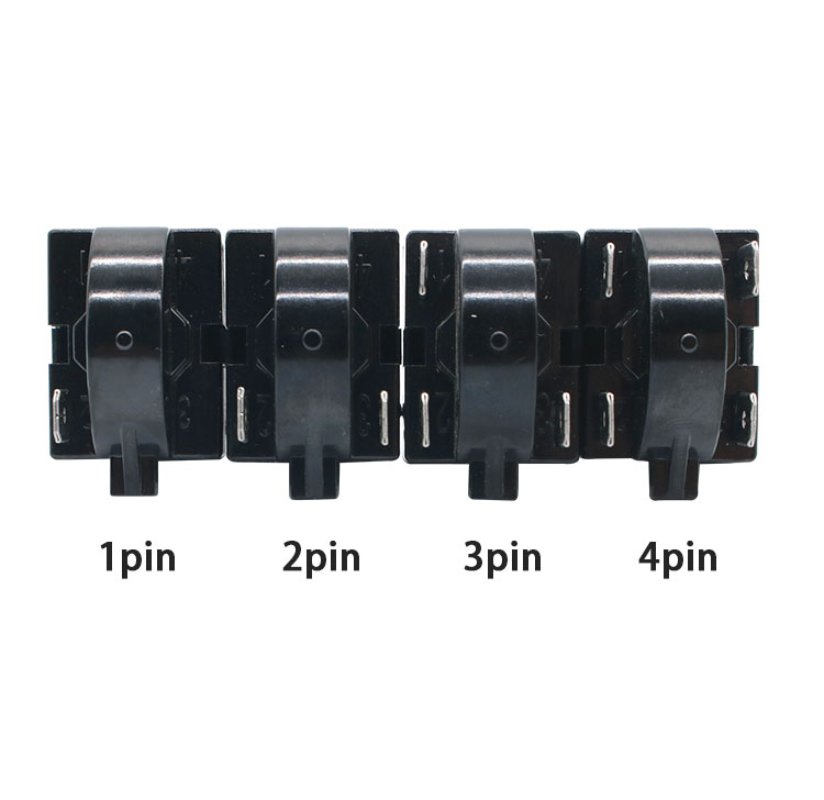
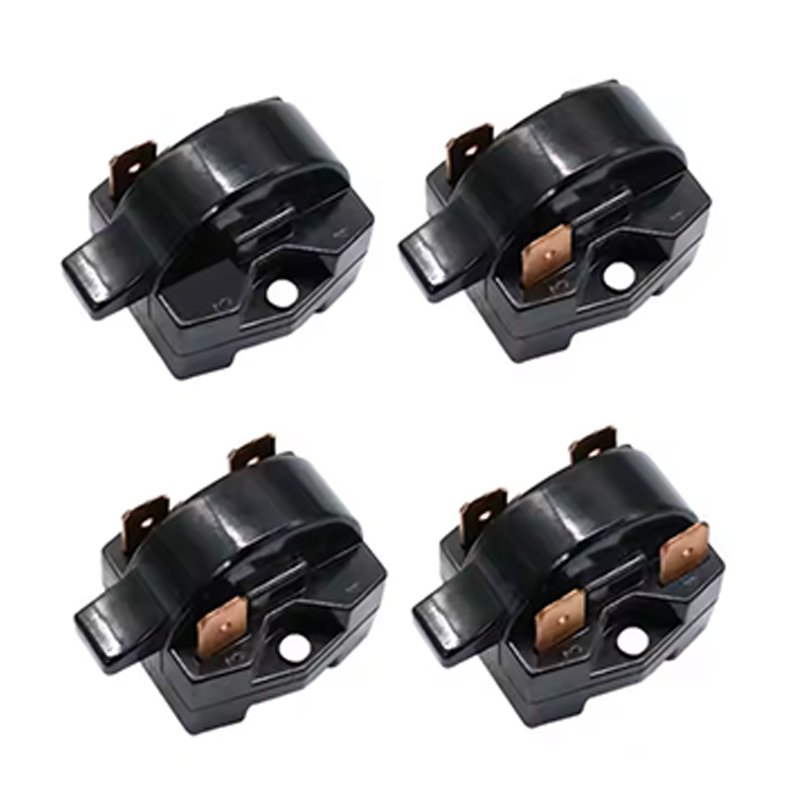
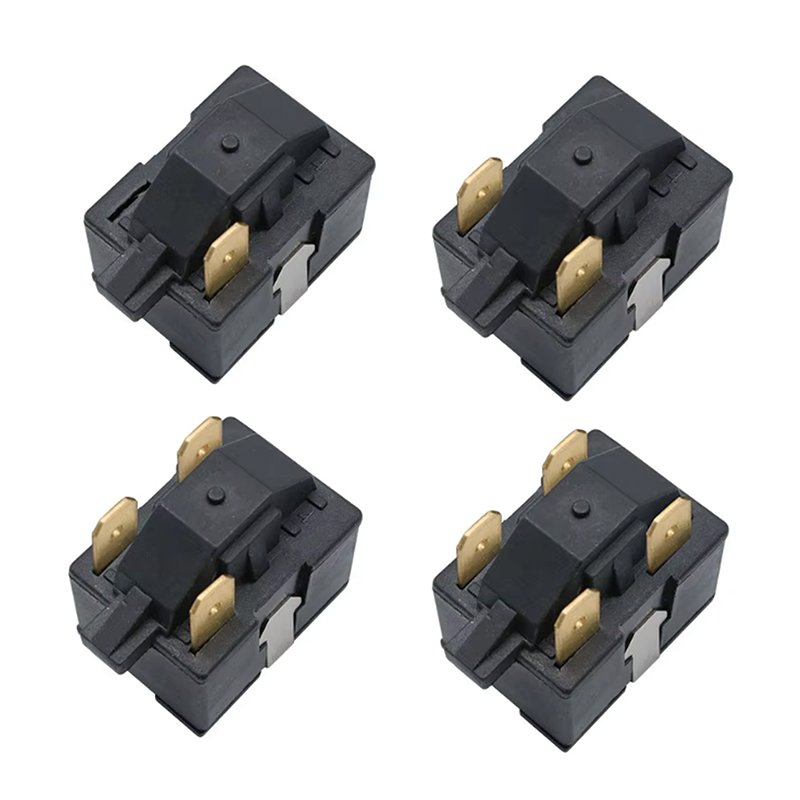
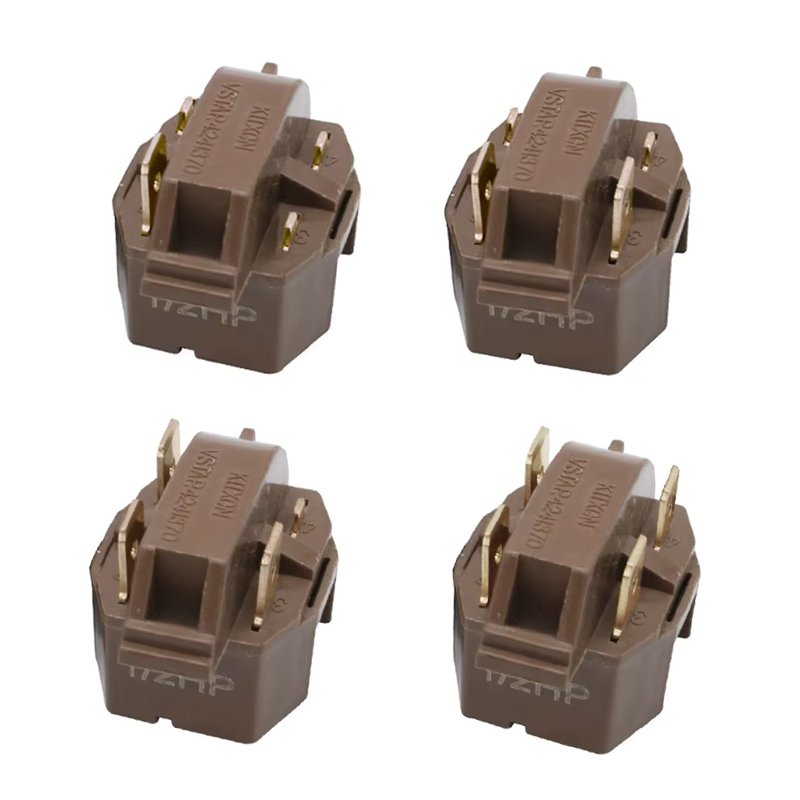
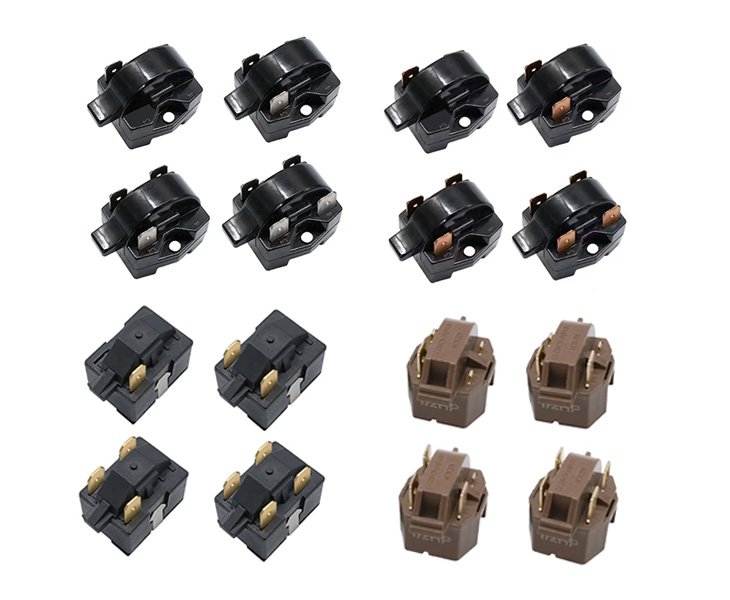
There are four types of PTC starting relay.
Feature of PTC Start Relay
The PTC starting relay offers significant advantages.

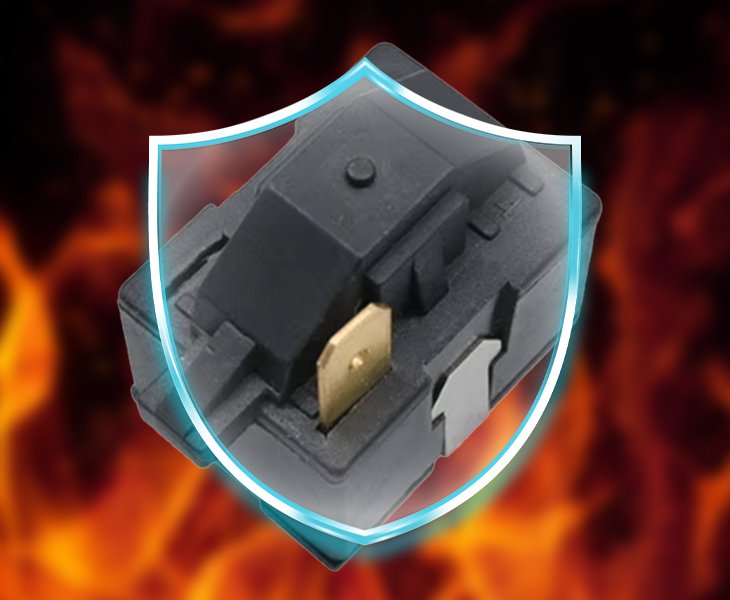
Its structural design has a certain degree of sealing property, which can prevent moisture and dust, avoid short circuits and electric shock risks, and also prevent the oxidation of some metal components.

The PTC starting relay of LCTC can safely withstand the huge current shock, and the internal components will not be damaged. It also can quickly exit the high-load state, protecting both the compressor and itself from being damaged.

Even in an extremely high temperature of 105℃, it can ensure that there will be no deformation or soften ing, loose internal structure, poor contact, and failure will not happen.

The LCTC PTC start relay features a compact, plug-and-play design that allows direct mounting on the compressor, thereby reducing installation time and labor costs while also simplifying maintenance and replacement operations.
PTC Start Relay with Wide Compressor Compatibility
The LCTC PTC starting relay offers various resistance specifications and options for starting parameters, designed to meet the diverse starting requirements of compressors. Primarily used in various single-phase sealed compressors, these components are designed to support compressors of different power ratings, ensuring reliable starting performance across a wide range of refrigeration applications, such as refrigerator compressors, freezer compressors, beverage cooler compressors, ice maker compressors.

Fast Automatic Switching PTC Start Relay
Fast Automatic Switching PTC Start Relay
The LCTC PTC start relay automatically connects and disconnects the compressor’s starting winding during startup based on temperature changes, without requiring external control signals or manual intervention. Disconnect the engine after it reaches normal operating speed to ensure the compressor quickly and stably returns to its normal operational state. Effectively improves compressor starting reliability by preventing issues such as abnormal kickback currents and continuous operation of starting windings; ideal for environments requiring frequent starts, reduces the need for manual maintenance, and ensures stable performance.
LCTC PTC Start Relay Operates Efficiently Without Mechanical Contact
PTC stands for thermistor with positive temperature Coefficient, what this means is the relay has an operating temperature ratio. It heats when powered, and its resistance rises sharply after reaching a critical temperature, allowing the winding to connect and disconnect automatically. The thing is that the LCTC PTC start relay process does not require any contact with mechanical switches and does not cause any wear.

Self Adjusting Function and No Maintenance of LCTC PTC Start Relay
Since the LCTC PTC start relay is made of solid material and has no mechanical contact, it will not wear out and will not generate electric arc. On the other hand it can automatically control the temperature and automatically reset itself, and the whole process requires no external control. Although it does not require maintenance, it is still necessary to regularly check the motor and wiring.
PTC Start Relay Resource Download
Application of PTC Start Relay
PTC start relays are commonly used in single-phase hermetic compressors and are suitable for a wide range of industrial sectors.

The LCTC PTC start relay quickly engages the starting winding and automatically disengages, ensuring smooth operation, reducing mechanical wear, and extending the compressor’s service life. Typical equipment includes household refrigerators, chest freezers, upright freezers, mini refrigerators, and wine coolers.

The LCTC PTC start relay enables rapid automatic switching and stable operation, ensuring the reliability of commercial refrigeration equipment during frequent start-stop cycles. Typical equipment includes beverage coolers, display refrigerators, supermarket display cabinets, under-counter refrigerators, and convenience store coolers.

The reliable starting performance of the LCTC PTC start relay helps maintain continuous cooling and preserves product quality, making it suitable for food storage equipment and beverage refrigeration. Typical equipment includes refrigerated display cases, food preparation tables, ice cream cabinets, beverage chillers, cold storage cabinets, water dispensers, water coolers, drinking water systems, beverage dispensers.

Thanks to its long operating life and maintenance-free design, the LCTC PTC start relay ensures reliable compressor startup for refrigeration equipment in medical and laboratory settings, providing continuous and stable temperature control. Typical equipment includes medical refrigerators, vaccine refrigerators, laboratory refrigerators, and blood storage cabinets.
First, verify the compressor’s specifications and starting requirements, including rated voltage, power, starting current, PTC resistance value, terminal configuration, and model compatibility.
Selecting the correct PTC start relay not only ensures reliable compressor startup but also prevents unnecessary stress, maintaining stable and long-lasting operation.
The LCTC PTC starting relay is suitable for a wide range of single-phase hermetic compressors; however, compatibility requires that all parameter specifications match. If you’re unsure which model to choose, you can contact LCTC by providing the model or specifications of your compressor, we will recommend the most suitable PTC start relay for your needs.
If the compressor does not start properly, frequently triggers overload protection, or exhibits unstable starting behavior, accompanied by symptoms such as unusual clicking sounds, overheating, signs of burnout, or abnormal resistance values, it indicates a possible malfunction of the PTC start relay.
During fault troubleshooting, first ensure that the power supply is disconnected and check whether the PTC start relay is damaged. Additionally, a multimeter can be used to verify that the resistance falls within the normal range.
Common faults of PTC start relays include:
The compressor does not start properly: the PTC start relay is unable to supply the starting current to the compressor, preventing it from operating.
Repeated clicking noise: due to internal damage or overheating, the PTC start relay repeatedly attempts to start the compressor.
Compressor preheating: a damaged PTC start relay fails to properly start the compressor, causing excessive current absorption and triggering the overload protection.
Frequent compressor start and stop cycles: a faulty PTC start relay causes intermittent compressor operation.
Burn marks or unusual odor: failure of the PTC start relay component.
Before performing the measurements, make sure to disconnect the power supply and remove the PTC start relay from the compressor. First, set the multimeter to resistance (Ω) mode, place the probes on the relay terminals and measure the resistance value of the PTC component.
The resistance value of a properly functioning PTC start relay must fall within the specified range for that model; a short circuit or an abnormal resistance reading indicates that the relay may be damaged.
In addition to performing a test with a multimeter, it is also advisable to inspect the exterior for signs of overheating, burns, or cracks, as these could indicate that the PTC start relay is damaged.
The 1, 2, 3, and 4 pin configurations refer to the terminal arrangements of PTC starter relays; the difference lies in the connection method to the compressor.
The 1-Pin PTC start relay is designed for a simple connection to the compressor, while the remaining electrical connections depend on the terminal arrangement of the compressor itself.
The 1-Pin PTC start relay is commonly used in compact appliances and provides an essential connection method for the compressor starting winding.
The 3-pin PTC start relay is a common component in refrigerator compressors; it is typically connected to the Common (C), Start (S), and Run (R) terminals.
In addition to the three standard terminals, the 4-pin PTC start relay offers additional connection options; it is commonly used with custom-designed compressors or in applications requiring extra wiring.
It is possible to select the most suitable PTC start relays based on specific requirements such as application, compressor model, terminal configuration, voltage, rated power, and excitation requirements.
A PTC start relay can work with a start capacitor in certain compressor applications that require higher starting torque. However, ensure that it matches the compressor’s electrical specifications.
The PTC relay controls the start winding, while the capacitor provides additional starting current to improve startup performance.
Start relay are not universal, so if they have different models or brands, they will not be compatible. To put it simply, each relay is designed for specific voltage and current conditions, using incompatible relays can cause serious operational problems.
Relay failure can interfere with the starting and operation of the compressor. During operation, affecting the refrigeration system, resulting in refrigerator cooling instability may occur, increased energy consumption, and even complete failure of the compressor.
Of course it is possible, but only if you know the circuit connection perfectly. An incorrect connection can damage the compressor and cause a risk of electrocution. So if you are not familiar with the operation, it is recommended to ask a qualified technician for help.
Yes, LCTC provides OEM/ODM customization services; we can develop the most suitable solution for your equipment based on your requirements. If you require a custom PTC start relay, please provide the compressor specifications or the existing relay model number; we will then recommend the most suitable model.
PTC Start Relay vs Current Relay/Potential Relay: What’s the Difference?
The compressor starter component is one of the most important elements in a refrigeration system and plays a crucial role in starting and ensuring reliable operation of the system’s motor. Among the various compressor starting systems, PTC start relays, current relays, and potential relays are three common types. Although they share the same basic function, they operate according to different principles and are suitable for various refrigeration applications.
What is a PTC Start Relay and its Working Principle
It is an electronic starting device primarily used to provide instantaneous power to the starter winding when the compressor starts, and to automatically cut off power to that winding once the compressor is operating normally. Compared to traditional electromagnetic relays, the PTC start relay features a simple structure, compact dimensions, and fewer mechanical components, ensuring long operational life and reliable, stable starting performance for the equipment.
The operating principle of a PTC start relay involves using a positive temperature coefficient (PTC) thermistor to control the compressor’s starting winding.
At compressor startup, the PTC component is in a low-resistance state, allowing current to flow through the compressor’s starting winding and providing the additional torque required for starting.
Once the compressor starts operating, the current passing through the PTC component causes its temperature to rise; the thermistor’s resistance increases significantly, reducing the current in the starting winding and thereby interrupting the circuit.
The entire process occurs automatically, without the need for mechanical switching components; thanks to this self-regulating feature, the PTC start relay provides a simple and reliable starting method for many refrigeration compressors.
What is a Current Relay/Potential Relay and its Working Principle
Current relays and potential relays are electromechanical starting devices used to control the starting windings of compressors, employing different electrical signals to manage the starting process. A current relay operates by detecting the compressor’s starting current, while a potential relay functions by monitoring the voltage across the compressor’s starter winding.
The current relay automatically responds to changes in current to control the compressor’s start-up; operation proceeds approximately as follows:
When the compressor draws a high starting current, a magnetic force is generated in the relay coil, causing the relay contacts to close and supplying power to the starter winding. Once the compressor reaches its rated speed, the current decreases, the magnetic force weakens, the contacts open, and the starter winding is disconnected. Current relays are suitable for refrigeration systems controlled by current-based switching.
The operating sequence of a potential relay is approximately as follows: the compressor starts up, and the starting winding generates a rising voltage; this voltage change triggers the relay contacts. Once the compressor reaches the required speed, the relay de-energizes the starting circuit, and the compressor continues to operate using the main winding. It is typically used in systems that require high performance at startup and precise switching control.
Advantages of PTC Start Relay and Current Relay/Potential Relay
Comparison | PTC Start Relay | Current Relay / Potential Relay |
| Structure | Simple | It features mechanical contacts and a coil, making it more complex |
| Reliability | No mechanical contact | It has mechanical contacts and is prone to wear |
| Size | Compact and lightweight | Relatively large in size |
| Installation | Easy to install | More precise wiring and system matching are required |
| Maintenance | Low maintenance requirements | Features mechanical components and requires significant maintenance |
| Cost | low cost | High cost |
| Starting Performance | Suitable for standard compressors | Suitable for applications requiring higher control precision |
Which Compressor Relay Should You Choose?
For small and medium-sized refrigeration equipment such as freezers, ice makers, beverage refrigerators, and ice producers, PTC start relays are typically the ideal choice. Thanks to its compact design, simple structure, controllable operation, and high cost-efficiency ratio, it is widely used in fully sealed single-phase compressors.
For refrigeration systems requiring more precise switching control, higher torque, or specific starting characteristics, a current relay or potential relay would be a more suitable choice.
Please note that, regardless of the type of compressor starter relay selected, factors such as the compressor’s type and model, rated voltage and power, starting current, resistance value and configuration, and operating environment must be taken into account. This ensures the relay operates optimally and starts the compressor reliably and stably.